
Nord Stream Trial Opens in Hamburg as Ukrainian Ex-Officer Denies Pipeline Sabotage Charges

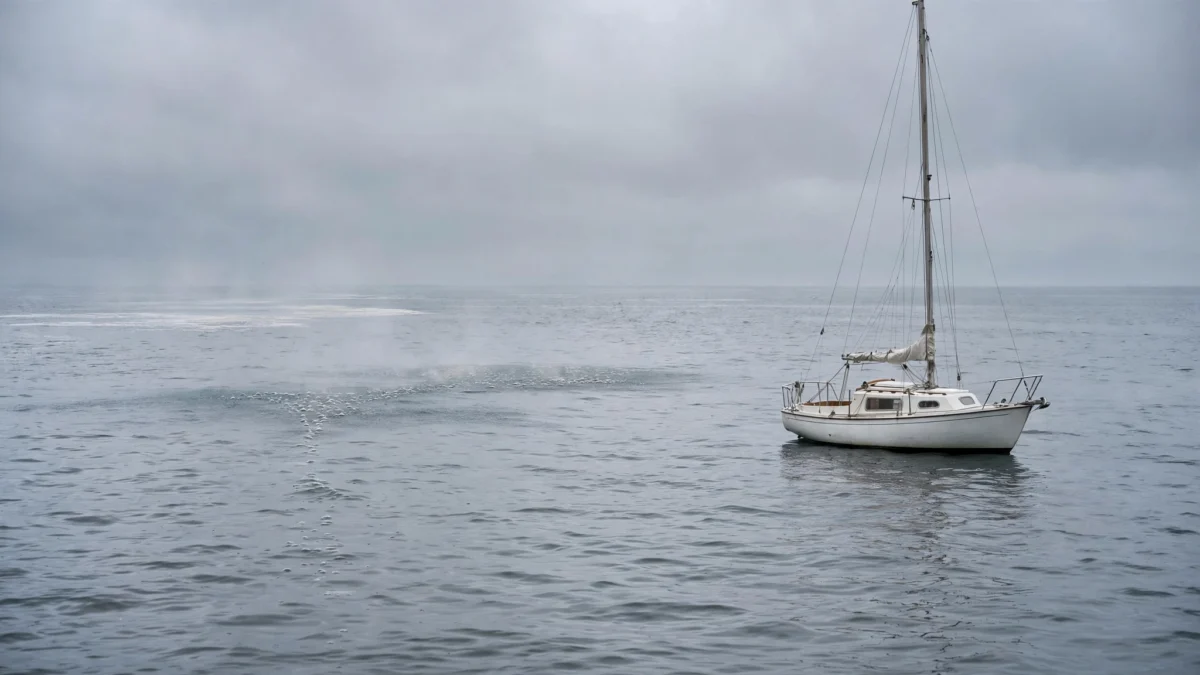
Four years after a series of undersea explosions tore through the Nord Stream gas pipelines beneath the Baltic Sea, the first person accused of carrying out the sabotage has gone on trial in Germany. The proceedings, which opened on Wednesday, October 14, at the Hanseatic Higher Regional Court in Hamburg, mark the first time evidence gathered during a years-long investigation will be heard and tested in public.
The defendant is a 50-year-old former Ukrainian military officer who is identified in court only as Serhii K., in line with German privacy rules. His full name, Serhii Kuznietsov, was made public during extradition proceedings in Italy, according to reporting by Le Monde and CNN. He denies any involvement in the blasts, and his defence lawyer has previously told CNN that he denies all wrongdoing.
German federal prosecutors accuse Serhii K. of organising and leading a small team that planted explosive devices on the Nord Stream 1 and Nord Stream 2 pipelines near the Danish island of Bornholm in September 2022. They allege that the group acted on behalf of unidentified Ukrainian state entities, an accusation the government in Kyiv has consistently rejected. Ukraine has maintained from the beginning that it had nothing to do with the explosions.
The charges against the defendant are unusually grave. According to the German federal prosecutor’s office, he is suspected of participating as an accomplice in a war crime involving attacks on civilian targets, alongside charges of detonating explosives, destroying infrastructure and disrupting a public service. Prosecutors argue that the pipelines were civilian infrastructure and that attacking them by military means during wartime falls under Germany’s code of crimes against international law. The Associated Press has reported that the suspect faces charges of causing an explosion, damaging property, disrupting public service and being an accomplice to war crimes by attacking civilian infrastructure.
What prosecutors allege happened
According to the prosecution’s account, the operation was planned and carried out by a small, specialised team working under the defendant’s direction. Prosecutors say the group included professional deep-sea divers, a skipper and an explosives expert, and that its objective was to put the pipelines out of action permanently.
Le Monde, citing a statement from the German federal prosecutor’s office, has reported that the alleged aim was to permanently end gas deliveries through the pipelines and to prevent Russia from using revenues from natural gas sales to fund its war operations. Prosecutors allege that Kuznietsov entered Germany on September 4, 2022, via Poland, using a fake Ukrainian passport, and that the group then chartered a sailing yacht named Andromeda in the northern German port of Rostock using false documents.
From there, according to the prosecution, the group transported large quantities of powerful military-grade explosives into international waters near Bornholm. By September 22, 2022, prosecutors allege, the team had placed several explosive devices fitted with timed detonators on the pipelines lying on the seabed, at a depth of around 80 metres. The devices were later detonated, rupturing the pipelines.
Investigators have said that traces of subsea explosives were found in samples taken from the Andromeda, and the BBC has reported that the saboteurs left behind DNA evidence on the boat. According to Le Monde, investigators also found data on the defendant’s mobile phone showing a strong interest in attacks on critical infrastructure and in the technical details of the two pipelines, suspicions that were reinforced by a conversation between the defendant and his wife soon after his arrest.
None of these claims has yet been tested in court. The trial, which is expected to run for months and continue into early 2027, will hear from witnesses and examine the forensic evidence. The defendant is presumed innocent unless the court finds otherwise.
The arrest and the road to Hamburg
The path to this trial was long and, at times, politically uncomfortable. Three countries initially opened investigations into the explosions: Germany, Sweden and Denmark. Sweden and Denmark both closed their inquiries in February 2024 without identifying any suspects, sharing what they had found with German prosecutors. Germany pressed on alone.
In January 2025, Germany’s Federal Court of Justice ruled that the case fell within German jurisdiction and that prosecutors had a responsibility to act, because the sabotage involved undermining Germany’s internal security, according to the BBC. German prosecutors then filed an indictment in July 2026, charging Serhii K. with complicity in war crimes, sabotage and destruction linked to the September 2022 attacks.
The defendant was detained overnight on August 20, 2025, in Rimini, Italy, where he was on holiday with his family, under a European arrest warrant, Le Monde has reported. He was transferred to Germany on November 27, 2025, and has since been held in custody. He is now presenting himself as an energy entrepreneur, according to Le Monde.
He is not the only suspect. A second man, identified as Volodymyr Z. and believed to have been one of the divers, was arrested in Croatia in August. A Croatian court has approved his extradition to Germany, Reuters reported last month, though his lawyer has said he could appeal the decision. German prosecutors have said he is strongly suspected of offences including sabotage and causing an explosion, and of taking part in dives to the pipelines.
The night the pipelines ruptured
The explosions of September 26, 2022, were among the most consequential acts of infrastructure sabotage in modern European history. Swedish seismologists registered multiple undersea blasts roughly 17 hours apart. The first explosion came at about 2:03 a.m., and further blasts followed. Three of the four concrete-coated steel pipelines were ruptured, sending vast quantities of gas gushing to the surface of the Baltic Sea in a churning, bubbling slick visible for days.
The environmental consequences were severe. Le Monde has reported that the leaks released nearly 500,000 metric tons of methane into the atmosphere, one of the largest single releases of the potent greenhouse gas ever recorded from a single event. Methane traps far more heat than carbon dioxide in the short term, and the scale of the release drew condemnation from climate scientists as well as governments.
The economic and strategic consequences were equally profound. Nord Stream 1, at the time of the blasts, was supplying about half of Germany’s annual natural gas needs, according to Le Monde. Nord Stream 2 had been completed in 2021 but had never entered service, after Germany suspended its certification process just before Russia launched its full-scale invasion of Ukraine in February 2022. Both pipelines were nevertheless filled with gas under high pressure when the explosions struck.
The blasts came seven months after the start of the war in Ukraine, at a moment when Europe was scrambling to wean itself off Russian energy. Russia had already shut off the flow of gas to Germany through Nord Stream 1 weeks before the attack. The sabotage made the rupture permanent: whatever the outcome of the war, Russian pipeline gas would not be flowing to Germany through these routes again.
A mystery that pointed in every direction
In the months after the explosions, suspicion pointed in almost every direction. Western governments initially looked toward Moscow without directly apportioning blame, and commentators cited reports of suspicious Russian naval movements near the blast site. Russia, for its part, accused the United States and its British allies, with President Vladimir Putin blaming what he called the “Anglo-Saxons” — an accusation both countries denied.
The German investigation gradually moved in a different direction. Investigators traced the movements of the Andromeda through the Baltic Sea in the days before the explosions and followed forensic traces back to a group of Ukrainian nationals. The indictment now before the Hamburg court alleges that the saboteurs conceived the plot while acting by order of Ukrainian state agencies, according to the BBC.
Kyiv has rejected that claim entirely. Ukrainian President Volodymyr Zelenskyy has always maintained that Ukraine had nothing to do with the Nord Stream blasts. The question of whether any Ukrainian state body ordered, authorised or even knew about the operation is the most politically explosive issue hanging over the trial — and it is one the Hamburg court is not designed to settle. Reporting on the opening of the trial has noted that the proceedings are limited to the question of the defendant’s own acts and guilt, and will not determine broader state responsibility or reparations.
Russia, meanwhile, is watching closely. The Russian government said on Monday that it expected a “just verdict” that would reveal the names of the perpetrators and those who ordered the operation, according to Reuters. Moscow has long demanded answers about the attack on pipelines in which the Russian state gas company Gazprom held a majority stake.
Analysis: Why It Matters
The Hamburg trial matters for reasons that go well beyond the fate of one man. It is, first, a test of whether a crime this murky can be resolved by ordinary criminal justice at all. For four years, the Nord Stream sabotage has been a magnet for conspiracy theories, selective leaks and competing national narratives. A courtroom is a slower, stricter arena than the news cycle: evidence must be presented, witnesses cross-examined, and allegations proven to a legal standard rather than merely asserted. Whatever the verdict, the trial will put at least part of the public record on a firmer footing than speculation ever could.
Second, the case is a stress test for one of Europe’s most important wartime relationships. Germany remains Ukraine’s largest European supplier of military aid, according to Reuters, and Berlin’s support has been central to Kyiv’s ability to sustain its defence. A German court trying a Ukrainian citizen over an attack on German-linked infrastructure — allegedly carried out on behalf of Ukrainian state entities — is an inherently awkward spectacle. The German authorities’ decision to press ahead regardless sends a signal that is worth noting: that alliance solidarity and the rule of law are being treated as separate obligations, and that neither is being allowed to cancel out the other. How Berlin and Kyiv manage that tension in the months ahead will be watched closely, particularly in Germany, where the scale of aid to Ukraine has become an increasingly contentious political issue, including on the far right.
Third, the war-crime framing of the charges could set a precedent with implications far beyond this case. Prosecutors are arguing, in effect, that sabotaging civilian energy infrastructure during an armed conflict can be prosecuted as a war crime even when the attack takes place far from any battlefield and no one is killed. If the court accepts that reasoning, it would add a significant building block to the law governing attacks on critical infrastructure — pipelines, cables, power grids and data links — at a time when such infrastructure is increasingly seen as a target in conflicts and grey-zone confrontations. If the court rejects it, that too will clarify the limits of the law.
Fourth, the trial exposes how much the energy map of Europe has changed since the night of the blasts. The pipelines at the centre of this case were once the physical embodiment of a German bet: that deep energy interdependence with Russia would underwrite stability. That bet is gone. Europe has spent the years since the explosions building liquefied natural gas terminals, signing new supply contracts and accelerating renewable energy — an expensive and disruptive pivot that the sabotage made irreversible. The courtroom in Hamburg is, in a sense, closing the book on an era that had already ended.
Finally, the case is a reminder of how much remains unknown. One defendant, one yacht, a handful of divers and a set of explosive devices are only the visible part of the story. Who financed the operation, who authorised it, and how far up any chain of command knowledge of it reached are questions this trial may illuminate but is unlikely to answer definitively. The gap between what a criminal trial can establish about one person and what the public wants to know about a state-level operation is real, and it will shape how the verdict — whichever way it goes — is received in Berlin, Kyiv and Moscow alike.
What to Watch Next
- The evidence. The prosecution’s case is expected to rest heavily on forensic material: traces of explosives from the Andromeda, DNA evidence allegedly left on board, phone data, and the movements of the yacht and its crew. How that evidence holds up under cross-examination will determine whether the trial ends in conviction or acquittal.
- The second suspect. If Volodymyr Z. is extradited from Croatia to Germany, prosecutors could gain a second defendant — and potentially a second account of what happened. His case may also reveal whether the Hamburg court hears the two cases together or separately.
- The politics. The trial will unfold alongside continued German military aid to Ukraine and an ongoing debate in Berlin about the scale of that support. Any testimony touching on Ukrainian state involvement will land in a highly charged political environment, and both governments will be under pressure to respond.
- The verdict’s reach. A conviction would be a landmark: the first criminal judgment in one of the biggest sabotage cases of the modern era. An acquittal would leave the Nord Stream mystery formally unsolved and would raise difficult questions about the strength of the German investigation. Either way, the judgment is likely to be appealed and debated long after the trial ends.
- The wider infrastructure question. The Nord Stream case has already sharpened European attention on the vulnerability of undersea pipelines and cables. Expect the trial to feed into ongoing debates about how to protect critical infrastructure in the Baltic Sea and beyond — and about what deterrence looks like when attribution is so hard to prove.
Sources
- Reuters: Ukrainian ex-officer stands trial in Germany over Nord Stream bombing
- Le Monde: Former Ukrainian officer stands trial in Germany over Nord Stream sabotage
- CNN: A trial over one of the biggest acts of sabotage in decades is getting underway. Here’s a refresher
- The Business Standard: Trial opens in Germany over 2022 Nord Stream pipeline sabotage

About the Author — Abdul Mannan
Related Articles
Russia Launches Overnight Barrage on Ukraine’s Energy Grid, Leaving More Than 600,000 Without Power
Russia fired 39 ballistic missiles and more than 120 drones at Ukrainian energy sites overnight, leaving more than…
The Ceasefire That Exists Only in a Post
Trump announced a Russia–Ukraine "energy ceasefire" on social media — while missiles fell on Kyiv. A column on…

Pope Leo XIV Diagnosed With Lung Cancer After Successful Surgery to Remove Part of Right Lung
Pope Leo XIV has been diagnosed with lung cancer after surgeons at Rome's Gemelli hospital removed the lower…