
Russia Launches Overnight Barrage on Ukraine’s Energy Grid, Leaving More Than 600,000 Without Power

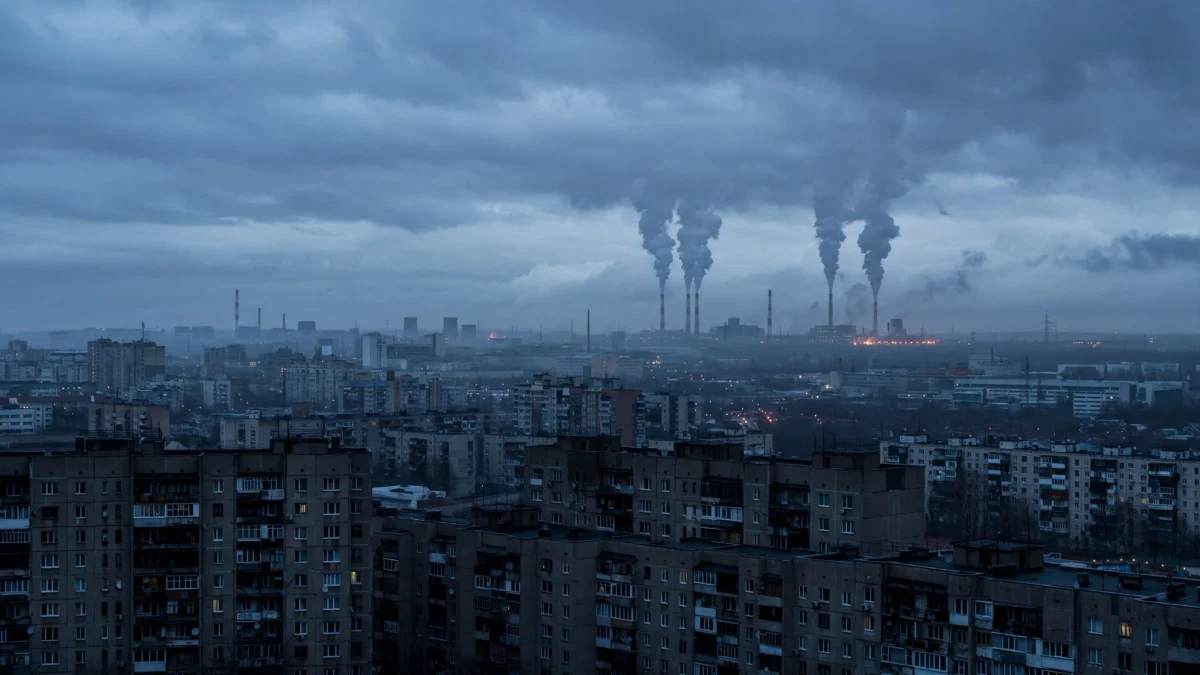
Russia fired 39 ballistic missiles and more than 120 drones at Ukrainian energy infrastructure in an overnight barrage from Tuesday into Wednesday, according to Ukrainian President Volodymyr Zelenskyy, leaving more than 600,000 people without electricity and causing heavy damage to power, oil and gas facilities in and around two of the country’s largest cities.
The attack struck Kyiv, the surrounding Kyiv region and Kharkiv, and damaged 26 power facilities and four oil and gas facilities, according to Zelenskyy, whose account was reported by Reuters. Ukraine’s air force said its defences brought down four of the 39 missiles, a figure that underlines how difficult ballistic weapons are to intercept once they are in flight.
In Kyiv, Mayor Vitali Klitschko said Wednesday’s strikes killed one person and injured one more, while also hitting energy facilities in the capital, according to Reuters. Reuters witnesses heard multiple explosions as air defences worked against the overnight attacks, and the agency reported that the ballistic missile attack was still under way during the morning hours. The fresh strikes fell as temperatures begin to cool and the heating season approaches, raising the stakes of every hit on the grid.
The barrage came barely two days after United States President Donald Trump announced what he described as an energy ceasefire between Russia and Ukraine, and hours after Zelenskyy complained that Kyiv had received no advance warning from its partners before a deadly strike the previous evening. Taken together, the two nights have become the sharpest test yet of whether any pause in attacks on energy infrastructure can hold, and of what Ukraine can expect from the allies whose intelligence it relies on.
A Night of Missiles Aimed at the Grid
According to Zelenskyy, Russia launched more than 120 drones and 39 ballistic missiles at Kyiv and Kharkiv in the overnight attack, specifically targeting energy facilities, CNN reported. The result, he said, was widespread power outages and significant damage to oil and gas facilities, the very infrastructure covered by the ceasefire announced by the American president at the weekend.
Ukraine’s air force said a large number of ballistic missiles had targeted energy infrastructure, and that its defences downed four of the 39 missiles launched overnight, according to Reuters. The air force gave a preliminary account in which many of the drones were reported intercepted or suppressed, but the low number of ballistic interceptions stood out. Ballistic missiles travel faster than the speed of sound and can reach Kyiv within minutes of launch, leaving air-defence crews almost no time to react.
In Kharkiv, Ukraine’s second city, a residential building was destroyed in the strikes, and Ukrainian officials said four people were killed there, according to The Independent. The Ukrainian Red Cross said its emergency response team helped rescue eight people following a missile strike on Kharkiv and set up an assistance point for those affected. Rescue workers searched through rubble through the night, and officials warned that casualty figures could change as the clearing continued.
The Russian side also reported deaths overnight. In the Volga River town of Balakovo in Russia, drones killed one person and damaged houses, a regional governor said on Telegram, according to Reuters. Russia’s defence ministry said it had downed 902 drones overnight, according to the Russian news agency Interfax, as reported by CNN. That claim, like the Ukrainian figures, has not been independently verified, and the two sides’ accounts of the night’s air war differ sharply in scale.
What is not in dispute is the shape of the night: a large, combined attack in which missiles and drones arrived together, aimed overwhelmingly at the systems that generate and move electricity, heat and fuel. For months, Russia and Ukraine have ramped up attacks on each other’s energy infrastructure even as the front lines on the ground have stayed largely unmoved, according to CNN. The overnight barrage was one of the heaviest single nights of that campaign.
The Ceasefire That Never Took Hold
Trump announced the so-called energy ceasefire on Sunday, saying it was effective immediately, in a post on his Truth Social platform. The announcement appeared to take both warring countries by surprise, according to CNN. Zelenskyy said afterwards that he supported the ceasefire even though he had not known about it in advance. The Kremlin has not commented directly on it, CNN reported.
By Monday, Zelenskyy said Russia had already violated the supposed ceasefire with fresh strikes, while adding that he was willing to abide by the agreement if Moscow did too. Zelenskyy has maintained that Ukraine has not carried out strikes on Russian oil refineries or the energy sector since the American president announced the ceasefire, while Russia continued to attack Ukraine’s energy facilities. Russian officials have said contacts are ongoing, without providing detail on any potential ceasefire.
When reporters asked Trump on Tuesday whether Russia had violated the ceasefire, he replied that he would let them know about that later, according to Reuters. The exchange captured the strange status of the arrangement: announced by Washington, endorsed in principle by Kyiv, never confirmed by Moscow, and already overtaken by two nights of heavy strikes.
The confusion matters because a ceasefire is only as strong as its terms. No written text, timeline, verification mechanism or agreed definition of what counts as an energy target has been made public. Without those, each side can claim the other broke the deal, and outside observers have no yardstick to judge the claims. The overnight barrage has now given the argument a concrete test case: if a ceasefire covering energy infrastructure was in force, then an attack of 39 ballistic missiles and more than 120 drones aimed at power, oil and gas facilities would be a clear breach. If no such agreement ever existed in any binding form, then the night was a continuation of an existing campaign rather than the breaking of a deal.
The Missing Warnings
Just hours before the overnight barrage, Zelenskyy said his government had received no early warning from its partners before a deadly ballistic missile attack hit a major power plant in Kyiv and damaged a residential building on Tuesday. Ukraine’s air defences had detected those missiles only when they were already virtually on approach to Kyiv, he said. He described the situation as absolutely unjust: Russia destroying Ukrainian energy infrastructure while Ukraine was not even receiving early warnings about ballistic missile launches.
The Tuesday attack hit thermal plant No. 4, known as CHP-4, a combined heat and power station that supplies electricity and heating to parts of the capital. A strike on a high-rise apartment building in the Desnianskyi district killed at least one person, according to Mayor Klitschko, as reported by Reuters. Apartments were ablaze and residents were being evacuated as emergency crews fought fires through the building.
Intelligence provided by the United States and other partners helps Ukraine defend against Russian ballistic missile attacks by providing the locations of missile launchers as well as data on where strikes are heading and when, according to CNN. That makes the missing warnings more than a diplomatic complaint. Without advance notice, air-defence batteries cannot be cued in time, civilians cannot reach shelter, and grid operators cannot take protective steps such as isolating equipment before impact.
The strikes came after the Trump administration warned Ukraine and allies in Europe last weekend that the United States could suspend intelligence sharing and European purchases of American weapons for Ukraine if Kyiv does not halt its deep strikes on Russian energy facilities, according to CNN. When asked on Tuesday, Trump said the United States had not stopped sharing intelligence with Ukraine, saying his administration was helping Kyiv and sharing intelligence while working with both sides to end the war.
Ukraine’s foreign minister, Andrii Sybiha, has suggested the gap could reflect a new or hard-to-detect type of Russian weapon, a technical explanation that has not been independently confirmed. Another possibility, raised by analysts, is that the flow of warning data itself faltered. What is clear is that the two explanations point in very different directions: one toward a technical problem to be solved with better sensors, the other toward a political decision about what is shared and when.
Fabian Hoffmann, a missile expert at the Norwegian Institute for Defence Studies, told The Independent that Ukraine’s European allies had very limited ability to replace American early-warning intelligence about Russian missile strikes. Ukraine relies on the United States’ Space-Based Infrared System, which detects missile launches from space, and the American system is second to none, he said. The point is a reminder that early warning is not a commodity that can be swapped between suppliers at short notice; it rests on a small number of highly specialised systems.
For months, Zelenskyy has urged partners to help bolster Ukraine’s air defences, especially by providing more ballistic-missile interceptors, among the few weapons capable of knocking down ballistic missiles that travel faster than the speed of sound, according to CNN. After the overnight attack, he called on Trump to impose stronger sanctions on Russia and to provide additional Patriot missile interceptors to Ukraine, according to Reuters. The request links the night’s events directly to the two forms of help Kyiv says it needs most: pressure on Moscow and the hardware to stop the missiles already in the air.
Analysis: Why It Matters
A ceasefire announced, never agreed
The most important lesson of the past three days may be about how ceasefires are made. A social-media announcement, however forceful, is not an agreement. An agreement needs the consent of the parties, a shared understanding of what is covered, a start time, and some way of verifying compliance. The energy ceasefire had none of these in public view. Kyiv said it would accept a pause it had not been told about; Moscow never confirmed it; Washington described it as effective immediately and then, when asked whether it had been broken, deferred the question.
That sequence should temper expectations for future announcements of the same kind. Ceasefires declared over the heads of the combatants tend to collapse at the first contact with reality, and each collapse makes the next attempt harder, because both sides learn that a declared pause carries no cost for ignoring it. If the United States wants a durable energy truce, the work will have to be done the slow way: written terms, agreed definitions, a verification channel, and consequences for violations that both sides believe in. Until then, announcements will keep producing the same cycle of surprise, endorsement, denial and fresh strikes.
Warning is infrastructure
The second lesson concerns early warning. It is easy to treat intelligence sharing as a diplomatic favour, something to be granted or withheld as leverage. The past two nights show it is better understood as infrastructure, as essential to civilian protection as the power lines themselves. When warning data flows, air defences can engage, people can shelter, and grid operators can limit damage. When it does not, missiles arrive with sirens sounding at the same time as the first explosions, as CNN reported has happened in some recent attacks.
That is why the question of why the warnings failed matters so much, and why it cannot be left as a mystery. If the cause was technical, then the fix is technical: better detection, faster data links, more sensors. If the cause was political, then the fix is political: a clear, public commitment that warning data will flow regardless of disagreements over Ukraine’s own deep-strike campaign. Either way, the people who pay for the gap are not the officials debating it. They are the residents of apartment blocks in Kyiv and Kharkiv who had no time to reach shelter.
The ballistic math
The third lesson is arithmetic. Four of 39 ballistic missiles intercepted is a stark ratio, and it explains why ballistic weapons dominate Russia’s campaign against the grid. Drones can be shot down in large numbers; ballistic missiles, arriving at extreme speed and from high altitude, require the most advanced interceptors, fired in salvos, from batteries that cannot be everywhere at once. Every night of this kind consumes interceptors faster than they are produced, and every battery committed to defending one city leaves another more exposed.
This is the context for Zelenskyy’s renewed appeal for Patriot interceptors. Patriot batteries are among the few systems proven against ballistic threats, but they are expensive, scarce and in demand far beyond Ukraine. The overnight attack strengthens Kyiv’s argument that air defence is not a secondary need but the central one: without it, every other form of help, from grid repair equipment to financial aid, is spent rebuilding what the next barrage will destroy. It also strengthens the case for the unglamorous work of hardening the grid itself, dispersing generation, stockpiling transformers and building redundancy so that no single strike can darken hundreds of thousands of homes.
Leverage on both sides
The fourth lesson is about leverage. The Trump administration’s warning, that intelligence sharing and European weapons purchases could be suspended unless Kyiv halts its deep strikes on Russian energy facilities, treats Ukraine’s refinery campaign as a problem to be stopped. From Kyiv’s perspective, that campaign is one of the few sources of leverage it holds. Striking Russian refineries imposes costs on Moscow’s war economy in a way that holding a static front line does not. Sybiha’s remark that Ukraine has gone from having no cards to choosing not to play them captures that view: the deep strikes are bargaining chips, not accidents.
The danger is that both sides’ leverage is aimed at the other’s energy system, and civilians on both sides pay for the exchange. Russian strikes darken Ukrainian cities; Ukrainian strikes squeeze Russian fuel supplies; and each round gives the other side a reason to escalate. An energy ceasefire, if it were real, would break that cycle by taking both campaigns off the table at once. But a one-sided pause, in which only Ukraine stops while Russia continues, would simply hand Moscow a free hand against the Ukrainian grid. That is why Kyiv insists on reciprocity, and why any future truce will stand or fall on whether it binds both sides equally.
What to Watch Next
- Repair pace: how quickly power is restored to the more than 600,000 people left without electricity, and whether rolling outages or rationing follow in Kyiv, Kharkiv and the surrounding regions.
- The next nights: whether the barrage continues, pauses, or shifts to new targets, and whether Zelenskyy’s warning of further ballistic launches proves accurate.
- The intelligence question: whether Washington clarifies, in public and in practice, that early-warning data will keep flowing to Kyiv, and whether the missing warnings of the past two nights are explained.
- Air-defence deliveries: whether the United States and European partners respond to the renewed appeal for Patriot interceptors and other ballistic-missile defences, and how fast any new systems can arrive.
- The ceasefire’s fate: whether the energy ceasefire gets written terms, verification and the agreement of both sides, or whether it quietly joins the list of announced pauses that never took effect, as the heating season closes in.
Sources
- CNN — Russia batters Ukraine’s energy facilities hours after Zelensky appeals for early warnings from partners
- Reuters — Russian strikes kill one, hit energy facilities in Kyiv, mayor says
- AnewZ (carrying Reuters updates) — Air defence heard over Kyiv after deadly Russian strike
- Devdiscourse (Reuters syndication) — Ukraine downs four of 39 missiles launched by Russia, air force says
- The Independent (live blog, via Europe Says) — Ukraine-Russia war latest: Putin hits Kyiv energy facilities as Zelensky says allies gave ‘no warning’ of strikes

About the Author — Abdul Mannan
Related Articles

Colombia Opens Embassy in Jerusalem, Restoring Israel Ties Broken Under Petro
Colombia inaugurated its embassy in Jerusalem on Wednesday, becoming the tenth country to locate its mission in the…
Ukraine Accuses SpaceX of Throttling Starlink for Its Drones as Musk Points to the White House
Kyiv says Starshield drone speeds were throttled without warning during Russia's barrage; Elon Musk blames the US military…

Trump Says ‘Massive’ Oil, Gas and Mineral Exploration Is Set to Begin in Greenland; Nuuk Pushes Back
President Trump claimed 'massive' oil, gas and mineral exploration is set to begin in 'our new and beautiful…