
NVIDIA, IBM and Fermilab Launch Quantum Codesign Platform With 13,000x Faster Error-Correction Decoding

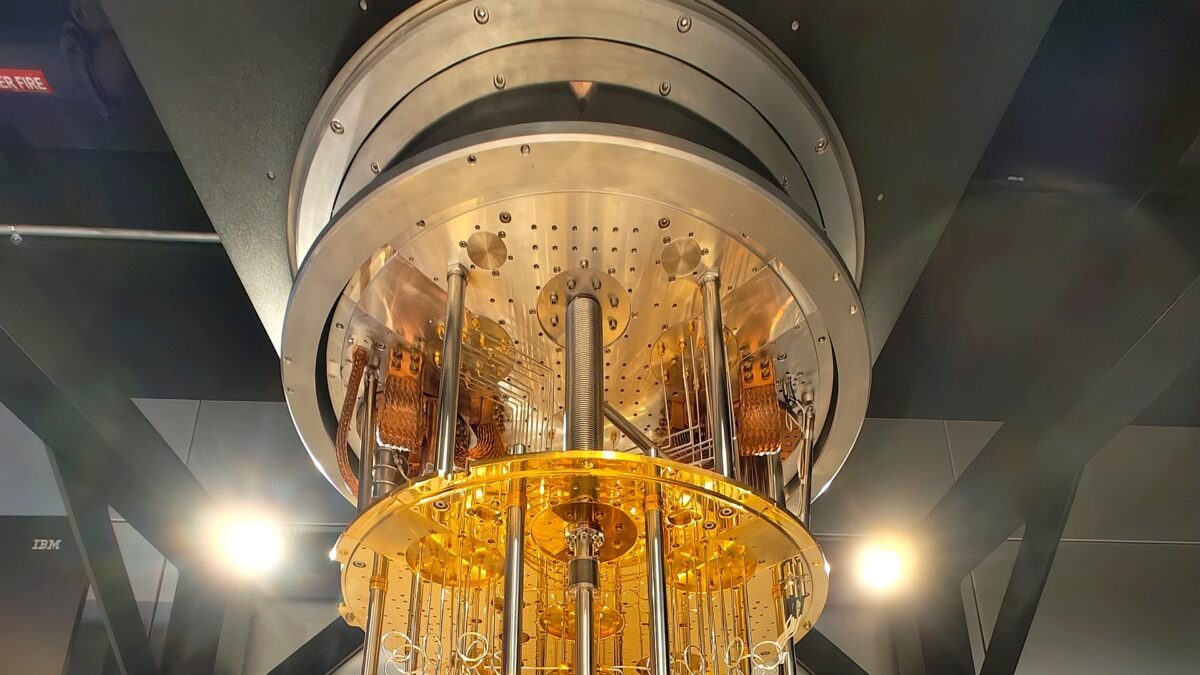
NVIDIA, IBM and the US Department of Energy’s Fermi National Accelerator Laboratory have announced a joint effort to build a modular quantum computing codesign platform, pairing NVIDIA’s accelerated computing systems with IBM’s most powerful quantum processor in a project aimed at one of the field’s hardest problems: making quantum computers reliable enough to be useful.
The three organisations unveiled the plan on Monday 16 November 2026 in Chicago, on the opening day of SC26, the International Conference for High Performance Computing, Networking, Storage and Analysis, according to NVIDIA. The announcement pairs two separate advances: a new hardware-and-software platform built around IBM’s 120-qubit Nighthawk processor, and a new decoding algorithm from NVIDIA that the company says can run up to 13,000 times faster than existing leading algorithms in quantum error-correction research.
The codesign platform will colocate NVIDIA DGX B200 systems with IBM quantum computers, including machines powered by IBM Quantum Nighthawk, the fastest quantum processor IBM has ever built, according to IBM. Researchers from the three partners will use it to develop and test error-correction codes, decoding algorithms and quantum-classical applications, with the work focused on high-energy and nuclear physics — the science Fermilab exists to pursue.
“Making quantum computers useful for science requires advances in error correction, applications and the systems that bring quantum processors and accelerated computing together,” said Krysta Svore, NVIDIA’s vice president of applied research for quantum computing, in the company’s announcement. “NVIDIA’s research software and our collaboration with IBM give scientists more powerful tools to investigate quantum designs and develop applications across these systems.”
Separately, NVIDIA released a new decoding algorithm, called TCBP-JOBS, as part of its CUDA-Q quantum computing platform. According to NVIDIA, the algorithm accelerates the computationally intensive parts of quantum error-correction research by up to 13,000 times while maintaining high accuracy, cutting the time needed to research new quantum computing designs from 12 weeks to 45 minutes in the cases the company cites.
The announcement also covers a third strand of work: integrating quantum processors into the everyday scheduling of supercomputing centres. NVIDIA is expanding Slurm, the open-source workload manager used by many of the world’s largest supercomputers, with a quantum interface, and IBM is contributing through its Quantum Resource Management Interface, so that a quantum processor can be booked and managed like any other computing resource.
Nothing in the announcement is a finished product. Both companies describe the platform in the language of plans and intentions — IBM says the partners “intend to launch” the codesign platform — and the headline speed figure carries the qualifier “up to”. What was announced on Monday is a research programme, a software release and a direction of travel, not a machine a customer can buy. That distinction matters, and it is worth keeping in mind through everything that follows.
What the codesign platform will actually do
The word at the centre of the announcement is “codesign”, and it describes a change in how quantum computers are built. For most of the field’s history, hardware teams built processors and software teams wrote algorithms for whatever hardware arrived. Codesign means designing the processor, the error-correction scheme, the decoding software and the scientific application together, so that each shapes the others.
The platform announced on Monday is built for that approach. NVIDIA DGX B200 systems — the company’s flagship accelerated computing servers — will sit alongside IBM quantum computers at IBM facilities, with the combined system supporting a modular quantum codesign platform developed jointly by IBM, Fermilab and NVIDIA, according to the announcements. The aim is to let researchers develop and evaluate error-correction codes, decoding algorithms and quantum-classical applications, and to study how classical systems can scale alongside several linked quantum processors inside modular architectures.
Fermilab’s role runs through its Superconducting Quantum Materials and Systems Center, known as SQMS, one of the US Department of Energy’s national quantum information science research centres. The laboratory’s expertise will focus the platform’s work on quantum error correction and on high-energy and nuclear physics applications, helping to define what future fault-tolerant quantum computers will need to do — and what science they will need to do it for.
“The future of quantum computing depends on more than advances in quantum hardware alone,” said Anna Grassellino, Fermilab’s chief technology officer and director of the SQMS Center. “Accelerated computing and superintelligence will play an important role in how we design algorithms, study errors and coordinate increasingly complex quantum systems. This proposed platform would combine NVIDIA’s computing capabilities with IBM’s quantum technologies and Fermilab’s scientific expertise.”
The physics problems the partners name are among the hardest in science. Fermilab and IBM will research what is needed to run calculations in high-energy and nuclear physics that are beyond the reach of classical systems alone, including lattice gauge theories — the mathematical framework of the strong force that binds atomic nuclei — neutrino interactions and nuclear simulations, according to IBM. These are problems where the number of possible configurations grows so fast that even the largest supercomputers cannot keep up, and where a working quantum computer would change what can be calculated at all.
“Some of the most fundamental problems in science remain out of reach without access to quantum computing,” said Jerry Chow, an IBM Fellow and the company’s chief technology officer for quantum-centric computing. “Scaling quantum and classical together will open new frontiers in high-energy and nuclear physics and beyond.”
Grassellino also pointed to a longer ambition: the work is, in her words, “an important step toward the capabilities and community needed for a future DOE quantum computing user facility” — a shared national resource where researchers could run quantum calculations the way they now book time on supercomputers and particle accelerators.
The 13,000x decoder: what it is, and what it is not
The most eye-catching number in Monday’s announcement belongs to the software, not the hardware. NVIDIA’s new TCBP-JOBS algorithm, available now in the CUDA-Q QEC 0.9.0 library, accelerates the computationally intensive parts of quantum error-correction research by up to 13,000 times compared with existing leading algorithms, according to NVIDIA, cutting the computation time for researching new quantum computing designs from 12 weeks to 45 minutes.
To understand why that matters, it helps to understand what a decoder does. Quantum processors are fragile. Their basic units, qubits, lose their quantum states through interference from heat, vibration, electromagnetic noise and the imperfections of their own control signals. A typical physical qubit today makes an error roughly once in every hundred to once in every ten thousand operations, depending on the hardware — a rate that sounds small until a useful calculation needs thousands or millions of operations chained together, at which point errors accumulate and destroy the result long before it finishes.
Quantum error correction is the answer the field has settled on. It spreads one “logical” qubit — the unit a program actually uses — across many physical qubits, in a pattern that lets the machine detect and fix errors without ever measuring the quantum information directly. That last point matters because of a fundamental rule of quantum mechanics, the no-cloning theorem: an unknown quantum state cannot be copied, so the classical trick of simply keeping three copies and taking a vote does not work.
The decoder is the classical algorithm that reads the measurement data from those many physical qubits, works out which errors most likely occurred, and tells the machine how to correct them. It is a hard computational problem in its own right, and it has to be solved fast: in a running quantum computer, decoding must keep pace with the processor, or the machine must pause and wait. A decoder that runs 13,000 times faster does not make a quantum computer 13,000 times faster. It makes the research into better error-correction designs 13,000 times faster, in the cases NVIDIA cites — which is a different and, for now, more important thing. Designing a good error-correcting code means testing thousands of candidate designs against simulated noise; if each test takes twelve weeks, researchers test a handful. If each test takes 45 minutes, they can test thousands.
The qualifiers deserve emphasis. The 13,000-fold figure is an upper bound — “up to” — and the twelve-weeks-to-45-minutes comparison applies to certain research tasks, not to every decoding workload. The algorithm is a research tool, released in a software library for scientists designing future machines. It is not, by itself, a working fault-tolerant quantum computer, and NVIDIA does not claim otherwise.
Even so, the timing is significant. Decoding has become one of the field’s recognised bottlenecks. In September 2026, the quantum company IonQ announced what it described as the industry’s first end-to-end real-time error-correction decoder running on a single standard computer processor, tested across simulated circuits of up to 408 logical qubits and more than 31.5 million operations, adding as little as 0.02 percent delay to the computation. The race is no longer only about who has the most qubits. It is about who can keep those qubits honest, in real time, at scale — and the classical computing needed to do that is becoming as important as the quantum hardware itself.
Nighthawk, the processor at the centre of it
The hardware at the heart of the codesign platform is IBM Quantum Nighthawk, a 120-qubit superconducting processor that IBM describes as the most powerful it has ever built. According to IBM, Nighthawk can run circuits of up to 7,500 two-qubit operations on 120 qubits, at speeds of up to 100,000 samples per second. Its 120 programmable qubits are linked by 218 tunable couplers in a square lattice, so each qubit connects to as many as four neighbours, and it carries 120 independent reset elements — hardware that returns a qubit to a known starting state quickly between calculations — for a total of 458 physical quantum elements.
Those numbers need translating. A hundred and twenty qubits is not a large count by the standards of the industry’s own announcements — IBM’s earlier Heron processor has 156 — but the Nighthawk design trades raw count for connectivity, speed and the ability to run deeper circuits. The square lattice, with four neighbours per qubit instead of two or three, gives error-correction codes more room to work. The fast reset hardware lets the machine run far more circuits per second: IBM says more than 100,000, about 25 times the throughput of its Heron fleet. And 7,500 two-qubit operations in a single circuit is a measure of depth — how long a calculation can run before errors overwhelm it — which is the quantity that matters most for real applications.
It is also worth stating plainly what Nighthawk is not. Its 120 qubits are physical qubits, not error-corrected logical qubits. A fault-tolerant machine capable of running the algorithms that would transform drug discovery or materials science would need many physical qubits for every logical one — hundreds or thousands, by most estimates. Nighthawk is a research processor for developing the techniques that might one day build such a machine, not that machine itself.
The processor has had a busy November. On 4 November, Yonsei University in South Korea switched on a Nighthawk r2 system at its Songdo campus, saying it would use the machine to shorten the early computational stages of drug development. On 6 November, IBM, the University of Chicago and the State of Illinois unveiled an operational IBM Quantum System Two powered by Nighthawk r2 at the university’s Hyde Park Labs in Chicago, a system that will eventually move to the Illinois Quantum and Microelectronics Park and support a National Quantum Algorithm Center. And on 11 November, IBM announced plans for Nighthawk r3, designed for 10,000 quantum operations across 520 programmable qubits. The codesign platform announced on Monday sits on top of that momentum — and, notably, it was announced in the same city where the System Two installation was unveiled ten days earlier.
Quantum chemistry: 79 times more accurate
The third strand of Monday’s announcement is a piece of science, and it may be the most concrete evidence the partners offered that their approach works. New research from IBM, RIKEN — Japan’s national research institute — and NVIDIA used quantum-classical workflows to simulate Fe4S4, an iron-sulfur cluster found inside the proteins of living cells, whose interacting electrons make it particularly difficult to model.
The team built on a technique called sample-based quantum diagonalization, in which a quantum computer samples the most important electron configurations of a molecule and a classical supercomputer does the heavy calculation on those samples. This time, the researchers began with a deliberately imperfect but more realistic starting guess for the molecule’s state, steering the quantum computer toward the configurations that matter most. They ran circuits of up to 4,000 two-qubit operations on 72 qubits and collected 5 million samples, integrating IBM quantum computers with NVIDIA graphics processors, including those inside RIKEN’s JHPC-quantum GPU supercomputer, known as ROQUO.
The result, according to IBM, was a 79-fold improvement in accuracy over earlier runs of the same experiment, landing within 4.3 millihartree of the accuracy achieved by density-matrix renormalization group — known as DMRG — one of the leading classical simulation methods, and one famous for its accuracy on exactly this kind of problem. In a related effort described by NVIDIA, the researchers modelled protein-ligand complexes containing up to 12,635 atoms — more than 40 times the size of the previous 303-atom quantum-classical benchmark — work relevant to drug discovery, where understanding how a drug molecule binds to its target protein is the central question.
“By combining quantum computing with HPC, we achieved accuracy approaching that of DMRG, one of the leading classical methods, for a strongly correlated iron-sulfur cluster,” said Seiji Yunoki, team principal of the Computational Materials Science Research Team at RIKEN. “This marks an important step toward applying quantum-HPC hybrid computing to scientific problems.”
The work has been named a finalist for the 2026 ACM Gordon Bell Prize, according to NVIDIA — the supercomputing field’s most prestigious award for work that advances high-performance computing. IBM separately noted that another of its collaborations, with the Cleveland Clinic, was also named a finalist for the same prize this year. The research was supported by Japan’s New Energy and Industrial Technology Development Organization, under its programme for quantum-supercomputer hybrid platforms.
Slurm: quantum joins the supercomputing queue
The least glamorous part of Monday’s announcement may prove the most consequential for working scientists. Slurm is the open-source workload manager that decides which jobs run, when they run, and which processors they use on many of the world’s largest supercomputers. Until now, it had no native concept of a quantum processor: centres that wanted to add quantum hardware had to bolt it on through plugins, outside the scheduler’s core model, creating extra engineering and maintenance work.
NVIDIA is expanding Slurm with a quantum interface, and IBM is contributing through its Quantum Resource Management Interface, an open-source, vendor-agnostic layer developed with the French quantum company Pasqal and the open-source community. Because a quantum processing unit can be shared across multiple computing nodes — unlike a graphics processor, which sits inside one node — the integration uses Slurm’s hierarchical resources capability, which lets administrators manage that shared resource and set limits for each part of the system.
The practical effect, according to IBM, is that a quantum-classical workflow can be managed as an ordinary Slurm job, without a separate queue, login or operating model, and that quantum processor time can be allocated, reserved and accounted for with the same policies centres already use for conventional processors and graphics processors. Because the interface is vendor-agnostic, the same approach can support quantum processors from different providers.
That is plumbing, not poetry — but plumbing is what turns a laboratory curiosity into infrastructure. A researcher who wants to run a hybrid calculation should not need to negotiate a separate system, a separate account and a separate queue. The test of this work will be whether, a year from now, quantum processors are simply another resource a supercomputing centre schedules, like memory or storage. If they are, Monday’s Slurm announcement will have mattered more than any of the headline numbers.
Analysis: Why It Matters
The bottleneck has moved — and that is progress
For a decade, the quantum computing story was told in qubit counts, and each announcement tried to outbid the last. That story has quietly changed. The numbers that matter now are error rates, code distances, decoding speeds and logical qubits — the measures of whether a machine can be trusted, not merely how big it is. Google’s Willow processor demonstrated in December 2024 that logical error rates fall as error-correcting codes grow larger, the first published empirical proof that quantum error correction works the way theory predicted. In 2026, QuEra reported error-corrected systems with up to 96 logical qubits. IonQ’s September announcement showed decoding running in real time on ordinary hardware. NVIDIA’s 13,000-fold decoding speedup belongs to the same shift: the field’s centre of gravity has moved from building qubits to keeping them honest.
That is progress, even if it is unglamorous. A quantum computer that cannot correct its own errors is a demonstration device. A quantum computer that can is, potentially, a tool. Every announcement in this new phase — faster decoders, better codes, processors designed around error correction rather than around qubit counts — is a step from the first category toward the second. The step announced on Monday is a real one, but it is a step in research infrastructure, not a finished tool, and it should be reported as such.
The honest framing also matters because the field has a history of overpromising. Quantum computing has been five or ten years from transforming industry for roughly twenty years, and each wave of announcements has produced headlines that the underlying science could not yet support. The antidote is not scepticism for its own sake, but precision: saying exactly what was demonstrated, under what conditions, and what remains undone. On those terms, Monday’s announcement holds up well. A faster decoder is a genuine advance. A codesign platform is a genuine commitment. Neither is a working fault-tolerant computer, and neither was presented as one.
No single company can build this alone
The most interesting thing about Monday’s announcement may be its cast list. IBM builds the quantum processors. NVIDIA builds the accelerated computing and the software that decodes errors and schedules jobs. Fermilab brings the physics problems and a national laboratory’s expertise in superconducting hardware. RIKEN brings a supercomputer and a chemistry problem. Pasqal, a French company, helped build the scheduling interface. A US Department of Energy laboratory, a Japanese national institute, two American technology giants and a European startup, all in one announcement.
That breadth is not decorative. Fault-tolerant quantum computing is too hard, too expensive and too multidisciplinary for any one organisation to solve alone — and the industry increasingly behaves as though it knows it. IBM’s roadmap depends on partners who can supply the classical computing that error correction demands. NVIDIA’s quantum strategy depends on partners who build the quantum processors its software must serve. Fermilab’s science depends on machines no laboratory could build by itself. The codesign platform is, in that sense, an institutional admission: the modular, multi-vendor future the partners describe will only arrive if rivals learn to build it together.
It is also a notably American-centred partnership with a Japanese and European fringe, announced in the week that Washington and its allies have been tightening controls on the technologies behind artificial intelligence supply chains. Quantum computing sits squarely in the same strategic frame: the machines that could one day break encryption or design new materials are the subject of export controls, industrial policy and national-security debate. A partnership anchored in a US national laboratory, announced at an American supercomputing conference, is a statement about where the United States intends this technology to be built — and by whom.
A plan, not a product — read the verbs
Press releases are written in a dialect of their own, and the verbs are the giveaway. IBM and NVIDIA “announced plans”. The partners “intend to launch” the codesign platform. The decoder “accelerates” research “by up to” 13,000 times. The chemistry work “marks an important step toward” applying hybrid computing to scientific problems. None of those sentences describes something finished.
That is not a criticism. Research programmes are announced as plans because they are plans, and the alternative — waiting until everything is built before saying anything — would leave the public learning about science years after the fact. But readers deserve to know the difference between a plan and a product, and the difference matters more in quantum computing than in most fields, because the gap between a promising result and a useful machine is measured in years and in billions of dollars.
The right way to read Monday’s announcement, then, is as a bet and a blueprint: a bet that modular architectures, linking several quantum processors with powerful classical systems, are the path to fault tolerance; and a blueprint for how three very different organisations intend to explore that path together. The bet may be right. The blueprint is detailed enough to test. What it is not — yet — is a machine.
The announcement lands in a storm at NVIDIA
There is a second story running underneath Monday’s announcement, and it belongs to NVIDIA itself. The company is being led by interim chief executive Colette Kress after the departure of Jensen Huang, the co-founder who built NVIDIA into the world’s most valuable company on the back of the artificial intelligence boom. The Financial Times reported on Sunday that Huang has discussed a possible return with confidants, while the US Treasury Secretary has said the company needs a dramatic shake-up under an outside chief executive. NVIDIA reports its quarterly results on Tuesday, with analysts expecting revenue of about 109 billion dollars.
None of that changes the physics. But it changes the context in which the announcement should be read. A company in the middle of a leadership crisis does not normally produce its most ambitious research announcements by accident: the quantum programme, and the people running it, are carrying on regardless. Krysta Svore, the NVIDIA executive quoted in Monday’s release, is a career quantum researcher, not a caretaker. The work she describes — software libraries, scheduling interfaces, partnerships with national laboratories — is the kind of slow, institutional research that outlasts any single chief executive.
That continuity is worth noting precisely because the week’s other NVIDIA headlines are so noisy. The company’s shares, its leadership and its export-compliance troubles have dominated business coverage for days. Monday’s announcement is a reminder that underneath the market drama sits a research organisation still doing long-horizon science — and that the science, unlike the share price, does not change its mind overnight.
Science first: the physics is the design brief
The most encouraging feature of the codesign platform is the order of its priorities. The partners did not start with a processor and look for a use. They started with physics problems — lattice gauge theories, neutrino interactions, nuclear simulations — and asked what machine would be needed to solve them. Fermilab, whose business is the fundamental structure of matter, is not a decorative partner. It is the customer, and its problems are the specification.
That is how useful technology usually gets built: a hard problem, stated precisely, driving the engineering, rather than engineering in search of a problem. It is also how the field’s previous breakthroughs arrived. Google’s Willow was built to test error correction, not to impress. The IBM-RIKEN chemistry work was built to answer a question about a real molecule, not to set a record. Monday’s platform extends the same logic: build the machine the science needs, and let the science judge whether it works.
If the platform succeeds, its most important product will not be a press release or a benchmark. It will be a calculation that no classical computer could do — a lattice gauge theory result, a neutrino interaction modelled from first principles, a nuclear simulation that tells physicists something new about the matter they study. That is the standard the partners have set for themselves, and it is the standard by which their work should eventually be judged. Everything announced on Monday is scaffolding for that moment. The scaffolding looks sound. The building is not yet built.
What to Watch Next
- The first results from the codesign platform. The partners have announced plans, not findings. The first real test will be published research that used the platform — an error-correction code or decoding algorithm developed on it, with numbers attached.
- Whether the 13,000x figure survives independent testing. NVIDIA’s decoder is available now in the CUDA-Q QEC 0.9.0 library. Independent researchers will benchmark it against existing decoders; watch for peer-reviewed comparisons, not just vendor figures.
- NVIDIA’s results on Tuesday. The company reports quarterly earnings on 17 November under interim chief executive Colette Kress, with analysts expecting about 109 billion dollars in revenue. Any comment on the quantum programme — or on the leadership question — will be closely watched.
- The Gordon Bell Prize announcement. The IBM-RIKEN chemistry work is a finalist for the 2026 ACM Gordon Bell Prize. The award, announced during SC26 week, would be independent validation of the hybrid quantum-classical approach.
- Nighthawk r3 and the road to 520 qubits. IBM announced plans on 11 November for Nighthawk r3, designed for 10,000 quantum operations across 520 programmable qubits. Watch for a deployment date and for whether the square-lattice design scales as promised.
- Slurm adoption at supercomputing centres. The quantum interface for Slurm matters only if centres adopt it. Watch for announcements from national laboratories and university computing centres scheduling quantum processors as ordinary Slurm resources.
- The DOE user facility question. Fermilab’s Anna Grassellino framed the platform as a step toward a future Department of Energy quantum computing user facility. Any formal proposal, funding decision or timeline for such a facility would signal that the platform has moved from research programme to national infrastructure.
Sources
- NVIDIA, “NVIDIA Announces Collaboration With IBM and Fermi National Accelerator Laboratory to Launch Quantum-Classical Codesign Platform, Plus Error-Correction Breakthrough to Advance Practical Quantum Computing” (GlobeNewswire, 16 November 2026)
- IBM, “IBM, Fermilab, and NVIDIA Announce Plans for New Co-Design Platform to Accelerate the Development of Next-Generation, Modular Quantum Computers” (PR Newswire, 16 November 2026)
- IBM Quantum Computing Blog, “Supercomputing 2026: bringing quantum and HPC together” (16 November 2026)
- Crypto Briefing, “IBM, Nvidia and Fermilab plan a co-design platform for modular quantum computers” (16 November 2026)
- eWeek, “IBM Brings Quantum System Two to Chicago” (11 November 2026)
- Quantum Zeitgeist, “Quantum Error Correction Explained 2026: 7 Essential Concepts” (22 June 2026)

About the Author — Abdul Mannan
Related Articles

Alibaba Unveils Qwen4-Max, Its Largest AI Model Yet, With a 2.4-Trillion-Parameter Design and a 62% Cut in Task Costs
Alibaba has unveiled Qwen4-Max, its new flagship AI model, promising cheaper and longer-running agent work — but the…

Workday Outage Knocks Payroll and Timekeeping Offline After a Disaster-Recovery Test Goes Wrong
A routine disaster-recovery test at Workday connected its backup systems to live production databases on Friday, leaving staff…

SpaceX Catches Starship From Orbit for the First Time as Mechazilla Grabs Ship 42 After 22 Hours in Space
SpaceX has caught a Starship returning from orbit for the first time, as Ship 42 settled into the…