
Workday Outage Knocks Payroll and Timekeeping Offline After a Disaster-Recovery Test Goes Wrong

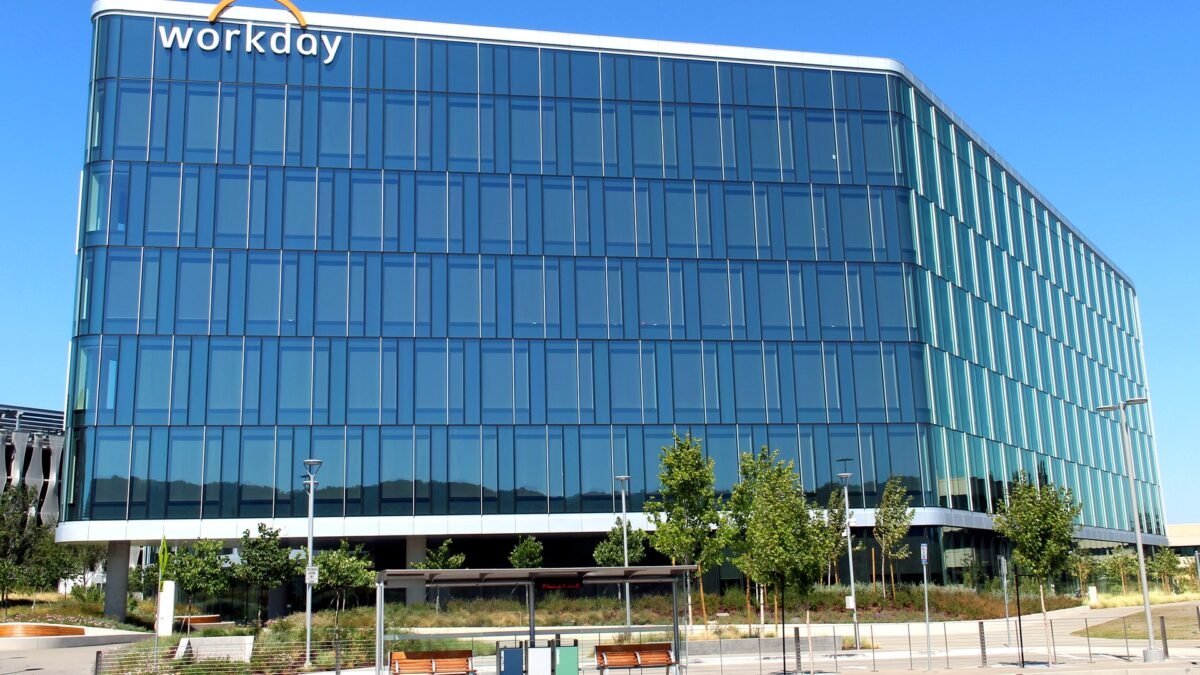
Workday, the cloud platform that handles payroll, timekeeping and human resources for more than 11,500 organisations around the world, suffered a major outage on Friday after a routine test of its disaster-recovery systems went wrong and connected its backup environment to its live production databases. Staff at affected employers were unable to log in, clock in or out, check their pay, request time off or finish benefits enrolment for the rest of Friday and into Saturday morning, until the company said service had been restored by 11 a.m. Eastern time on Saturday.
The failure was, by the company’s own account, self-inflicted. Workday told customers that while it was validating the weekly maintenance window for its disaster-recovery tenants, services inside the disaster-recovery site “unexpectedly connected to Production databases”, leaving data in what the company described as an “inconsistent state”. The platform then placed all of its WD1 production tenants into maintenance while its engineers worked on a fix. A spokesperson told ABC10 that the disruption affected two data centres, was not related to a cybersecurity incident, and that service “was restored by 11 a.m. EST Saturday”.
The outage was the third major technology failure in a single week in the United States. It followed a global Microsoft 365 outage on Wednesday that left millions unable to use Outlook and Teams, and a nationwide Federal Aviation Administration ground stop on Friday that halted flights across the country. Workday’s failure was different in kind from both: it did not hit email or air travel, but the system that records whether people worked, what they are owed, and which health benefits they have chosen. For the workers locked out of it, that made Friday night feel less like an IT problem and more like a pay problem.
What happened on Friday evening
The first public signs of trouble appeared shortly after 5 p.m. Eastern time on Friday, 13 November, when Downdetector, the website that tracks digital outages, recorded a spike of nearly 3,000 reports from people who could not reach Workday, according to Fox Business. Users who tried to log in were met with a message that read: “Workday is currently unavailable. We are experiencing a service interruption. Your service will be restored as quickly as possible.”
Emerson College in Boston told its community that Workday had taken the system offline at about 5:15 p.m. Eastern for unplanned maintenance affecting multiple customers, and extended its open-enrolment deadline to Monday, 16 November, according to UC Today. Washington University was still listing a major outage at 04:44 GMT on Saturday, saying Workday was not expected back until after an overnight maintenance window. Saint Joseph’s University said at 02:53 GMT that a potential solution was still being tested.
A Workday spokesperson told LiveNOW from FOX: “Some of our customers are experiencing a service disruption and we’re working urgently to investigate and resolve the issue. We sincerely apologize for the challenges this is causing impacted customers.” The company did not, at that stage, give an estimate for when services would return, according to Fox Business.
The recovery ran on reindexing rather than a simple switch back on. In a customer message posted by Florida Atlantic University’s IT team, Workday said reindexing and tenant release were expected to complete for the majority of customers by 11 a.m. Eastern on Saturday. Florida Atlantic’s IT team then posted that Workday production was available again. Washington University said at 17:24 GMT on Saturday that “the Workday unplanned outage has been resolved”, while noting that updates between systems and within Workday “may be temporarily delayed”. The University of Chicago marked the incident resolved at 19:35 GMT, saying Workday “is operating normally”, according to UC Today.
The cause: a safety test that reached the wrong database
The explanation Workday gave its customers was unusually specific for a first notice, and it is the detail that makes this outage different from an ordinary server failure. The company said the trouble began while it was validating the weekly maintenance window for disaster-recovery tenants. In the notice quoted by Washington University IT at 01:05 GMT on Saturday, Workday wrote: “While validating the weekly Maintenance Window for Disaster Recovery tenants, we have identified that tenanted services within the DR Site unexpectedly connected to Production databases. As a result, this has left data in an inconsistent state that can cause errors accessing tenants or jobs/integrations/tasks to fail with missing transaction error messages.”
The San Francisco Chronicle reported that the disruption occurred after the company discovered a problem while testing its backup systems, according to Fox Business. Workday placed all WD1 production tenants into maintenance immediately and promised updates every 30 minutes while its teams investigated the best recovery path.
A disaster-recovery test exists for one reason: to prove that a failure in one place cannot spread to another. The test is supposed to demonstrate that if the production systems fail, the backup environment can take over without touching live data. In this case, the test did the opposite. The backup environment reached into the production databases, and the data it left behind no longer lined up. Records that should have matched did not, and jobs, integrations and tasks began failing with missing-transaction errors. The safety drill itself became the incident.
Workday has not yet said how that path existed, or whether any records were lost rather than simply left mismatched, and it has not published a full root-cause report. That silence matters, because the difference between corrupted data and merely inconsistent data is the difference between a long outage and a long clean-up. Reindexing, the process Workday used to bring tenants back, rebuilds the indexes that let a database find its records quickly. It is consistent with a problem of records that were out of order rather than records that were destroyed, but the company has not confirmed that interpretation, and no outside source has been able to verify it independently.
Nothing so far points to a cyberattack. Workday’s own notice traces the failure to its own backup testing from the first message, the San Francisco Chronicle’s reporting supports that account, and a Workday spokesperson told ABC10 that the disruption was not related to a cybersecurity incident. No source has reported a hack, and nothing official says pay data was lost. The distinction matters because a cyberattack and a self-inflicted failure lead to very different questions: one is about who got in, the other is about how the system’s own safeguards failed.
Who was affected, and who was not
Workday serves more than 11,500 organisations worldwide, and its public client list includes some of the largest employers in the United States. Fox Business reported that retail giants Walmart and Target were among the large retailers potentially affected, and that the platform’s clientele also includes Netflix, Salesforce, PNC Bank, Chipotle, Southwest Airlines, General Electric and Nasdaq. It also serves government agencies, including the cities of Philadelphia, Dallas, Seattle, Charlotte and Denver, as well as federal agencies such as the U.S. Department of Energy and NASA’s Jet Propulsion Laboratory.
That list, however, is not a list of victims. Workday has only ever said that “some of our customers” were affected, and it has never published a count of how many. Viral posts during the outage treated the 11,500 figure as the number affected, but that is the company’s total customer count, not a confirmed impact total, as UC Today pointed out. Workday itself has not confirmed any individual employer by name, and an anonymous source told one outlet that Walmart, Target, Chipotle and Skechers were among the companies hit, but Workday has not confirmed those names either.
What is certain is what stopped working for the people who were locked out. Staff at affected organisations could not log in, clock in or out, view pay information, request time off, apply for benefits or finish benefits enrolment. For hourly workers, the inability to clock in is not an inconvenience but a labour-compliance problem: if the system cannot record that someone worked, the employer has to reconstruct the record another way. For salaried staff in the middle of open enrolment, the timing was worse still. Open enrolment is the short annual window in which American workers choose their health insurance and other benefits for the coming year, and missing it can mean a year on the wrong plan. Emerson College’s decision to extend its open-enrolment deadline to Monday, 16 November, shows how seriously at least one employer took that risk.
The outage also exposed a quieter dependency. Universities were among the first to report the problem in public, because their IT teams post status updates for staff and students. Washington University, Florida Atlantic University, the University of Chicago, Northeastern University, Emerson College and Saint Joseph’s University all published notices during the incident. Their openness is one reason the public record of this outage is as detailed as it is. Workday’s own public communication was thinner: its X account had not posted about the incident as of Saturday morning, according to UC Today, and its maintenance page simply said the platform was unavailable.
A week of failures
The Workday outage did not happen in isolation. It was the third major technology failure in the United States in three days, and each one hit a different piece of infrastructure that people assume will simply work.
On Wednesday, 12 November, a global Microsoft 365 outage left millions unable to use Outlook and Teams. Microsoft later apologised and blamed a technical issue, saying the problem began with a capacity-loss spiral in which servers failing automated health checks were pulled from service, overloading the fleet that remained. Service was restored early on Saturday.
On Friday, 13 November, the Federal Aviation Administration ordered a nationwide ground stop that halted flights across the United States for hours, disrupting thousands of flights and Saturday college football broadcasts. Transportation Secretary Sean Duffy attributed the outage to a contractor maintenance error, and the contractor at the centre of the stop, L3Harris, said on Saturday that it was assisting federal investigators.
Workday’s failure began on Friday evening, hours after the ground stop. Three failures, three different causes: a capacity spiral, a contractor error, and a backup test that reached production. There is no evidence that the three are connected, and no source has suggested a common cause. What connects them is the pattern they reveal. The systems that modern work depends on — email, air travel, payroll — are concentrated in a small number of providers, and when one of them fails, the damage spreads far beyond the company’s own customers.
Fox Business framed the Workday outage in exactly those terms, describing it as the second major business software outage in recent days after Microsoft’s shutdown. The comparison is fair, but it understates the difference. When email goes down, people cannot communicate. When a payroll platform goes down, people cannot prove they worked, cannot see what they are owed, and cannot choose their health cover. The first is a communications failure. The second is a failure of the record itself.
Analysis: Why It Matters
The test meant to prove resilience caused the failure
There is a particular irony in this outage that deserves to be stated plainly. Disaster-recovery testing is the most basic discipline in enterprise computing. A company runs a test to prove that its backup systems are isolated from production, so that a failure in one place cannot corrupt the other. Workday’s test did the opposite: it demonstrated that the isolation was not there. The backup environment connected to the production databases, and the production data came out inconsistent.
That is not a story about a server breaking. Servers break every day, and well-run systems absorb it. It is a story about a safeguard failing in the exact scenario it was designed to prevent. The question Workday will have to answer, in its post-incident report, is not why a test ran on a Friday evening, but why a test environment had any path at all into production data. A disaster-recovery site should be able to fail in every conceivable way without touching a single live record. If it can reach production, then the recovery system is not a safety net. It is a second way for things to go wrong.
This is the question that should worry every customer, not just Workday’s. Every large cloud provider runs disaster-recovery tests. Every one of them assumes the test environment is sealed off. The Workday incident shows that the assumption can be wrong, and that when it is wrong, the failure is discovered not in a drill report but in a live outage, by the customers themselves.
HR software is now critical infrastructure
We treat email and meetings as the systems a business cannot afford to lose, and this week proved the point twice over. But payroll and timekeeping belong in the same category, and the Workday outage is the clearest demonstration of why. If people cannot clock in, an employer has a labour-compliance problem before breakfast. If they cannot check their pay, they cannot tell whether they have been paid correctly. If they cannot finish benefits enrolment, they can lose a year’s health cover through no fault of their own.
The difference between email and payroll is the difference between losing a conversation and losing a record. An email can be resent. A time record that was never written has to be reconstructed from memory, from rotas, from swipe cards, from whatever paper trail survives. That reconstruction is slow, error-prone, and it lands on the lowest-paid people in an organisation first: the hourly workers whose pay depends on the clock.
Governments have begun to treat cloud infrastructure as critical, but the conversation usually stops at communications and finance. Workday’s outage argues for a wider definition. When a single platform holds the employment records of more than 11,500 organisations, including government agencies and a NASA laboratory, its failure is not a private commercial matter. It is a workforce event. The regulatory question — whether platforms of this scale should face the same resilience and reporting obligations as a bank or a telecoms operator — is no longer theoretical. It is the question this week keeps asking.
“Some customers” is not an answer
Workday’s communication during the outage was careful, prompt in its customer notices, and strikingly vague in public. The company said “some of our customers” were affected, and it has not published a number since. It said service was restored by 11 a.m. Eastern on Saturday, but some customers came back later than that, and at least one university had still not moved on from “limited recovery” by Saturday evening.
The gap between the company’s statement and the customers’ experience is the gap that matters. A spokesperson’s assurance that service was restored is not the same as every customer being back, and a customer count of “some” is not a measure of impact. The employers who were affected needed to know whether their data was intact, whether any transactions were lost, and whether the records their staff could not reach on Friday were the same records they would find on Monday. Workday has not answered those questions in public, and it has not published a post-incident report.
There is a legitimate reason for caution: a company should not guess at numbers before it has them. But there is also a legitimate expectation. When a platform holds the payroll records of millions of workers, “some” is not a sufficient disclosure, and silence on social media while universities publish status updates for their staff is not a sufficient communications strategy. Workday’s X account had not posted about the incident as of Saturday morning. For a company whose product is communication between employers and employees, that silence was noticed.
The week’s pattern is the real story
Three failures in three days, three different causes, no common thread — and yet the pattern is the story. Microsoft’s capacity spiral, the FAA’s contractor error, and Workday’s backup test are not the same failure, but they are the same kind of failure: a concentrated system, run by a small number of providers, failing in a way that its customers cannot work around.
When email goes down, a company can pick up the phone. When flights stop, travellers can wait. When the payroll platform goes down, there is no phone call that records a shift. The concentration is the point. More than 11,500 organisations use Workday. Millions of workers depend on Microsoft 365. The entire American aviation system depends on the FAA’s infrastructure. In each case, the customer has no realistic alternative on the day the system fails. They cannot switch payroll providers on a Friday evening. They cannot reroute a flight through a different air traffic system.
This is why the week’s events should be read together rather than as three separate incidents. Each one, taken alone, can be explained away: a capacity problem, a contractor mistake, a test that went wrong. Taken together, they describe a system in which the failure of a single provider becomes a national event, and in which the providers themselves are the only ones who can explain what went wrong. The question is not whether any one of these systems will fail again. It is whether the customers who depend on them have any way of operating when they do.
Open enrolment made the timing worse
The Workday outage landed in the middle of open enrolment season, the short annual window in which American workers choose health insurance and other benefits for the year ahead. That timing turned a technical failure into a deadline problem. Emerson College extended its open-enrolment deadline to Monday, 16 November, because its staff could not finish their elections on Friday. Other employers will have faced the same choice, and not all of them will have announced it in public.
Open enrolment is unforgiving in a way that most corporate deadlines are not. Miss it, and an employee can spend a year on the wrong health plan, paying the wrong premium, with the wrong cover. The deadline is set by the employer and the insurer, not by the software vendor, which means the vendor’s outage becomes the employer’s problem and the employee’s risk. That is the chain of consequences that makes this outage different from a failure in, say, a customer-relationship system. The people who bear the cost are not the people who chose the software.
It is also worth noting what did not happen. There is no evidence that anyone’s pay was delayed, and no source has reported that salaries failed to go out. The available reporting does not establish that payroll operations failed, only that employees could not reach their accounts or complete human-resources tasks. That distinction should be kept. An outage that blocks access is serious enough without being inflated into a claim that people were not paid. The honest account is bad enough: millions of workers could not see their own employment records for the best part of a day, in the middle of the week when they choose their health cover.
What to Watch Next
- The post-incident report: Workday has not published a full root-cause report. When it does, the key question is how a disaster-recovery test environment had a path into production databases, and what has changed to close it.
- Whether any data was lost: Workday has said data was left in an “inconsistent state” but has not said whether any records were lost rather than merely mismatched. The clean-up, and any restatement of records, will show whether the damage was limited to ordering or went deeper.
- How many customers were affected: Workday has only said “some” customers were hit. A real number, when the company is ready to give one, will show whether this was a narrow failure in one part of the platform or a broad one.
- Service credits and contract questions: Affected employers will ask what their service-level agreements actually credit, when they get a post-incident report, and whether their contracts give them any fallback when the platform goes dark.
- Regulatory attention: A payroll platform serving more than 11,500 organisations, including government agencies, will attract questions about resilience and reporting obligations. Watch for any response from regulators or lawmakers.
- The next failure in the sequence: Microsoft on Wednesday, the FAA on Friday, Workday on Friday evening. Whether the week produces a fourth incident, and what it hits, will show whether this was a coincidence or a season.
- Workday’s own communication: The company’s X account had not posted about the incident as of Saturday morning. Whether it publishes a public account of the outage, and how detailed it is, will show how seriously it takes the trust question.
Sources
- Fox Business — Software company with thousands of Fortune 500 clients joins Microsoft in experiencing major outage
- UC Today — Workday’s Backup Test Took Payroll and Timekeeping Offline
- San Francisco Chronicle — Workday outage (as cited by Fox Business)
- LiveNOW from FOX — Workday outage means employees across thousands of businesses can’t access accounts
- TML News — Workday Backup Test Knocks Payroll Offline for Hours
- The Evergreen Edit — Workday Outage: How to Protect Your Pay and Open Enrollment

About the Author — Abdul Mannan
Related Articles

SpaceX Catches Starship From Orbit for the First Time as Mechazilla Grabs Ship 42 After 22 Hours in Space
SpaceX has caught a Starship returning from orbit for the first time, as Ship 42 settled into the…

UN Climate Chief Tells COP31 to ‘Move Swiftly’ as Fossil Fuel Divide Threatens a Deal in Antalya
UN climate chief Simon Stiell warned negotiators in Antalya to move swiftly to the hardest issues and avoid…
SpaceX Starship Reaches Orbit on Its Boldest Test Yet as Booster Explodes Over the Gulf
SpaceX's Starship reached orbit on its boldest test yet on Friday, but the Super Heavy booster exploded over…