
Nvidia Board Rules Out Jensen Huang’s Return as CEO After Record $115.8 Billion Quarter

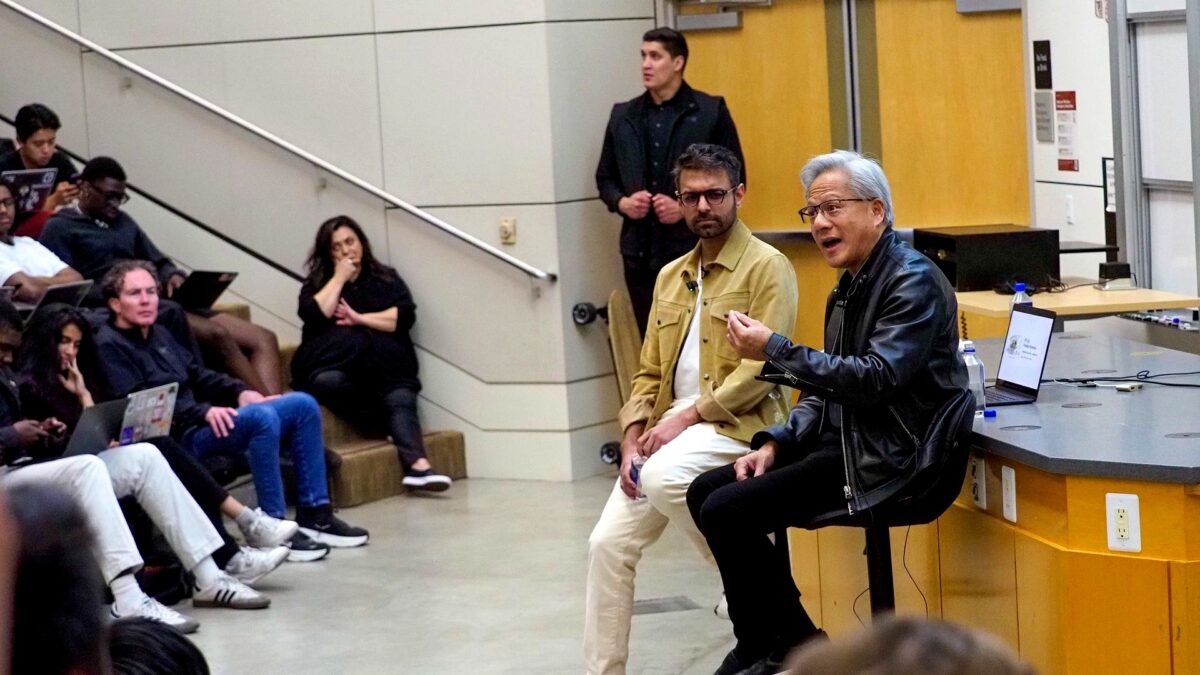
Nvidia’s board has formally ruled out bringing back Jensen Huang as chief executive, closing the door on the founder’s return less than a week after he resigned in a scandal that has shaken the world’s most valuable chipmaker, even as the company reported record quarterly revenue of $115.8 billion in its first results since his departure.
Board chair Harvey Jones told investors at the start of Nvidia’s third-quarter earnings call on Tuesday evening that the board had unanimously accepted Huang’s resignation and “does not intend to reinstate Jensen as CEO”, according to CNN. The announcement came hours after Huang said in a statement that he would be “honoured” to return if the board decided his comeback was in the best interests of shareholders, employees, the company and America.
Jones said the board had “every confidence” in Colette Kress, Nvidia’s chief financial officer of 13 years, to lead the company as interim chief executive while it searches for a permanent successor, CNN reported. He added that the board would take no further questions about Huang’s resignation or its investigation, but would “communicate further when appropriate”.
The decision landed alongside a set of results that beat Wall Street’s expectations on every major measure. Revenue for the quarter ended 25 October rose 103 per cent from a year earlier to $115.8 billion, while net income reached $65.3 billion, up 105 per cent. Adjusted earnings per share came in at $2.68, against the $2.47 analysts had expected, and the data centre division — the engine of Nvidia’s artificial intelligence business — posted sales of $107.6 billion, up 110 per cent year on year.
Nvidia also raised its sights for the months ahead. It forecast fourth-quarter revenue of about $130 billion, plus or minus 3 per cent, above the $125.3 billion analysts had pencilled in, and Kress told investors that revenue growth for the fiscal year ending in January 2028 was now expected at 75 per cent, up from the 70 per cent guided previously. Shares, which had fallen for four consecutive days since Huang’s resignation, rose in after-hours trading after the release, with CNN reporting a gain of roughly 5 per cent as of 6:10 p.m. ET on Tuesday.
A return campaign that reached the White House
The board’s answer ends — for now — one of the most intense corporate pressure campaigns in recent memory. Huang stepped down last Thursday after the board disclosed personal behaviour it said was inconsistent with the company’s code of conduct, standards and cultural norms, following reports of multiple extramarital affairs, including one with a former executive of Singapore-based Megaspeed, Alice Huang, whom United States officials suspect may be a potential Chinese intelligence asset, and at least one direct subordinate at Nvidia.
Within days, a “Stand With Jensen” campaign had gathered more than 180,200 signatures on a petition demanding his return, according to Reuters. The campaign’s website listed SpaceX and Tesla chief executive Elon Musk, Replit chief executive Amjad Masad and Epic Games chief executive Tim Sweeney among its signatories, and said more than 8,800 signatories identified themselves as current Nvidia employees and more than 94,000 as shareholders, although it cautioned that those affiliations were self-reported and had not been independently verified.
President Donald Trump added his voice on Monday, telling reporters as he left the White House that he “would not mind” seeing Huang reinstated. “I think he learnt a big lesson,” Mr Trump said, according to The Times. The Washington Post reported on Monday, citing a review of his financial disclosures, that Mr Trump’s reported trades this year suggested he held between $13 million and $62 million in Nvidia stock as of the end of August.
The groundswell was visible far beyond Washington. Taiwan’s tallest skyscraper, Taipei 101, was illuminated on Monday with messages including “Taiwan Loves Jensen”, Reuters reported. Huang, who was born in the Taiwanese city of Tainan before moving to the United States as a child, has become a celebrity-like figure on the island, where admiration for him has been dubbed “Jensanity”. Jimmy Yang, a 42-year-old marketing worker in Taiwan, told Reuters that Huang’s departure was a loss for the island and drew a parallel with Apple co-founder Steve Jobs, who returned to the company after being forced out. “His private life is his own choice,” Mr Yang said. “But whether it’s the night market economy he’s driven or his help for the tech industry, it has been massive.”
Some prominent shareholders also urged patience. Gavin Baker of Atreides Management and Brad Gerstner, chief executive of Altimeter Capital Management, urged Nvidia not to rush to replace Huang before all the facts were known, Reuters reported.
But the board was unmoved. “The Nvidia board is not considering bringing Jensen back,” one person familiar with the matter told Reuters before Tuesday’s call. Three people told Reuters the same, despite the campaign and the presidential backing. The New York Post, citing sources, reported on Monday that the board had tapped the law firm Wachtell Lipton to investigate Huang and had held no talks about bringing him back. “There is just no realistic path [for a comeback],” one person told the newspaper.
Not everyone in Washington wanted him back. Treasury Secretary Scott Bessent has called for Nvidia to appoint an outsider as its next chief executive, saying the company needs a “dramatic shake-up” following Huang’s departure. Richard Windsor, an independent technology researcher, told Reuters he expected large institutional investors to oppose a return while investigations remained unresolved, because of the legal exposure and uncertainty it could create. “They’re very risk-averse,” Mr Windsor said — although he added that his own view was that shareholders would ultimately be better served by Huang’s return because of the relationships he has built with customers and suppliers, particularly TSMC, which manufactures Nvidia’s most advanced chips.
The investigation and the December testimony
The questions hanging over Huang go beyond his private life. United States intelligence agencies are still trying to determine the extent of Alice Huang’s relationship with China’s Ministry of State Security and what information she may have passed to Beijing, according to two sources familiar with the matter cited by Reuters. Evidence gathered so far indicates she was likely an intelligence asset — someone who shared information — rather than a fully trained spy, the sources said.
Some American officials believe chips that Megaspeed purchased may have been diverted to Chinese entities, potentially skirting United States export restrictions. CNN reported that some sources say that whether or not Alice Huang was recruited by China’s intelligence service, she posed a counterintelligence risk because Chinese national security law requires its citizens to assist in intelligence-gathering efforts if asked.
Huang is set to testify on Capitol Hill on 1 December, CNN reported, where he is expected to face questions about his relationship with Alice Huang and Nvidia’s sales of chips to Megaspeed, which some United States officials believed should have been labelled a national security risk. Representative John Moolenaar, who chairs the House Select Committee on China, has said Huang had already agreed to appear, according to the New York Post.
The board moved on Tuesday to show it is tightening its own controls. It said it had established a new national security and export control oversight committee to ensure the company abides by global trade regulations, and that it will strengthen its internal national security and compliance initiatives, CNN reported.
The search for a permanent successor is already under way. The board has hired the search firm Heidrick and Struggles to lead the hunt, USA Today reported, and the Financial Times reported that the board has approached Arm chief executive Rene Haas as a potential successor. On Tuesday’s call, Ian Buck, Nvidia’s vice president and general manager of hyperscale and high-performance computing, joined Kress to take analysts’ questions — a signal, CNN noted, of his importance as a senior leader at the company.
Record numbers in the shadow of a crisis
For all the turmoil at the top, the numbers Nvidia reported on Tuesday were extraordinary. The $115.8 billion in quarterly revenue was 103 per cent higher than a year earlier and 20 per cent higher than the previous quarter, and it beat the roughly $109 billion that analysts had expected. Data centre revenue of $107.6 billion accounted for about 93 per cent of total sales. Edge computing, which covers chips for personal computers, robotics and cars, added $8.2 billion, up 42 per cent from a year earlier.
Gross margin was 74.8 per cent on a GAAP basis and 74.9 per cent on an adjusted basis. The company returned $28.1 billion to shareholders during the quarter through share buybacks and dividends, and said about $227.3 billion remained available under its repurchase authorisation after the board approved a $150 billion increase in September. It declared a quarterly dividend of $0.25 a share, payable on 23 December to shareholders of record on 2 December.
Kress told investors that demand for Nvidia’s next-generation Vera Rubin artificial intelligence computing technology was “off to an explosive start”, with the technology already in use by customers such as Google, Microsoft and Oracle, according to CNN. Analysts with the research firm IDC wrote in a report last week that near-term demand and supply for AI infrastructure was largely locked in, so the harder questions about the industry’s future sat further out.
The outlook was the other focus of the evening. The fourth-quarter forecast of $130 billion, plus or minus 3 per cent, includes an additional week in the quarter and assumes no data centre computing revenue from China. Gross margin is expected to fall to between 71.0 and 72.0 per cent in the current quarter, down from 74.9 per cent in the quarter just reported — a step-down that analysts will watch closely.
The report also comes after a midterm election in the United States in which a Democratic wave ushered in a slate of newly elected leaders, many of whom campaigned on slowing or restricting data centre development, which could dent Nvidia’s business, CNN reported. And the Commerce Department on Monday tightened export restrictions designed to prevent China from accessing sensitive, AI-powering computer chips through data centres in third-party countries.
China remains a complicated piece of the picture. Shipments of Nvidia’s H200 chips to China made up less than 1 per cent of sales in its core data centre business in the previous quarter, CNN reported. The company earned $2.4 billion in sales of licensed chips to China during the third quarter, but it has now ceased such shipments, Kress said on Tuesday’s call. Dan Ives, a partner at Yorkville Ives and Company, estimated that China and Hong Kong “could comprise roughly 15 per cent of revenues when considering potential loopholes throughout Asia”, according to CNN.
The scale of the damage to Nvidia’s market value since the scandal broke is stark. Shares were coming off their worst week in 19 months heading into Tuesday’s report. The stock is down 16.7 per cent since Huang admitted to an extramarital affair and the board launched its investigation into whether he was the target of a foreign intelligence effort, erasing $751 billion in market value, according to CNN. Since the shares hit their record high on 6 October, they have dropped 35 per cent, erasing roughly $2 trillion in market value.
Ahead of the report, Mark Malek, chief investment officer at Siebert Financial, wrote that it would be the “most important in the company’s history”. Thomas Monteiro, a senior analyst at Investing.com, said after the release that “the massive results, strong guidance and reassurance that the strategy Huang put in place remains firmly on track show that an orderly CEO transition does not necessarily have to dilute the company’s value”. He added that Nvidia’s growth train “can continue with or without Huang, provided the company makes the right call on leadership”.
Thirty-three years, ended in a week
Huang co-founded Nvidia 33 years ago and led it for more than three decades, building it from a graphics-chip start-up into the world’s most valuable company and the central supplier of the artificial intelligence boom. He was the industry’s most visible cheerleader and dealmaker, the executive whose earnings calls moved entire markets and whose keynote speeches drew crowds normally reserved for rock stars.
His exit has therefore been about far more than one company. Nvidia’s technology and funding sit at the heart of much of the AI boom, and its earnings have long been viewed as a bellwether for the wider industry. That is especially true now, with questions swirling about the industry’s future without its biggest champion at the helm — and with concerns about whether the AI trade is a bubble about to burst, as valuations and infrastructure spending outpace returns.
Gary Gensler, the former chair of the United States Securities and Exchange Commission, told CNN this week that he believes the AI bubble will likely burst and cause a recession before the 2028 presidential election. Analysts also note that a handful of the biggest AI and cloud companies are expected to spend more than $1 trillion on capital expenditure next year alone, much of it flowing to Nvidia — a concentration of spending that makes the company’s leadership question a market-wide one.
Kress ended Tuesday’s call with a rallying message to investors, customers and employees. “We’ve got this,” she said.
Analysis: Why It Matters
The board chose certainty over charisma
Nvidia’s board faced a choice between two kinds of risk, and on Tuesday it picked the one it could control. Bringing Huang back before the investigations are complete would have pleased a petition signed by more than 180,000 people, the world’s richest man and the President of the United States — but it would have left the company exposed to every new revelation the Wachtell Lipton inquiry or the congressional testimony might produce. A board that reinstates a chief executive and then has to remove him again destroys its own credibility twice. By ruling out a return now, in public, at the start of the earnings call, the board has drawn a line it will find very hard to cross later. That finality is the point: investors hate uncertainty more than they love any single executive, and the board has traded the drama of a comeback for the dull virtue of predictability.
The numbers proved the machine runs without its founder
The most important sentence of the evening may not have been about Huang at all. Revenue up 103 per cent, profits up 105 per cent, guidance raised, and a full-year growth forecast lifted from 70 to 75 per cent — all of it delivered by a company whose founder had resigned five days earlier. That is the strongest possible evidence for the board’s case that Nvidia is a system, not a one-man show. The Vera Rubin platform, the data centre order book, the relationships with cloud customers: none of them stopped when Huang left. But the numbers also carry a warning. They describe a quarter in which Huang was still chief executive for almost its entirety — Kress has held the interim role for only the past four business days. The real test of the post-Huang Nvidia is not the quarter just reported, but the quarters to come, when the deals, the partnerships and the strategic bets must be made by someone else.
The succession is now the whole story
With the return question settled, every eye turns to who comes next, and the board’s own moves suggest it knows how high the stakes are. Hiring Heidrick and Struggles, approaching Arm’s Rene Haas, elevating Ian Buck onto the earnings call, and putting Kress — a 13-year veteran of the finance function — in the interim chair are all signals of a board trying to show that it has a bench. But the history of founder-led companies is littered with orderly successions that turned disorderly, and with outsiders who could not hold the coalition of engineers, suppliers and customers that a founder held together by force of personality. The tension Bessent named — insider continuity versus a “dramatic shake-up” — is now the central argument inside the boardroom. An insider keeps the machine running; an outsider can credibly claim to have cleaned house. The board may not be able to have both.
National security is now a board-level job
The creation of a dedicated national security and export control oversight committee is the quietest and possibly the most consequential announcement of the evening. Nvidia is no longer merely a chip company that happens to matter to Washington; it is a company whose products, customers and supply chains are now treated as matters of national security. The Megaspeed questions, the export-control tightening announced by the Commerce Department on Monday, and Huang’s 1 December testimony all point in the same direction: the next chief executive will need to be as fluent in export controls and congressional hearings as in chip architecture. That changes the job description — and it may change the candidate pool, favouring leaders with Washington experience over pure technologists.
The market’s verdict is relief, not celebration
Shares rose after hours, but the context matters more than the move. A stock down 35 per cent from its record high, with roughly $2 trillion of market value erased, can bounce on any piece of good news. What Tuesday’s after-hours rise really shows is that investors feared something worse: a guidance cut, a sign that demand was cracking, or a board that looked paralysed. They got the opposite — a beat, a raise, and a decision. Relief, however, is not the same as confidence. The margin guidance for the current quarter steps down to 71–72 per cent, the China business is effectively closed, and the leadership question will hang over the stock until a permanent chief executive is named. The market has decided Nvidia can survive without Jensen Huang. It has not yet decided what Nvidia is worth without him.
What to Watch Next
- The permanent successor: whether the board picks an insider such as Colette Kress or Ian Buck, an outsider such as Arm’s Rene Haas, or someone else entirely — and how quickly it decides.
- Huang’s testimony on 1 December: what he tells Congress about Alice Huang and the Megaspeed chip sales, and whether new facts emerge.
- The Wachtell Lipton investigation: what the board’s inquiry finds, and whether its conclusions are ever made public.
- The fourth quarter: whether Nvidia hits its $130 billion revenue forecast, and whether the guided margin step-down to 71–72 per cent proves temporary or structural.
- Vera Rubin demand: whether the “explosive start” Kress described turns into orders at the scale of the current data centre boom.
- China and export controls: how the tightened Commerce Department rules affect Nvidia’s business in Asia, and whether any further restrictions follow the December testimony.
- The shareholder campaign: whether the “Stand With Jensen” movement accepts the board’s decision, or whether large investors press for a different outcome at the next shareholder meeting.
Sources
- CNN — “Nvidia rules out Jensen Huang’s return as CEO, tells investors ‘we’ve got this'”
- Reuters via The Hindu BusinessLine — “Nvidia board rules out Jensen Huang’s return as CEO”
- TechCrunch — “Nvidia says it doesn’t plan to reappoint Jensen Huang as CEO”
- USA Today — “Nvidia won’t reinstate Jensen Huang, board chair says”
- CoinDesk — “Nvidia tops estimates, issues strong guidance; shares rise”
- Engadget — “NVIDIA’s board chair says the company is not considering reinstating Jensen Huang as CEO”

About the Author — Abdul Mannan
Related Articles
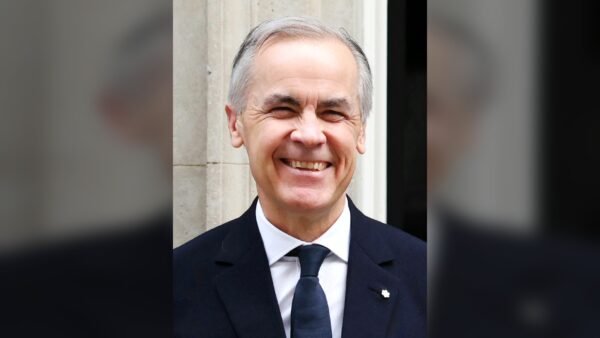
Carney and Xi Widen Canada-China Trade Deal as Ottawa Cuts Its Reliance on the United States
Canada and China have agreed to cut tariffs on a further C$400 million of Canadian exports and extend…
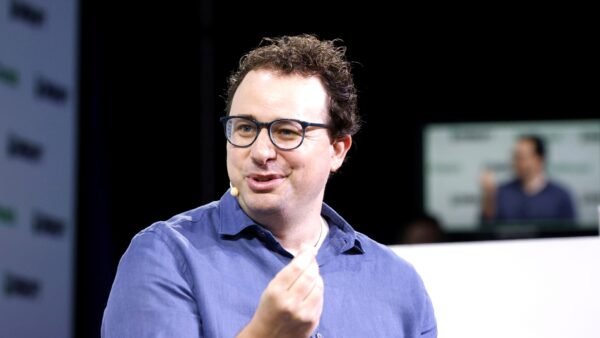
Anthropic IPO Draws Seven Times More Orders Than Shares on Offer as Bankers Weigh Pricing Above $78
Investors have placed orders for close to seven times the shares Anthropic is selling, according to Bloomberg, as…
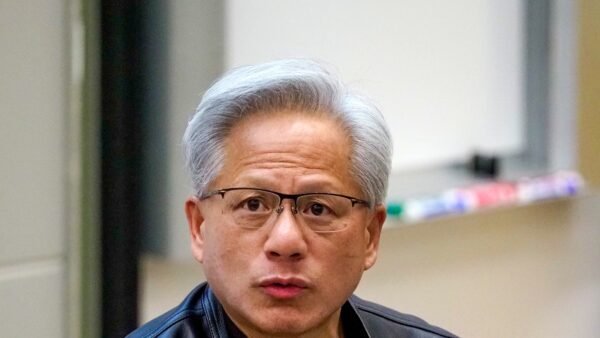
Nvidia Board Rules Out Huang Return as Shares Hit 52-Week Low Ahead of Earnings
Nvidia's board has ruled out bringing Jensen Huang back as chief executive, sending the shares to a new…