
Zardari Meets Shehbaz in Lahore as Pakistan’s 12-Province Plan and Referendum Idea Divide the Coalition

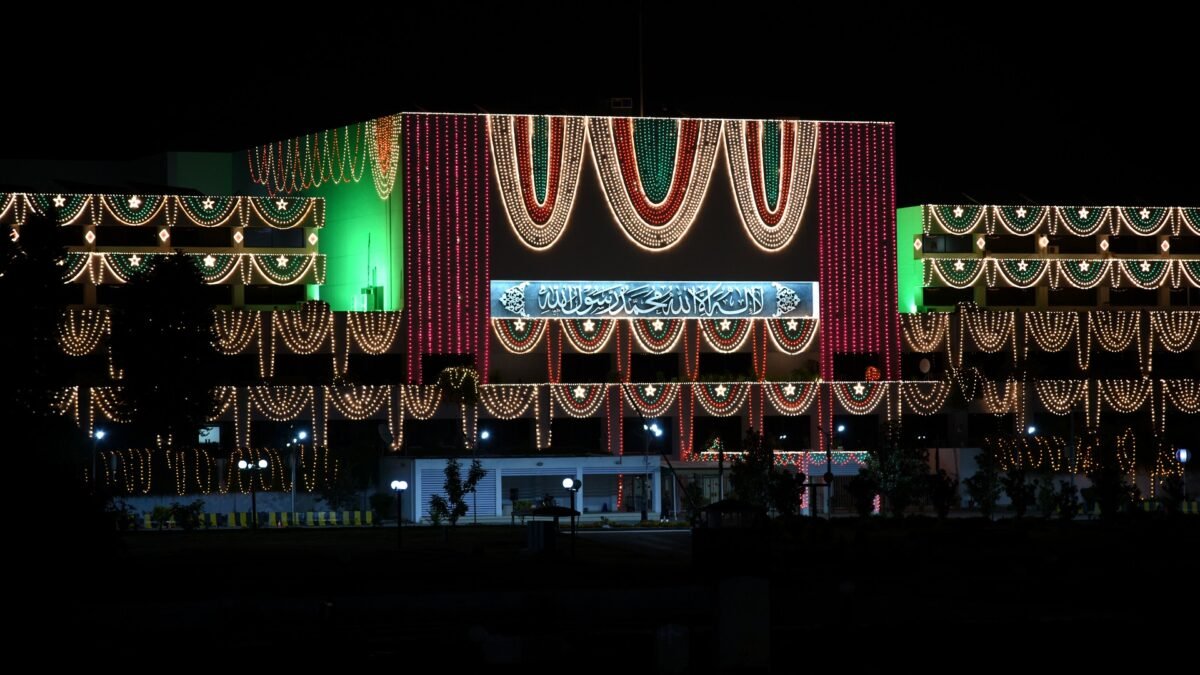
President Asif Ali Zardari met Prime Minister Shehbaz Sharif in Lahore on Saturday, as a proposal to redraw Pakistan’s map from four provinces into 12 moved to the centre of the country’s politics, dividing the ruling coalition and raising questions the Constitution may not let a referendum answer.
The meeting, held at the prime minister’s Model Town residence, was described by the Prime Minister’s Office as a detailed discussion of the country’s political, economic and security situation, along with cooperation between the coalition partners. According to the official statement, Shehbaz Sharif also briefed the president on his recent visit to Turkiye and his participation in the COP31 climate summit in Antalya.
What the statement did not say was whether the two leaders discussed new provinces. That silence matters, because the idea has dominated Pakistan’s political conversation for a week: a reported plan to split Punjab into four provinces, Khyber Pakhtunkhwa and Balochistan into three each, and Sindh into two, possibly put to a nationwide referendum before a 28th Constitutional Amendment. No draft bill has been made public, no date has been set for a vote, and the two main coalition partners are publicly pulling in opposite directions.
The debate is no longer abstract. Interior Minister Mohsin Naqvi has publicly proposed a referendum on the question. The Presidency has denied that provinces were discussed when Naqvi met Zardari in Nawabshah. The Pakistan Peoples Party, which governs Sindh, has made clear it will not accept the division of its province. And the constitutional route to creating a single new province — let alone eight — runs through two-thirds majorities in both houses of Parliament and in every provincial assembly affected.
The Lahore meeting
Zardari arrived in Lahore from Nawabshah a day before the meeting, according to reports of the visit, and was received at the prime minister’s residence at 95-H, Model Town. He was accompanied by former prime minister Raja Pervaiz Ashraf and Senator Saleem Mandviwalla. On the government’s side, those present included National Assembly Speaker Sardar Ayaz Sadiq, Law Minister Azam Nazeer Tarar, the prime minister’s adviser Rana Sanaullah and Punjab Assembly member Hamza Shehbaz.
The prime minister’s sister-in-law Faryal Talpur was also in Lahore, with reports saying the president’s family was in the city primarily for a family wedding. The official account of the meeting was brief: the two leaders discussed the overall political, economic and security situation, coalition cooperation, the continuity of consultations and progress on public welfare initiatives, and the prime minister briefed the president on his Turkiye visit and COP31 participation.
The timing of the meeting is what gave it weight. It came two days after Naqvi’s referendum proposal and a day after the Presidency issued a clarification about the interior minister’s own meeting with the president. The official statement offered no detail about any decisions taken, and it did not confirm or deny that new provinces were on the agenda. That gap between the public record and the political speculation is now part of the story itself.
The 12-province proposal
The proposal entered public debate on 8 November, when The News reported that a plan to increase Pakistan’s provinces from four to 12 was under consideration, possibly with a nationwide referendum ahead of a 28th Constitutional Amendment. Under the reported layout, Punjab would be divided into four provinces, Khyber Pakhtunkhwa and Balochistan into three each, and Sindh into two.
Sources familiar with the proposal told The News that the amendment could be considered in the first half of 2027, with preparatory steps potentially beginning in the first quarter. The same report stressed that the proposal remained under consideration and that no final decision had been taken on provincial boundaries, administrative structures or the constitutional process.
That timeline is not the only one in circulation. A prime minister’s adviser said on 1 November that the amendment was expected before the New Year. The two accounts cannot both be right about timing, and neither has been confirmed by a published draft. The stated aim of the restructuring, according to The News, is to improve governance, decentralise administrative authority and ensure a more equitable distribution of development resources.
Naqvi is not the first minister to float the idea. Planning Minister Ahsan Iqbal first raised the demand in June for as many as 15 provinces, and Defence Minister Khawaja Asif has backed the creation of new provinces, saying even 12 could be considered, provided they are established on administrative rather than ethnic or political grounds. Asif told Geo News in Sialkot that the proposal had been under discussion for the past two months, with opinions emerging from across the country.
The referendum idea
Naqvi put the referendum at the centre of the debate on Thursday 12 November, speaking to reporters at the National Cyber Crime Investigation Agency (NCCIA) office in Lahore. He said seeking public opinion was the “best solution” to the new provinces issue, stressing that the views of all political parties were necessary.
“If the people say new provinces should not be created, then I am with the people,” Naqvi said, according to The News. He added that everyone had their own stance on new provinces, and that the Pakistan Peoples Party had its own position as well. “If there is any other best solution besides this, we should go to the people for that too.”
According to a report of the same briefing, Naqvi also said: “Let us hold a referendum and give people what they want, because we all talk about democracy. The people are supreme.” He said surveys were being conducted and that people were demanding new provinces, and that if surveys indicated public support, a referendum could be organised to establish the public’s actual preferences. Dawn and Business Recorder both reported the proposal, with Dawn also reporting Naqvi’s acknowledgement that parties held different positions.
Naqvi first made the case for smaller administrative units at the Pakistan Economic Summit in July. His argument, as presented at the NCCIA briefing, is that the question should be settled by voters rather than by an extended political standoff, and that he would accept a public rejection of the idea. “If everyone agrees, everything will happen,” he said. “Nothing would be decided through disagreement.”
One survey is already being cited in the debate. The Meridian National Barometer 2026, a survey of 5,000 people, reported that 77 per cent support more provinces, up from 54 per cent in 2022 and 66 per cent in 2024. Those figures should be treated as reported: the survey’s method has not been independently reviewed, and no referendum has been agreed, scheduled or held. Neither Dawn nor Business Recorder reported any polling on public opinion in their accounts of Naqvi’s briefing.
The Nawabshah meeting and the Presidency’s denial
Hours after his referendum proposal, Naqvi travelled to Nawabshah for an unscheduled, nearly hour-long meeting with President Zardari on Thursday night. Media reports said the meeting covered the new provinces proposal, the possibility of a referendum and other political developments. Neither the Presidency nor the Interior Ministry issued an official statement about the meeting at the time.
On Friday, the Presidency issued a clarification. It said the meeting between the president and the interior minister had focused on national security and the regional situation, and it specifically denied that the issue of creating new provinces had been discussed. The Associated Press of Pakistan carried the Presidency’s account, and The Nation published the same account under an APP byline.
The denial has not settled the matter. It corrects the record on one meeting, but it says nothing about the proposal itself, the referendum idea or the Lahore meeting that followed a day later. The Presidency has not identified the media reports it was correcting, and it has not given a further account of what was discussed in Nawabshah. What is confirmed is narrower than the speculation: a meeting took place, the Presidency says it was about security and the region, and the government has not published any plan.
The constitutional wall
Whatever the politics, the Constitution sets a demanding route. Under Article 239(4), altering a province’s boundaries requires a constitutional amendment passed by two-thirds of the total membership of the National Assembly and the Senate, and by two-thirds of the total membership of the provincial assembly concerned. A referendum cannot substitute for that process.
Article 48(6) provides for a referendum on a matter of national importance, but only after the prime minister refers the question to a joint sitting of Parliament, which must approve it. The vote itself would be a Yes or No question to voters. As Sindh minister Nasir Hussain Shah said on Saturday, a referendum alone cannot create a province: a bill would still need a two-thirds majority in the provincial assembly concerned.
Minister for Parliamentary Affairs Tariq Fazal Chaudhry made the same point on 13 November, saying Parliament and the provincial assemblies could not be “bypassed”, and inviting the PTI to debate the issue. Legal experts cited in the debate estimate that as many as 12 articles of the Constitution would need amending, and some lawyers argue the Constitution contains no express provision for creating new provinces at all and would need an enabling clause first.
For Sindh, the practical consequence is stark. The PPP-led Sindh Assembly has already voted against division, which means the two-thirds majority required in that assembly does not currently exist. In practice, a referendum could build political pressure, but the decision still sits with Parliament and each affected provincial assembly.
Who stands where
The coalition’s fault line runs through Sindh. The PPP strongly opposes the creation of new provinces in Sindh, its stronghold, and has maintained that any decision must follow constitutional and parliamentary processes with political consensus. Addressing a ceremony in Larkana on Monday, PPP chairman Bilawal Bhutto-Zardari called for a “political reset” rather than new provinces amid the country’s prevailing economic hardships.
Sindh Chief Minister Murad Ali Shah has rejected the claim that the system has collapsed, called the proposal outdated, and warned that no bloodshed would be allowed over new provinces. His cabinet colleague Nasir Hussain Shah reinforced the constitutional argument on Saturday, saying a referendum alone could not create a province. The PPP’s position is not new: in September, the party reiterated its opposition to dividing Sindh, and the Sindh chief minister rejected the proposal outright.
The PML-N, the senior coalition partner, has yet to fully endorse or reject the measure, saying it will set out its view when the matter reaches Parliament. That caution is understandable. The party governs Punjab, the province that would be divided into four under the reported plan, and its own ministers are split between enthusiasm and silence. Khawaja Asif has backed the idea; the party as a whole has not.
The PTI, the main opposition party, has taken a conditional position. Its chairman, Barrister Gohar Ali Khan, said new provinces were necessary but required broad consensus and a two-thirds majority. The party’s parliamentary party reportedly decided to support the 28th Amendment only if Imran Khan is released, according to ARY, citing sources — a condition that ties the constitutional debate to the country’s most intractable political dispute.
The Muttahida Qaumi Movement-Pakistan, which has long demanded new provinces, backed the idea in August and called for a national dialogue. It described the Sindh Assembly’s resolution against division as “unconstitutional”. Former prime minister Shahid Khaqan Abbasi has also supported smaller administrative units on administrative grounds, arguing the issue should be considered from the perspective of governance rather than ethnic or linguistic divisions.
A debate with a long history
The argument for smaller provinces is older than this government. Demands for a South Punjab province, for Bahawalpur, for Hazara and for Karachi have circulated for decades, driven by complaints that large provinces concentrate power and resources in their capitals while distant districts wait for services. Bills for South Punjab and Bahawalpur provinces, including a PML-N amendment in 2019, have been tabled before without completing the process.
The last time Pakistan’s internal map changed by constitutional means was in 2018, when the 25th Amendment merged the former Federally Administered Tribal Areas into Khyber Pakhtunkhwa. That change, too, required a constitutional amendment and years of political negotiation. The comparison is instructive: redrawing one boundary took a decade of debate; the current proposal would redraw all four.
The fiscal argument is real, and it predates the current debate. The 18th Amendment of 2010 devolved substantial powers to the provinces, and the National Finance Commission Award of the same year gave the provinces 57.5 per cent of the federal divisible pool. But a World Bank review published in July 2026 found that local government’s share of total public expenditure had fallen from about 10 per cent in 2005 to less than 5 per cent in 2024. The money, in other words, stopped at the provincial capitals and rarely reached the districts.
India’s experience is cited by both sides. Telangana, carved out of Andhra Pradesh, took a decade of agitation, negotiation and parliamentary process before it became a state in 2014. Supporters of new provinces in Pakistan point to Telangana as proof that redrawing a map is possible; opponents point to the same decade as proof that it is slow, divisive and expensive.
Punjab, meanwhile, is moving on a parallel track. The province passed the Punjab Local Government Act in 2025, completed the delimitation process, allocated a budget of Rs12.52 billion for local elections, and the Election Commission has given the go-ahead for polls between 15 December 2026 and 15 January 2027. Stronger local government is the alternative answer to the governance complaint — devolution without redrawing the map — and its progress will be watched as closely as the provinces debate.
The Khyber Pakhtunkhwa complication
There is one obstacle that no referendum can remove and no timetable can wish away: Khyber Pakhtunkhwa, one of the provinces that would be divided into three under the reported plan, does not currently have a functioning elected government.
On 11 October, President Zardari proclaimed a state of emergency in the province under Articles 232 and 234 of the Constitution, on the advice of Prime Minister Shehbaz Sharif, suspending the provincial government run by the PTI. Governor Faisal Karim Kundi took charge with an advisory council, and Chief Minister Sohail Afridi was taken into preventive custody along with other PTI leaders. The federal government cited a deteriorating law and order situation and what it described as the provincial administration’s deliberate disengagement from the fight against terrorism.
The PTI has challenged the emergency in the Federal Constitutional Court, and the court has barred lower courts from hearing petitions on detentions under the Maintenance of Public Order ordinance and on matters arising after 11 October. The legal fight over whether the emergency itself is constitutional is still running, and it now sits directly across the path of any plan that needs a provincial assembly’s two-thirds consent.
Afridi’s own legal position worsened this week. On Wednesday, a Peshawar anti-terrorism court reissued arrest warrants for him in the case of the May 9, 2023 attack on the Radio Pakistan building, after he again failed to appear. On Saturday, the court initiated proceedings under Section 87 of the Criminal Procedure Code to declare him a proclaimed offender, with a similar notice issued against Aamir Chamkani. Proceedings will resume on 17 November, when the interim bail of three former provincial ministers also comes up for hearing.
None of this makes new provinces impossible. It does make the consent route — the only route the Constitution provides — extraordinarily difficult to operate in one of the four provinces the plan would divide. Any government that wants to redraw Khyber Pakhtunkhwa would first have to answer how a suspended province gives its consent.
Analysis: Why It Matters
A referendum that cannot decide anything
The most important fact about the referendum proposal is also the least discussed: even a successful referendum would change nothing in law. Article 48(6) allows the prime minister to refer a question of national importance to a joint sitting of Parliament, which must approve the referendum before it can be held. The vote itself would ask the public a Yes or No question. It would not create a province, alter a boundary or amend a single article of the Constitution.
That is not a technicality; it is the design of the Constitution. Creating a province requires an amendment under Article 239(4), passed by two-thirds majorities in both houses of Parliament and in the provincial assembly concerned. A referendum can generate political momentum, and it can embarrass opponents, but it cannot bypass the assemblies. Naqvi’s proposal is best understood as a political instrument, not a legal shortcut — a way of putting public opinion on the record before the far harder parliamentary arithmetic begins. The risk for its supporters is that a referendum held without a clear legal consequence could raise expectations it cannot fulfil, and leave the debate more polarised than it found it.
Sindh is the real fault line
The debate is often framed as a question of governance, but its political centre of gravity is Sindh. The PPP is the coalition’s indispensable partner, it governs the province that would be split in two, and its assembly has already voted against division. No 28th Amendment can pass without the PPP’s votes in Parliament, and no Sindh division can happen without a two-thirds majority in an assembly the PPP controls.
That gives the PPP a veto in practice, whatever the polling says. Bilawal Bhutto-Zardari’s call for a “political reset” rather than new provinces was a deliberate reframing: the country’s problems, in his telling, are economic and institutional, not cartographic. Murad Ali Shah’s warning that no bloodshed would be allowed over new provinces was sharper still, a reminder that the division of Sindh touches questions of identity and history that a referendum question cannot capture. Any plan that requires the PPP to vote for the division of its own stronghold is a plan that has not yet reckoned with its own arithmetic.
The map is also a message about power
New provinces would not only change administration; they would change the distribution of power. Each new province would gain representation in the Senate, a share of the National Finance Commission Award, and a seat at the Council of Common Interests. The balance between Punjab and the smaller provinces, already the most sensitive question in Pakistani federalism, would be recalculated from scratch.
That is why the proposal attracts support from parties that feel under-represented and resistance from parties that benefit from the current map. The MQM-P’s enthusiasm and the PPP’s opposition are two sides of the same calculation. The PTI’s reported condition — support for the 28th Amendment only if Imran Khan is released — makes the same point from the other direction: in Pakistan’s current politics, no constitutional change is only about the Constitution. The map is a proxy for every other unresolved question, and that is precisely why it is so hard to settle.
The timetable tells its own story
Two timelines are in circulation, and they point in opposite directions. A prime minister’s adviser said on 1 November that the amendment was expected before the New Year. Sources familiar with the proposal told The News it could be considered in the first half of 2027, with preparatory steps possibly beginning in the first quarter. No draft bill has been made public, and no parliamentary business has been scheduled.
The gap between the two timelines is the gap between an announcement and a plan. A constitutional amendment of this scale requires drafting, cabinet approval, coalition agreement, provincial consultation and two-thirds majorities in three legislatures. None of that work is visible. Until a draft text exists, the debate is about an idea, not a bill — and ideas are much easier to propose than to pass. The test of whether this is a serious legislative project or a political signal will be simple: does a text appear, and when?
The Khyber Pakhtunkhwa question nobody can answer yet
The most concrete obstacle to the plan is also the one least discussed in the referendum debate. Khyber Pakhtunkhwa’s elected government has been suspended for more than a month, its chief minister is in preventive custody and facing proclamation proceedings, and the constitutional validity of the emergency itself is before the Federal Constitutional Court. The Constitution requires the consent of the provincial assembly concerned before a province’s boundaries can be altered.
How does a province under emergency rule give that consent? The question has no comfortable answer. If the government waits for normal politics to return to Peshawar, the timetable slips by months. If it proceeds without the province’s elected representatives, the amendment would carry a legitimacy problem that its opponents would exploit in court and in public. The emergency, imposed for reasons of security, has created a constitutional complication that the provinces debate cannot avoid — and that nobody in government has yet addressed in public.
What to Watch Next
- A published draft: whether the text of a 28th Amendment is tabled, and whether new provinces are in it or left for later.
- A joint sitting on a referendum: any reference by the prime minister under Article 48(6), which would be the first formal step towards a public vote.
- The PPP’s next move: whether Bilawal Bhutto-Zardari and the Sindh leadership harden their opposition or open a negotiation over administrative reform short of division.
- Provincial assembly resolutions: any resolutions in Punjab, Khyber Pakhtunkhwa or Balochistan in favour of new units, which would isolate Sindh’s position or reshape the plan.
- The PTI’s formal position: whether Barrister Gohar Ali Khan’s call for consensus becomes a negotiating position, and whether the reported condition linking support to Imran Khan’s release is confirmed or denied.
- The Khyber Pakhtunkhwa cases: the Federal Constitutional Court’s handling of the emergency challenge, and the anti-terrorism court proceedings against Sohail Afridi when they resume on 17 November.
- Punjab’s local government polls: the elections scheduled between 15 December 2026 and 15 January 2027, which will test whether devolution without redrawing the map can answer the governance complaint behind the provinces debate.
Sources
- The News, “Naqvi says seeking public opinion ‘best solution’ to new provinces issue”, 12 November 2026
- Digital Debate, “Twelve Provinces and a Referendum, Who Is Saying What, and What the Constitution Allows”, 14 November 2026
- ISN Media, “Presidency denies provinces discussed at Zardari-Naqvi”, 14 November 2026
- ISN Media, “Naqvi proposes new-province referendum; Dawn cites PPP view”, 12 November 2026
- Burak Digital, “What Is Cooking Between Zardari and Shehbaz?”, 14 November 2026
- South Asia Journal, “Telangana Took a Decade. Pakistan Wants New Provinces.”, November 2026

About the Author — Abdul Mannan
Related Articles
Pakistan Says 74 Militants Killed in Raids Across Balochistan and Khyber Pakhtunkhwa
Pakistan's military says security forces killed 74 militants in intelligence-based operations in Balochistan and Khyber Pakhtunkhwa, including 43…
PTI Takes the Khyber Pakhtunkhwa Fight to the Constitutional Court as Its Missing Chief Minister Stays Out of Sight
Two petitions filed in Islamabad on Thursday ask the Federal Constitutional Court to order the release of Khyber…
Imran Khan’s Sisters Uzma and Noreen Freed After 53 Days in Lahore Jail as Aleema Remains Behind Bars
Dr Uzma Khan and Noreen Niazi walked out of Lahore's Kot Lakhpat Jail on Thursday after 53 days…