
Pakistan Says 74 Militants Killed in Raids Across Balochistan and Khyber Pakhtunkhwa

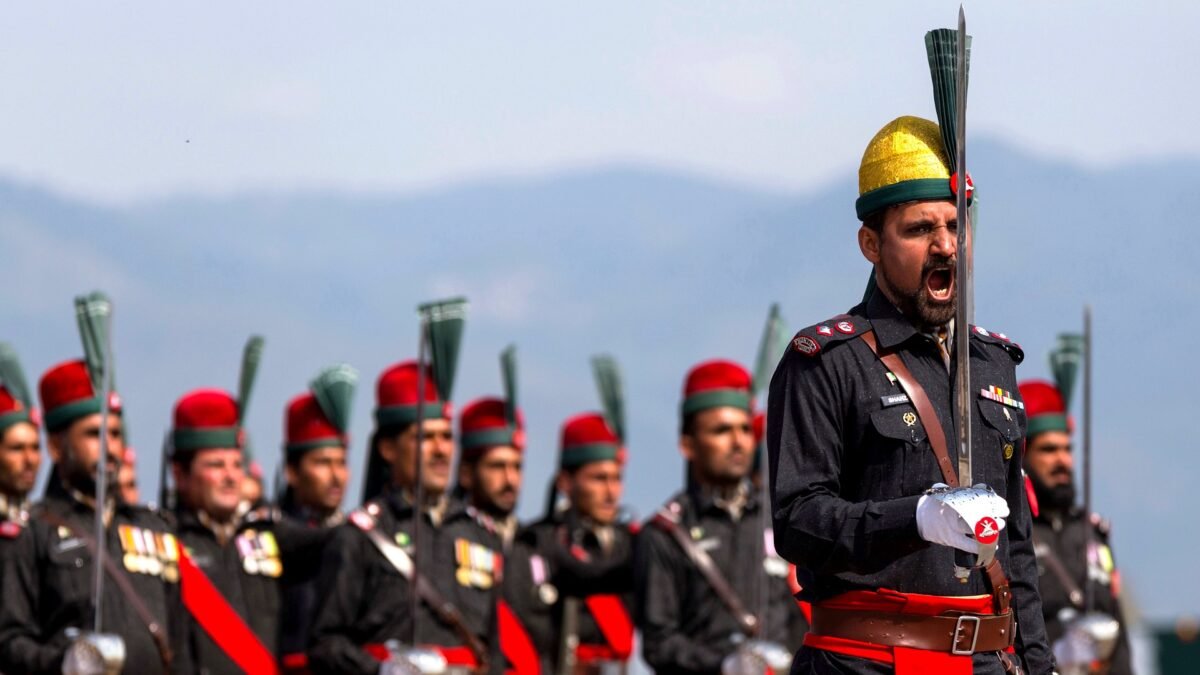
Pakistan’s military said on Friday that security forces had killed 74 militants in a series of intelligence-based operations across Balochistan and Khyber Pakhtunkhwa, in one of the largest single announcements of militant deaths in the country’s long-running counterterrorism campaign this year.
According to the Inter-Services Public Relations (ISPR), the military’s media wing, 31 of the dead were killed in the Kurram area of Quetta district in Balochistan, where an operation has been under way since 3 November, while a further 43 were killed in the Mir Ali and Orakzai areas of Khyber Pakhtunkhwa over the previous 48 hours. The figures were reported by The News and several other Pakistani outlets on Friday, all citing the ISPR statements.
The military said troops had recovered a large cache of weapons, ammunition and explosives from the militant hideouts, including homemade explosives and improvised explosive devices, and that clearance and sanitisation operations were continuing in the affected areas. The announcement framed the raids as part of Operation Azm-e-Istehkam, the national counterterrorism campaign launched in June 2024, which the ISPR said would continue “at full pace”.
President Asif Ali Zardari and Prime Minister Shehbaz Sharif both publicly praised the security forces after the announcement. According to a statement from the president’s office, carried by Pakistan TV, Mr Zardari said the security forces’ “continued successes in the war against terrorism reflect national resolve and professional capabilities”, adding that “the ambitions of externally sponsored terrorists seeking to undermine Pakistan’s peace and stability will not be allowed to succeed”. Mr Sharif, according to the Associated Press of Pakistan, praised the professional expertise and courage of the troops and the destruction of several militant hideouts during the operations.
The announcement landed at the end of a violent week in the two provinces. On Thursday, at least 11 policemen were killed and 12 wounded when their convoy was ambushed in Kohat district in Khyber Pakhtunkhwa, according to authorities cited by QNC News. Earlier in the week, two civilians were killed and at least 13 people injured when an attack on a security post at Kandava, on the N-25 highway in Mastung district, Balochistan, was repelled by security forces, who killed three attackers; three Frontier Corps personnel were also injured, according to Dawn. The ISPR did not link Friday’s raids to either attack, but the timing placed the announcement against a backdrop of fresh losses on the security side.
The operations, district by district
The Balochistan operation was the longer of the two. According to the ISPR statement reported by The News, security forces launched a comprehensive intelligence-based area sanitisation operation in the Kurram area of Quetta district on 3 November, targeting militants the military describes as members of Fitna al-Khawarij and Fitna al-Hindustan. Over ten days of engagements, troops “effectively engaged” multiple hideouts, killing 31 militants and recovering weapons, ammunition and explosives from the sites.
The Khyber Pakhtunkhwa operations were more compressed. According to the ISPR, security forces expanded a series of intelligence-based operations to Mir Ali, in North Waziristan district, and Orakzai district over the past 48 hours. “Following intense and fierce exchanges of fire, 35 khwarij belonging to Indian-sponsored Fitna-al Khwarij have been neutralised in Mir Ali and eight khwarij were sent to hell in Orakzai,” the ISPR said, in wording reported by The News and Pakistan TV. The military said the operations had inflicted “a significant blow” on the networks operating in the two districts and that sanitisation operations were continuing to clear any militants still holed up in the area.
The language matters, and it is worth pausing on it. “Fitna al-Khawarij” is the official term the Pakistani state now uses for the proscribed Tehreek-e-Taliban Pakistan (TTP), drawing on a historical Islamic reference to underline that the group’s attacks on civilians, security forces and state institutions place it outside the faith, as Pakistan TV explained in its report. “Fitna al-Hindustan” is the corresponding label applied to Baloch separatist groups. The terms are not neutral descriptions; they are part of how the state frames the conflict, and they appear in every official statement about it. This article uses “militants” as the neutral term and attributes the official labels to their source.
Intelligence-based operations, the form of action described in both statements, are the standard tool of the current campaign: raids on specific hideouts based on intelligence, rather than the large-scale, territory-clearing offensives of the past, such as the 2014 Operation Zarb-e-Azb in North Waziristan. The distinction is important, because it tells us something about how the military now fights this war — in targeted strikes against named locations, announced in batches, rather than in declared offensives with start and end dates.
A number that comes with a caveat
Seventy-four is a large number, and it deserves to be handled carefully. Every element of it — the total, the breakdown by district, the description of the dead — comes from a single source: the military itself, through its media wing. No independent organisation has verified the casualty figures, and no journalists were present at the operations. As the Daily 6AM report of the announcement put it plainly, “the casualty figures and operational details reported by the ISPR could not be independently verified.” That does not mean the figures are wrong. It means they are, for now, a claim by one party to a conflict, and any honest account of the story has to say so.
The same caution applies to the most politically charged element of the announcement: the ISPR’s description of the dead as “Indian-sponsored” or “India-backed” militants. The allegation that India sponsors the TTP and Baloch separatist groups is a long-standing position of the Pakistani state, and it was repeated in both of Friday’s statements. But, as the Daily 6AM report also noted, “the allegations of Indian sponsorship could not be independently verified.” India has consistently denied supporting militant groups in Pakistan. This article reports the allegation as the ISPR’s claim, not as an established fact, because no evidence supporting it was published with the announcement.
None of this is unusual. In conflicts of this kind, the side that controls the battlefield also controls the first account of what happened there, and the first account is almost always the only account. The question for readers is not whether to believe the announcement or dismiss it, but what the announcement itself tells us: that the military wants the public to know it is acting at scale, in both provinces at once, and that it is willing to put a large number on that action. The number is the message as much as the operations are.
Two provinces, two different wars
What makes the announcement striking is that it covers both of Pakistan’s two most violent provinces in a single breath, and they are not the same war. In Khyber Pakhtunkhwa, the enemy named by the state is the TTP, an Islamist insurgent group that has waged war against the Pakistani state for nearly two decades and whose attacks have surged since the Afghan Taliban returned to power in Kabul in 2021, according to The News. In Balochistan, the enemy is a separatist insurgency led by groups such as the Balochistan Liberation Army, which seeks independence for the province and has increasingly targeted security forces, infrastructure and Chinese-linked projects.
The two conflicts have different causes, different geographies and different politics, but they share a grim statistic. According to a report by the Centre for Research and Security Studies (CRSS), cited by The News, Khyber Pakhtunkhwa and Balochistan together accounted for nearly 96 per cent of all violence-related fatalities recorded in Pakistan during the second quarter of 2026. Khyber Pakhtunkhwa was the worst-affected region, with more than 61 per cent of the deaths — 475 people — while Balochistan accounted for 34 per cent, or 265 deaths. Khyber Pakhtunkhwa also recorded the highest number of violent incidents, 151 cases, or 57 per cent of the nationwide total, followed by Balochistan with 94 incidents, or 35 per cent.
Those figures explain why a single announcement covering both provinces reads as a statement of intent. The military is not fighting one insurgency in one place; it is fighting two, in the two provinces where almost all of the country’s political violence now happens. Friday’s raids, as announced, hit both at once: the TTP’s networks in Mir Ali and Orakzai, and the separatist and Islamist hideouts in the hills around Quetta.
Mir Ali itself is a name with a long history in this conflict. The town in North Waziristan district, close to the Afghan border, was one of the centres of militancy cleared during Operation Zarb-e-Azb a decade ago, and it has remained a focus of intelligence-based operations ever since. Orakzai, further north, is a former tribal district where the TTP has long maintained a presence. The Kurram area of Quetta district, meanwhile, sits in the provincial capital’s hinterland — a reminder that the Balochistan insurgency is not confined to the province’s remote districts but reaches the edges of its largest city.
Azm-e-Istehkam, two years on
The campaign under which Friday’s operations were announced, Azm-e-Istehkam — “Resolve for Stability” — was approved on 22 June 2024 by the Apex Committee on the National Action Plan, chaired by Prime Minister Shehbaz Sharif and attended by the chief ministers of all the provinces, the services chiefs and senior cabinet members, according to the Prime Minister’s Office. The federal cabinet endorsed it three days later, on 25 June 2024. The Prime Minister’s Office said at the time that the campaign would “integrate and synergise multiple lines of effort” against extremism and terrorism “in a comprehensive and decisive manner”, combining military action with socio-economic measures intended to deter extremism.
The campaign was controversial from the start. The PTI, then as now the largest opposition party, objected in parliament that no military operation should proceed without parliamentary approval, arguing that no Apex Committee could stand above the elected house. The Khyber Pakhtunkhwa government, then led by the PTI, initially withheld its backing until it received clarification of the operation’s details. Those objections have never fully gone away, and they form part of the political backdrop to every announcement the campaign now produces.
That backdrop grew sharper in October 2026, when the federal government announced emergency rule in Khyber Pakhtunkhwa under Articles 232 and 234 of the Constitution, suspending the province’s PTI-led government and placing the province under the governor, citing worsening security conditions and what it described as shortcomings in the provincial administration’s cooperation with counterterrorism efforts. The PTI has challenged the move in the constitutional court, and its suspended chief minister, Sohail Afridi, remains out of sight, as NEXA reported on 13 November. The result is an extraordinary situation: the province where the war against the TTP is being fought is itself under emergency rule, governed by an administration imposed from Islamabad, while the party that won the province’s last election contests the arrangement in court.
Friday’s announcement does not mention any of this. It does not need to. But the politics are inseparable from the operations, because the operations are being conducted in a province whose elected government has been suspended in the name of the same security crisis the operations are meant to address. That is the context in which the ISPR’s claim of 74 militants killed will be read in Pakistan — not only as a military result, but as a justification, offered by the state, for the emergency itself.
Analysis: Why It Matters
1. The number is the message
Militaries announce casualty figures for a reason, and the reason is rarely just information. A figure like 74, broken down by district and by operation, is designed to convey tempo: the state is not merely responding to attacks, it is hunting. It is also designed to convey scale: two provinces, three districts, ten days in one place and 48 hours in another. The announcement is, in that sense, a piece of strategic communication as much as a report, and it should be read as one. The test of it will not be the next announcement but the next quarter’s CRSS figures — whether the concentration of violence in these two provinces actually falls, or whether the numbers keep coming while the toll stays the same.
2. Two wars under one label
There is a risk in announcing both provinces’ operations together: it makes two different conflicts look like one. They are not. The TTP wants to overthrow the Pakistani state and impose its own order; the Baloch separatists want to break the state apart. The first is an ideological insurgency with cross-border sanctuaries; the second is an ethno-nationalist one fuelled by grievances about resources, representation and disappearances. Treating them as a single “foreign-sponsored terrorism” problem, as the official language does, simplifies the politics of both — and simplification is a poor basis for policy. The military can kill militants in Mir Ali and Quetta in the same week; it cannot solve two different political conflicts with the same press release.
3. The India claim and the evidence gap
The allegation of Indian sponsorship does real work in the announcement: it turns a domestic security problem into an external one, and it places the operations inside the larger story of Pakistan–India hostility. But the allegation is asserted, not evidenced. No names, documents, intercepts or captures were published with it, and no independent source has verified it. That matters, because the claim, if true, would be one of the most consequential facts in South Asian security; and if it is repeated without evidence often enough, it begins to function as a fact in public debate whether or not it is one. Readers are entitled to ask for the evidence, and the state, if it wants the claim believed abroad as well as at home, will eventually have to produce it.
4. The war is being fought where the government has been suspended
The most consequential fact about Friday’s announcement may be the one it does not mention: the operations in Khyber Pakhtunkhwa are taking place in a province under emergency rule, whose elected government was suspended a month ago in the name of the security crisis. The federal government’s case for the emergency was, in essence, that the provincial government was not cooperating with the fight against terrorism. Friday’s raids are now, in effect, the evidence offered for that case — proof that the fight is being prosecuted seriously. But the arrangement also carries a cost: counterterrorism works best when the local population and its elected representatives are partners in it, and the suspension of the province’s government has removed one of the few institutions that could supply that partnership. The military can clear hideouts; it cannot, on its own, supply political legitimacy.
5. The week that framed the raids
Announcements like this one are often read as the state acting; this week’s news suggests they are also the state reacting. Eleven policemen were killed in an ambush in Kohat on Thursday. Two civilians were killed and 13 injured in Mastung. Three attackers died there, but so did the sense that the state controls the ground. Friday’s figure of 74 dead militants is, among other things, an answer to that week — a demonstration that the state can hit back harder than it was hit. That is a legitimate purpose for a military announcement. It is also a reminder of the cycle: attack, raid, announcement, attack. The question is not whether the state can produce a large number on a Friday, but whether the number breaks the cycle or merely records its latest turn.
What to Watch Next
- The sanitisation results: The ISPR said clearance operations were continuing in all three districts. Watch for follow-up statements on further recoveries or arrests, and for any reports of civilian displacement or casualties from the operation areas.
- Independent verification: Whether any independent source — local journalists, hospital records, or the families of the dead — corroborates or challenges the figure of 74, and whether the military publishes names, photographs or other evidence of the dead.
- The India allegation: Whether Islamabad publishes evidence for the claim of Indian sponsorship, and how New Delhi responds to the renewed accusation.
- The Kohat investigation: What the authorities establish about Thursday’s ambush, in which 11 policemen were killed, and whether arrests follow.
- The Mastung aftermath: Whether the attack on the Kandava post leads to further operations in the area, and what happens to the civilians injured in the attack.
- The Khyber Pakhtunkhwa court case: How the constitutional court handles the PTI’s challenge to emergency rule, and whether the suspended chief minister, Sohail Afridi, reappears or is produced before a court.
- The Afghan border: Whether the operations affect the already strained relationship with Kabul, given the state’s position that the TTP operates from Afghan soil and the continuing deportation of Afghans through Pakistan.
Sources
- The News — 74 India-backed terrorists killed in Balochistan, KP IBOs: ISPR
- Pakistan TV — Pakistan’s security forces eliminate 74 Indian-sponsored terrorists
- QNC News — Pakistan Says 74 Fighters Fell in Raids Along Afghan Border
- Daily 6AM — 74 Militants Killed in Balochistan, KP Operations: ISPR
- Prime Minister’s Office, Pakistan — Operation Azm-e-Istehkam approved, 22 June 2024
- Wikipedia — Operation Azm-e-Istehkam

About the Author — Abdul Mannan
Related Articles
PTI Takes the Khyber Pakhtunkhwa Fight to the Constitutional Court as Its Missing Chief Minister Stays Out of Sight
Two petitions filed in Islamabad on Thursday ask the Federal Constitutional Court to order the release of Khyber…
Imran Khan’s Sisters Uzma and Noreen Freed After 53 Days in Lahore Jail as Aleema Remains Behind Bars
Dr Uzma Khan and Noreen Niazi walked out of Lahore's Kot Lakhpat Jail on Thursday after 53 days…
Imran Khan Taken to PIMS Overnight for Sixth Eye Injection Before Lengthy Adiala Meeting as Lawyers Warn His Blood Pressure Is Alarmingly High
Jailed former prime minister Imran Khan was taken to PIMS hospital overnight for a sixth eye injection and…