
Pakistan Anti-Terrorism Court Sentences Rights Lawyers Imaan Mazari and Hadi Ali Chattha to 10 Years Each

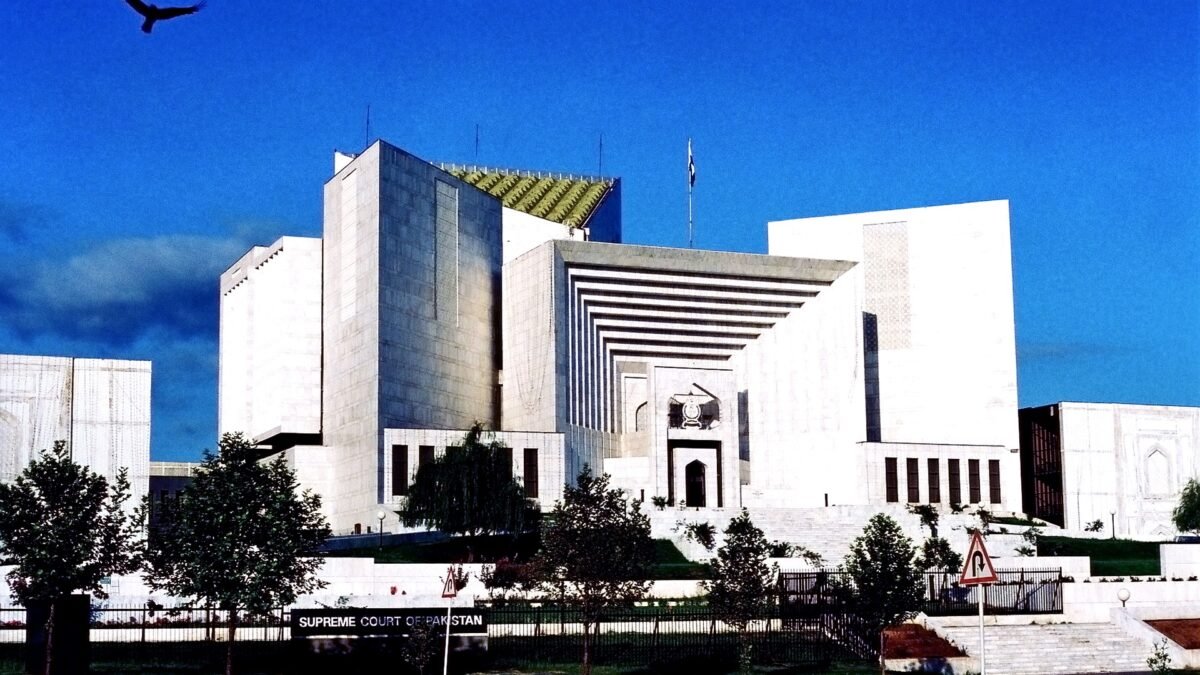
An anti-terrorism court in Pakistan has sentenced two prominent human rights lawyers, Imaan Zainab Mazari-Hazir and her husband, Hadi Ali Chattha, to ten years in prison each in a case arising from the removal of road barriers during a visiting cricket team’s security arrangements in October 2024. According to Reuters, the verdict was announced on Thursday 29 October 2026 at Adiala Jail in Rawalpindi, where the couple have been held since earlier this year, and the sentences imposed under different legal provisions are to run concurrently, leaving each of them facing an effective term of ten years.
The sentence is the second severe prison term imposed on the couple this year. In January 2026, a sessions court sentenced each of them to seventeen years in prison under Pakistan’s cybercrime law over social media posts. According to Reuters, the Supreme Court suspended those sentences on 17 September, but police re-arrested the couple the same day in the security-breach case before they could be released. The new conviction therefore does not arrive as an isolated judgment. It lands in the middle of a sequence of cases, appeals and re-arrests that has kept the two lawyers in custody for most of 2026 and has turned their treatment into a prominent test of how Pakistan’s courts handle dissent, protest and the use of anti-terrorism law.
According to reporting of the court order by Geo News, cited by the Indo-Asian News Service, the anti-terrorism court imposed three separate sentences on each defendant. Under Section 353 of the Pakistan Penal Code, each received two years’ imprisonment and a fine of 50,000 rupees. Under Section 186, each received one year and a further fine of 50,000 rupees. Under the Anti-Terrorism Act of 1997, each received ten years’ rigorous imprisonment and a fine of 100,000 rupees. The court directed that the sentences run concurrently, so the total term to be served is ten years for each defendant, with credit for time already spent in custody. The Express Tribune reported, according to a summary of its coverage, that the verdict was pronounced at Adiala Jail by anti-terrorism court Judge Tahir Abbas Sipra.
The case was registered at Islamabad’s Aabpara Police Station and concerned events on 25 October 2024, when, according to prosecutors, the couple removed traffic barriers and interfered with a security route designated for the visiting England cricket team. Prosecutors argued that the couple endangered the team’s security plans by staging a protest and blocking a road. According to a copy of the judgment obtained by the AFP news agency and reported by 234Radio, the judge found that the couple had put the security of the England and Wales Cricket team at risk and that their conduct clearly showed an intention to create a sense of terror. At the same time, AFP reported, the ruling conceded that the security breach was, in the court’s own description, a very common, ordinary type of incident apparently involving the removal of a barrier. That tension, between an ordinary roadside act as described by the court and a terrorism conviction carrying a decade in prison, is likely to be at the centre of the appeal that the family says will follow.
In statements seen by Reuters, Mazari and Chattha denied the charges. They described themselves as prisoners of conscience and said they were being targeted for their human rights work. According to Dawn, quoted in the IANS report, the couple said in separate but similar recorded statements that the evidence produced during the trial was not evidence against them but, in their words, a charge sheet against the prosecution witnesses, police officials and the state. In a defence document reported by AFP, they said they were being made an example in order to deepen what they called a chilling effect against those who stand, or wish to stand, against tyranny, oppression and injustice. Those are the defendants’ characterisations, not findings of the court, and they are recorded here as their stated position.
The trial itself moved quickly and under contested conditions. According to Dawn, reporting summarised by the Pakistan Legal Forum, the couple were indicted on 7 October after pleading not guilty, and a formal trial followed. The prosecution presented seven witnesses. The court appointed a state counsel for the defence, and state counsel Atif Mehmood conducted the cross-examination of the witnesses. On 27 October, both accused recorded statements under Section 342 of the Criminal Procedure Code, which allows the court to examine the accused, and final arguments concluded. The court then reserved its judgment and said it would be pronounced on 29 October.
Before the verdict, the defence sought a postponement. According to Geo News, lawyer Aimal Mandokhail argued that the decision should wait until petitions pending before the Supreme Court and the Islamabad High Court had been decided, and contended that the trial court could not lawfully deliver its verdict while those applications remained under consideration. The court proceeded to announce the verdict. According to Dawn’s reporting, the couple had approached the Supreme Court on Monday to challenge an Islamabad High Court order of 19 October refusing to stay the trial. The High Court had earlier heard their appeals against an order of 10 October in which the anti-terrorism court dismissed petitions challenging the framing of charges and the inclusion of terrorism-related provisions. The High Court issued notices and said it would decide how to proceed after receiving responses from the parties. According to a report of the couple’s Supreme Court petition, they argued that the trial had moved forward too quickly, leaving them insufficient time to prepare, and that prosecution witnesses had been examined in a single day. That account is the petitioners’ argument, and it has not been determined by a higher court.
Shireen Mazari, Mazari’s mother and a former human rights minister in the cabinet of jailed former prime minister Imran Khan, told Reuters that her daughter and son-in-law were not permitted to defend themselves through their own lawyer and were not provided with key legal documents. She said the family would file a petition against the verdict in the Supreme Court. The public prosecutor did not immediately respond to a request for comment from Reuters. Pakistan’s law minister, Azam Nazeer Tarar, has repeatedly said that the country’s judiciary is independent, according to Reuters. That position, that the courts act independently of the executive, is the government’s standing answer to criticism of politically sensitive prosecutions, and it will be tested again in the appellate proceedings that follow this verdict.
To understand why a barrier-removal case from 2024 has produced a ten-year terrorism sentence in 2026, it is necessary to follow the couple’s longer history with the criminal law, as documented by Amnesty International and by the Committee to Protect Journalists’ TrialWatch programme. Mazari and Chattha are human rights lawyers based in Islamabad. They married in 2023. Their work, according to Amnesty International, has included representing activists and marginalised communities subjected to enforced disappearances, people facing unjust charges by the state, journalists, and people charged under Pakistan’s blasphemy laws. In June 2025, according to Amnesty International Canada, Mazari received the World Expression Forum’s Young Inspiration Award. That record of representation is central to the couple’s own account of why they have been prosecuted, and it is also why international human rights organisations have followed their cases closely.
The pattern, as described by United Nations special rapporteurs and summarised in the TrialWatch spotlight on the couple, is one of repeated criminal complaints. According to that summary, the couple have been subject to ten criminal complaints since 2022, which the rapporteurs described as establishing a pattern of prosecutions in which the legal system was used as an instrument of harassment and intimidation in order to punish them for their work advocating for victims of alleged human rights violations. In August 2023, according to Amnesty International Canada, Mazari was arrested on terrorism charges after a speech at a Pashtun Tahafuz Movement rally and was released on bail a week later. In October 2024, the couple were arrested on terrorism charges after the barrier incident involving the England team’s visit and were released days later. Those earlier arrests did not end the matters. The cases remained in the system and, in the case of the barrier incident, returned as a full trial in 2026.
The cybercrime case is the other half of the story. According to Amnesty International, the couple were arrested on 23 January 2026 in a separate case over social media posts that prosecutors said were anti-state. A sessions court sentenced them each to seventeen years the next day under the Prevention of Electronic Crimes Act. According to Amnesty International Canada, the seventeen-year total was made up of ten years for cyberterrorism, five years for glorification of an offence and two years for spreading fake and false information, with the sentences running concurrently. The posts at issue, according to Amnesty International, were made between 2021 and 2025, criticised the military and expressed solidarity with Baloch and Pashtun activists, including posts about alleged enforced disappearances and the mistreatment of Baloch and Pashtun dissidents. The couple denied that the posts were criminal. The Supreme Court suspended the sentences and granted bail on 17 September, but, according to Amnesty International, the couple were re-arrested under anti-terrorism charges on the same day, before they could be released. Their bail applications in a separate protest case were still pending at the time of the 29 October verdict.
That separate protest case concerns a demonstration by Baloch activists in March 2025. According to Amnesty International, the couple were accused of chanting anti-government slogans and allegedly blocking roads during a peaceful protest by Baloch activists, and their bail applications in that case were still pending when the anti-terrorism trial over the cricket-team barriers proceeded. According to a report in Voicepk, the post-arrest bail applications in the protest case were listed for hearing on 3 November, and the couple remained on judicial remand in jail in that case even as they became convicted prisoners in the barrier case. The existence of several parallel cases, each capable of keeping the couple in custody even if another is suspended or decided in their favour, is one of the features of the proceedings that their supporters say makes the sequence difficult to follow and difficult to challenge case by case.
The reaction to the 29 October conviction was swift and sharply critical. Amnesty International issued a statement on the same day calling the conviction an indictment of Pakistan’s justice system. Yasmine Ahmed, Amnesty International’s Senior Director for Regional Human Rights Impact, said the convictions were a test of the judiciary’s ability to uphold the principles of justice and the right to a fair trial, and that it had failed that test miserably. She said it was clear that the anti-terrorism charges were being used to punish Mazari and Chattha for their human rights advocacy. Amnesty International said the couple had been consistently denied the right to an open and fair trial, that they were initially barred from attending in person, and that the trial was later shifted inside the prison premises, where they were kept behind a cage-like structure during hearings. Amnesty International urged the authorities to release the couple immediately and drop all charges. Those claims about the conduct of the trial are Amnesty International’s assessment, based on its monitoring of the case. They are not findings of a court, and the prosecution and the trial court have not, in the reporting available, responded in detail to the specific fair-trial criticisms beyond the proceedings and judgment themselves.
The conviction also arrives at a moment of unusual strain inside Pakistan’s judiciary. On 28 October, the day before the verdict, Lahore High Court Justice Mohsin Akhtar Kayani resigned, saying in his letter to President Asif Ali Zardari that changes introduced through the 26th and 27th Constitutional Amendments had compromised the independence and institutional integrity of the high courts. According to reporting of his letter by the Press Trust of India, Justice Kayani said he had witnessed what he regarded as the executive’s growing control over judicial institutions, extending to the appointment and transfer of judges, and that such interference had seriously eroded public confidence in judicial independence and the fairness of the judicial process. He also raised concern for the ordinary litigant, whom he described as the principal stakeholder in the justice system, and said his conscience did not permit him to continue on the bench. He announced his intention to return to private legal practice.
Justice Kayani was, according to that reporting, the fourth judge of the superior judiciary to resign following the controversial amendments. Before him, Supreme Court Justices Syed Mansoor Ali Shah and Athar Minallah and Lahore High Court Justice Shams Mehmood Mirza resigned, citing similar reasons after the 27th Amendment was signed into law. The 27th Amendment created a Federal Constitutional Court to hear constitutional matters, changed arrangements for the transfer of judges, and, according to its critics, reduced the autonomy of the courts. The government has defended the amendments as reforms. Amnesty International, in its background note on the Mazari and Chattha case, linked the concerns about judicial independence to the 26th and 27th Amendments and noted the resignations, as well as an earlier episode in March 2024 in which six Islamabad High Court judges alleged interference by intelligence agencies. The Mazari and Chattha verdict will now be read, fairly or not, against that institutional background. Supporters of the couple will present it as further evidence of a judiciary under pressure. Supporters of the verdict will say that a trial court heard witnesses, recorded statements and applied the Anti-Terrorism Act to conduct that endangered a visiting team’s security, and that the proper place to test that reasoning is the appellate court. Both readings point to the same next step: the Supreme Court.
The case also sits within a wider argument about the scope of anti-terrorism law in Pakistan. The Anti-Terrorism Act was designed for terrorism, and its use in cases arising from protests, road blockages and the removal of barriers has been contested for years by lawyers and rights groups, who argue that the law is being stretched to cover public-order and dissent cases. Prosecutors and courts, in cases of this kind, have argued that conduct which creates a risk to protected persons or creates a sense of terror can fall within the Act even when no weapon is used and no one is injured. The reported concession in this judgment, that the barrier removal was an ordinary incident of a common nature, will give the appellants a specific passage to rely on. The counter-argument, as reflected in the judgment as reported by AFP, is that intention and context matter: the same act, on a designated security route for a visiting national team, in the prosecution’s account, carried a different meaning from an ordinary traffic obstruction. An appellate court will have to decide whether that reasoning holds, and whether the framing of terrorism charges, the speed of the trial and the arrangements for the defence met the requirements of a fair trial.
There is also a political dimension that cannot be separated from the legal one, although it should not be overstated. Shireen Mazari served as human rights minister under Imran Khan, whose Pakistan Tehreek-e-Insaf party is now in opposition and whose leader has been in jail for more than three years. The family connection guarantees that the case will be read politically, and the government’s opponents will treat the conviction as part of a broader pattern. At the same time, the couple’s work long predates any single party affiliation in the public record: their clients have included journalists, blasphemy defendants and families of disappeared persons across different governments and different political moments. The question for the appellate courts is narrower than the political argument. It is whether this trial, on this evidence, under these provisions, was fair and lawful. The political argument will continue regardless of the legal answer, because the case has become a symbol in a larger dispute about free expression, protest and the independence of the courts.
For the couple themselves, the immediate consequence is stark. A ten-year sentence, even with credit for time already served and even alongside a suspended seventeen-year cybercrime sentence that remains subject to appeal, means years in prison unless a higher court intervenes. The family has said it will petition the Supreme Court. That petition will be the first formal test of the verdict. It will also be watched for what it reveals about the new Federal Constitutional Court and the division of work between that court and the Supreme Court, since constitutional questions about fair trial and the scope of anti-terrorism law could arise in either forum. The timing matters. Appeals in Pakistan can take a long time, and interim relief, suspension of sentence or bail pending appeal, can determine whether a convicted person remains in prison for years while the appeal is heard. The couple’s experience in September, when a Supreme Court suspension was followed by immediate re-arrest in another case, shows why interim relief in one case does not necessarily mean liberty.
International attention is likely to remain focused on the case, but its practical effect will depend on the appellate record. Amnesty International’s statement, the earlier urgent action by its Canadian section, the TrialWatch spotlight and the United Nations rapporteurs’ communications establish a documented international record. That record does not decide a Pakistani appeal. It does, however, raise the reputational cost of the proceedings and ensure that the written judgment, the trial record and the appellate reasoning will be scrutinised outside Pakistan as well as inside it. For a government that presents its judiciary as independent and its counter-terrorism law as necessary for security, the scrutiny is unwelcome. For the couple’s supporters, it is a form of protection, or at least of visibility, that many defendants in similar cases do not have.
The England cricket team element of the case deserves a final note of precision. No suggestion has been made in the reporting that any member of the England team was harmed, threatened directly or even present at the barrier incident, and no injury to any person is recorded as part of the charge as reported. The prosecution’s case, as reported, was about risk to security arrangements and the integrity of a designated route, not about an attack on the team. That distinction matters for public understanding. A reader who hears only that a couple received ten years under anti-terrorism law in a case involving a cricket team might imagine a very different set of facts. The facts as reported are narrower and, for that reason, more contested: a roadside barrier, a security route, a protest, and a legal argument about whether that combination amounts to terrorism. The appellate court will now decide whether the law was correctly applied to those facts, and whether the process by which it was applied was fair.
Analysis: Why It Matters
1. A ten-year terrorism sentence for a barrier incident tests the limits of the Anti-Terrorism Act
The most important question raised by this verdict is not whether barriers were moved. On the reporting available, the act itself is not in serious dispute, although the couple deny the charges as framed and deny any terrorist intent. The question is what the law should call that act. A decade in prison under anti-terrorism legislation is a severe consequence, and it rests on a finding that conduct on a security route, in the court’s assessment, was intended to create a sense of terror. If appellate courts uphold that reasoning, prosecutors will have a clear precedent for treating interference with protected movements as terrorism, even when the underlying act is, in the trial court’s own reported words, ordinary in nature. If appellate courts reject it, the judgment will stand as a warning about the risks of stretching a law designed for terrorism to cover protest and public-order conduct. Either way, the case will be cited in future arguments about the scope of the Act, because it presents the issue in unusually clear form: a commonplace act, a protected route, and a terrorism label.
2. The speed and setting of the trial are now as important as the verdict itself
Fair-trial arguments often turn on details that seem procedural but are, in practice, decisive: whether the accused had their own lawyer, whether they received the documents in time, whether witnesses were examined at a pace that allowed proper cross-examination, and whether the hearing was open and accessible. In this case, the defence says the couple were not permitted to defend themselves through their own lawyer and were not provided with key documents, while Dawn’s reporting records that a state counsel was appointed and conducted cross-examination. Amnesty International says the trial was moved inside prison premises and the couple were kept behind a cage-like structure. The couple’s Supreme Court petition, as reported, complains of insufficient preparation time and witnesses examined in a single day. An appellate court will need the trial record to resolve these competing accounts. The lesson for the wider system is that speed and setting are not neutral. A trial that is too fast, or too closed, creates exactly the doubts that an appeal must then spend months or years resolving, and it leaves the verdict vulnerable even if the underlying evidence was strong.
3. The case is inseparable from the debate over judicial independence
It would be a mistake to treat the Mazari and Chattha verdict as if it had arrived in a vacuum. It was delivered the day after a senior high court judge resigned over the 26th and 27th Amendments, and after three other senior judges had resigned for similar reasons. The amendments, the creation of a Federal Constitutional Court and the changes to appointment and transfer arrangements are contested precisely because critics say they give the executive more control over the judiciary, while the government says they are legitimate reform. A verdict in a politically sensitive case will inevitably be read through that dispute. That does not mean the trial judge was influenced by it; there is no evidence in the reporting available to support such a claim about this judge, and the judgment should be assessed on its reasoning. It does mean that public confidence, which Justice Kayani cited in his resignation letter, is now part of the context in which the appeal will be received. The Supreme Court’s handling of the appeal, including whether it grants interim relief and how fully it reasons its decision, will itself become evidence in the independence debate.
4. The sequence of cases shows how custody can outlast any single judgment
One of the most striking features of this history is that a favourable order in one case has not meant freedom. The Supreme Court suspended the seventeen-year cybercrime sentences in September, and the couple were re-arrested the same day in the security-breach case. Bail applications in the March 2025 protest case remained pending. The barrier case then produced a conviction. For a defendant, the practical effect is continuous custody through a chain of cases, even when individual links in the chain are suspended, appealed or decided in their favour. For the legal system, the pattern raises a question about coordination and proportionality: whether multiple cases arising from related conduct and overlapping periods should proceed in parallel, and whether courts should consider the cumulative effect on liberty when deciding bail and interim relief. The appellate courts will have to address that cumulative effect, not just the single verdict before them, if the couple are to have a realistic prospect of release while their appeals are heard.
5. International scrutiny raises the stakes, but the decision will be made in Pakistan’s courts
Amnesty International, United Nations rapporteurs and international legal monitors have documented the couple’s cases in detail, and the 29 October statement ensures that the conviction will be raised in diplomatic and human rights discussions. That scrutiny can protect defendants by making their treatment visible, and it can raise the cost to a government of proceedings seen as unfair. It cannot, however, substitute for an appellate judgment in Pakistan. The Supreme Court petition, the written judgment in the barrier case and the eventual appellate reasoning will determine the couple’s liberty. The international record matters most if it prompts careful, public and well-reasoned appellate proceedings. The risk, for all sides, is that the case becomes a contest of statements, with each side quoting the passages that suit it, while the trial record itself receives less attention than it deserves. The most useful outcome, whatever the result, would be a detailed appellate judgment that addresses the terrorism framing, the fair-trial complaints and the sentence, so that the law is clearer for the next case of this kind.
What to Watch Next
- The family’s promised petition to the Supreme Court: its grounds, whether it challenges the framing of terrorism charges, the conduct of the trial or the sentence, and whether interim relief or suspension of sentence is sought and granted.
- Publication of the full written judgment, including the court’s reasoning on terrorist intent and its concession that the barrier removal was an ordinary incident, and how the prosecution and defence respond to that reasoning.
- The hearing on 3 November reported for the couple’s bail applications in the separate March 2025 Baloch protest case, and whether any order there affects their custody status.
- The status of the suspended seventeen-year cybercrime sentences and any appeal or further proceedings in that case, including whether the Supreme Court’s September suspension remains in force.
- Any response from the prosecution or the trial court to the fair-trial criticisms raised by the family and Amnesty International, and any further statement from the government on judicial independence following Justice Kayani’s resignation.
Sources
- Reuters: Pakistan court jails prominent rights couple for 10 years, family says
- Amnesty International: Pakistan: Terrorism conviction of human rights lawyers an indictment of justice system
- Amnesty International USA: Pakistan: Terrorism conviction of human rights lawyers an indictment of justice system
- IANS, reporting Geo News and Dawn: Pakistan court sentences human rights lawyer couple to 10 years in jail
- The Standard: Imaan Mazari, Hadi Ali Chattha sentenced to 10 years in ‘security’ case
- AFP reporting, via 234Radio: Pakistan rights activist Imaan Mazari and husband jailed for 10 years

About the Author — Abdul Mannan
Related Articles
One Killed and Five Injured as Cross-Border Firing Hits Angoor Adda Market and Homes, Pakistan Says
One civilian was killed and five people were injured when firing struck houses and a market at Angoor…

Punjab Extends Detention of Imran Khan’s Sisters by 30 Days, Lahore High Court Told
The Punjab government told the Lahore High Court on Monday that it had extended the detention of Aleema…
HRCP Demands End to Governor’s Rule in Khyber Pakhtunkhwa and Release of Detained Leaders
The Human Rights Commission of Pakistan has demanded an immediate end to emergency and governor's rule in Khyber…