
One Killed and Five Injured as Cross-Border Firing Hits Angoor Adda Market and Homes, Pakistan Says

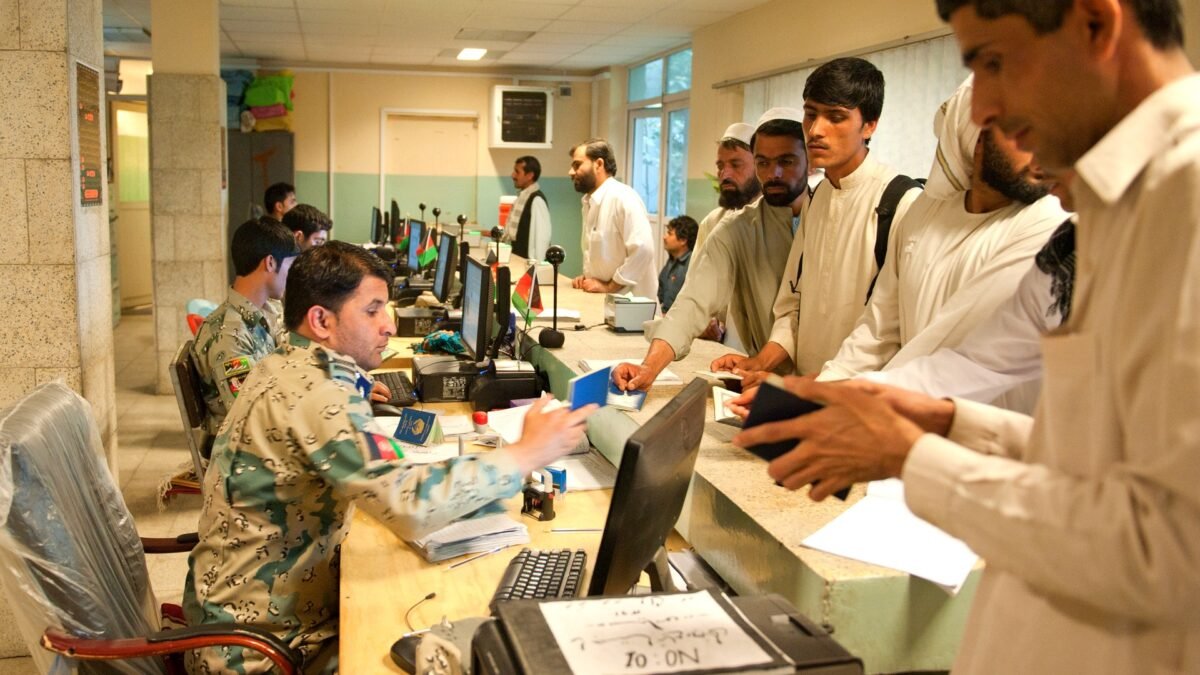
One civilian killed, five injured, and shops damaged
One civilian was killed and five other people were injured when firing from across the Afghan border struck houses and a market at Angoor Adda in Lower South Waziristan on the night of Tuesday, 27 October, according to Reuters, which cited a senior Pakistani administrative official. The official said the firing, attributed by Pakistan to Afghan Taliban forces, hit civilian houses and a market in the Waziristan region near the Pakistan-Afghanistan border. Reuters reported that Pakistani forces were responding to what the deputy commissioner of Lower South Waziristan described on X as “unprovoked” firing on Tuesday.
The deputy commissioner’s account, quoted in Pakistani reporting of his post on X, was more specific about the damage. He wrote that Afghan Taliban forces had fired on civilian houses and Angoor Adda bazaar on the night of 27 October, that one civilian had been killed and five injured by a mortar round, and that many shops had been damaged. Reporting by The News, citing security sources and the deputy commissioner, said a mortar shell had struck the area, killing one civilian and injuring five members of the same family, while several shops were damaged. The Diplomatic Insight, citing Dawn’s reporting from sources, likewise reported that a mortar shell had landed on a house, killing one person and injuring five members of the same family. The names of the people killed and injured had not been published in the reporting reviewed for this article, and this article does not add names or details that the sources did not provide.
The incident took place at a crossing whose daily life depends on movement across the frontier. Angoor Adda is a border point in Lower South Waziristan, close to Afghanistan’s Paktika province, and reporting summarising Dawn’s account described it as a major trade route and a key public transit crossing between Pakistan and Afghanistan. When firing reaches a bazaar and nearby homes, the consequences are therefore not only military. Shops, families and travellers are caught in the same small area, and damage to a market can disrupt livelihoods even for people who were not injured. That civilian dimension is the first fact any account of the night must keep in view, before any discussion of retaliation or strategy.
What Pakistan says happened, and what remains unverified
Pakistani officials and security sources described a sequence that began with firing from Afghan positions and continued with a forceful Pakistani response. According to Dawn’s reporting, as summarised by The Diplomatic Insight, Afghan security personnel opened fire on Pakistani border posts and nearby residential areas, using sniper rifles and small and heavy weapons, and a mortar shell struck a residential house. The same reporting said Pakistani security forces then engaged Afghan Taliban border positions, mortar locations and defensive bunkers with small arms, heavy weapons and artillery. Sources cited in that reporting described Pakistan’s response as intense and accurate, said Afghan Taliban personnel had abandoned their positions, and said Pakistani forces retained control of the affected border area.
Separate reporting by The News and the Islamabad Post, citing security sources, said Pakistan’s armed forces had destroyed several Afghan Taliban checkposts in retaliation, that the response was continuing, and that troops were prepared to counter further aggression. Samar Haroon Bilour, an adviser to the Khyber Pakhtunkhwa governor, was quoted in reporting of her post on X as citing security sources for a similar account: a shell had struck a home in a civilian area, injuring five members of the same family and killing one civilian, and the Pakistan Army had provided an immediate response in which several Afghan checkposts were destroyed. She was also quoted as saying that Pakistani troops remained on high alert and that retaliatory operations were continuing.
Those claims about destroyed checkposts, abandoned positions and continued operations come from Pakistani official and security sources. They have not been independently verified in the reporting reviewed for this article, and this article presents them as Pakistani-source claims rather than as established facts. The same caution applies to the description of the initial firing. Reuters attributed its core account to a senior Pakistani administrative official and to the deputy commissioner’s statement, and it reported that the Afghan Taliban spokesperson, Zabihullah Mujahid, did not immediately respond to its requests for comment. No official Afghan Taliban response to the specific Angoor Adda incident was identified in the reporting reviewed. Readers should therefore treat the question of who fired first, and with what effect on military positions, as a matter on which the public record currently contains a Pakistani official account and no identified Afghan official reply, rather than a fully tested two-sided account.
The casualty figures themselves are consistent across the outlets reviewed. Reuters reported one person killed and five injured. The News, the Islamabad Post and the reporting summarising Dawn all reported the same toll: one civilian killed and five members of one family injured. Consistency on the toll does not remove the need for caution about the wider military claims, but it does mean the human cost reported on the night is not a figure resting on a single outlet. Where outlets differed was in emphasis and in the additional claims they carried from security sources, and this article has kept those additional claims labelled as claims.
The governor’s warning and the political response
The political response from Khyber Pakhtunkhwa was swift and sharply worded. Faisal Karim Kundi, the governor of Khyber Pakhtunkhwa, condemned what he described as unprovoked aggression against civilian homes and Angoor Adda bazaar, according to reporting of his post on X. He said he saluted the Pakistan Army for what he called a swift, forceful and decisive response, and he told the Afghan Taliban administration to have “no illusions”. In the same statement, as quoted in that reporting, he said Islamabad would never tolerate attacks on its people or violations of its sovereignty, that any aggression against Pakistan would be confronted with unwavering resolve, and that the armed forces had the full backing of the nation to defend every inch of Pakistani soil.
That language matters because the governor is speaking both to Kabul and to audiences at home. In Khyber Pakhtunkhwa, border incidents are not abstract foreign-policy events. They affect districts where families live close to the frontier, where traders depend on crossings, and where previous rounds of fighting have already displaced people and damaged property. A governor who promises resolve is also reassuring residents that the provincial and federal authorities regard an attack on a bazaar as an attack on civilians, not merely as a routine exchange of fire between posts. At the same time, the strength of the wording narrows the space for a quiet de-escalation. Once a senior official has publicly said there should be “no illusions”, any subsequent restraint needs to be explained as a choice, not as inattention.
Bilour’s intervention pointed in the same direction. By citing security sources and emphasising that the Army’s response was immediate and continuing, she reinforced the official framing of the night as an attack on civilians met by a proportionate and ongoing military answer. Neither statement, as reported, offered a diplomatic off-ramp in the same breath. That does not mean diplomacy has stopped, but it does mean the public messaging around this incident has been dominated, so far, by condemnation and deterrence rather than by an invitation to talk. In border crises, the first public statements often set the tone for the days that follow, and these statements set a firm tone.
Background: a long dispute, a fragile truce, and repeated flare-ups
The Angoor Adda incident did not occur in a vacuum. Pakistan and Afghanistan have been at odds for years over militancy, and Islamabad accuses Kabul of harbouring militants who stage cross-border attacks, according to Reuters. The Taliban government in Kabul denies that charge and says militancy is Pakistan’s internal problem, Reuters also reported. That disagreement is the central dispute behind almost every border incident. Pakistan argues that attacks inside its territory are planned or sheltered from Afghan soil. Kabul rejects the accusation and resists being held responsible for violence inside Pakistan. Until that disagreement is narrowed, each incident is interpreted through two incompatible explanations, and each side’s public will tend to hear the other’s account as implausible.
Reuters noted that the violence came days after the Afghan Taliban had said problems with Pakistan could be resolved through diplomacy. That timing is important, but it should not be over-read. A general statement in favour of diplomacy is not the same as an agreement on the specific steps that would prevent firing at a particular crossing. Diplomacy between Islamabad and Kabul in 2026 has involved talks, truces and mediation, and also repeated returns to fighting. Reporting on the wider relationship described talks in Doha, Qatar, that yielded a ceasefire, and a further meeting in Istanbul on 25 October that was expected to focus on a joint monitoring and verification mechanism, with Qatari and Turkish facilitation. The same reporting noted that diplomatic ties had been suspended and trade had ceased, which underlines how much had already broken down before the Istanbul discussion.
Earlier in 2026, the pattern was already one of escalation followed by fragile pauses. Reporting reviewed for this article described renewed hostilities in February, when Pakistan launched an operation after renewed skirmishes along the border, and a week-long ceasefire in March for the Eid al-Fitr holiday after requests from Turkey, Saudi Arabia and Qatar. In late April, according to reporting by the Islamabad Post citing DNA News, mortar shelling from across the border injured civilians and damaged homes in South Waziristan, prompting Pakistani forces to target Afghan Taliban positions. In September, Pakistan conducted strikes that its information minister described as precision air and drone strikes at locations in Afghanistan, in response to drones said to have entered Pakistani airspace. Those episodes, taken together, show a cycle in which each side’s action is presented as a response to the other’s, and in which pauses have not yet produced a durable arrangement for the border.
The geography of the frontier helps explain why the cycle is so hard to break. The Pakistan-Afghanistan border runs for about 2,600 kilometres through mountainous and sparsely populated terrain, with many regular and irregular crossings. Angoor Adda is one of the passages between South Waziristan and Paktika, and communities on both sides share tribal, family and trading ties. A fence, forts and checkpoints can change how a crossing is controlled, but they cannot by themselves resolve a political disagreement about who is responsible for militants, or about the status of the boundary itself. Afghanistan has traditionally disputed the colonial-era Durand Line demarcation and does not recognise it as an international boundary, while Pakistan insists it inherited the frontier on independence. That underlying dispute does not cause every incident, but it colours every incident, because control of a bazaar, a gate or a hilltop can carry symbolic weight far beyond its size.
Analysis: Why It Matters
1. Civilians are bearing the cost of a dispute they did not choose
The most important fact about Angoor Adda is also the simplest: a mortar round struck a home, one person died, five members of one family were injured, and shops were damaged. That is the account given by Pakistani officials and security sources, and it is consistent across the outlets reviewed. Whatever the military sequence that preceded it, the reported outcome was civilian harm in a residential and commercial area. In border reporting, there is a constant risk that casualty figures become a prelude to a discussion of strategy, as if the human cost were only the context for a larger game. The order should be the other way round. The safety of people who live and trade beside the border is the test by which any border policy should be judged, and on that test the night of 27 October failed, because a family at home and traders in a bazaar were exposed to weapons that should never have reached them.
This matters beyond Angoor Adda because border communities have already absorbed repeated shocks. Homes have been damaged before, markets have closed, and families have lived with the knowledge that firing can resume without warning. Each incident adds to a cumulative burden: repairs that cannot be afforded, trade that cannot be planned, and children who grow up associating a crossing with danger rather than with movement and livelihood. A policy debate that treats border incidents only as signals between capitals will miss the most durable consequence, which is the erosion of ordinary life in the districts closest to the frontier. Any credible response, whether military or diplomatic, must be able to explain how it will make the next night safer for the next family in the next house near the next crossing.
2. A truce is being tested before its mechanisms exist
The timing of the Angoor Adda firing, days after a statement in favour of diplomacy and around the time of talks aimed at monitoring and verification, suggests that the diplomatic track and the military reality are moving at different speeds. Talks can agree in principle that firing should stop, but a ceasefire only holds if there are agreed rules for what counts as a violation, who investigates it, how quickly the two sides communicate, and what happens when a claim is disputed. The Istanbul discussion was reported to focus on a joint monitoring and verification mechanism, which is precisely the kind of machinery that turns a promise into a practice. Until such a mechanism is operating, each incident will be argued over in public statements, with each side presenting its own account and no shared process for establishing what happened.
The original analysis here is that the danger is not only a return to large-scale fighting, but a slow hollowing-out of the truce itself. If incidents like Angoor Adda occur, are publicly condemned, are met with retaliation, and then pass without a joint investigation or an agreed corrective step, the truce becomes a label rather than a restraint. Both sides can continue to say they favour diplomacy while acting on the battlefield as if no agreement existed. That is a familiar pattern in long border disputes, and it is more corrosive than an open collapse, because it teaches commanders and communities to discount diplomatic assurances. The test of the Doha and Istanbul process is therefore not whether leaders say the right words, but whether the next incident produces a different sequence: rapid communication, a joint check of the facts, protection for civilians, and a visible effort to prevent repetition.
3. Competing accounts and the verification gap
The public record on Angoor Adda currently has a verification gap, and acknowledging it is not a criticism of any single outlet. Reuters reported the core casualty account from a Pakistani official and noted the absence of an immediate Afghan Taliban response. Pakistani outlets, citing security sources and Dawn’s reporting, added claims about destroyed checkposts, abandoned positions and an ongoing response. Those additional claims may be accurate, but they have not been independently verified in the reporting reviewed, and they come from sources with an interest in the outcome. The Afghan Taliban account of the specific incident, if one is issued, has not yet been identified. Until it is, readers cannot know whether Kabul disputes the sequence, the location, the weapon, or the attribution, or whether it accepts that firing occurred but offers a different explanation.
This gap matters because border incidents are often used to justify the next step. A claim that checkposts were destroyed can be used to argue that deterrence is working. A claim that positions were abandoned can be used to argue that the other side has been punished. A claim that operations are continuing can be used to prepare the public for further fighting. None of those inferences is safe until the underlying claims are checked. Responsible coverage must therefore separate three layers: the casualty toll, on which outlets agree; the sequence of firing, on which only a Pakistani official account is currently public; and the military effects claimed for the response, which rest on security sources. Keeping those layers separate is not pedantry. It is the difference between informing the public and amplifying one side’s version of events.
4. Border politics inside Pakistan
Inside Pakistan, the incident lands in a political landscape where Khyber Pakhtunkhwa’s security is a live and contested issue. The province has a governor, a provincial administration under emergency arrangements in the wider political context of 2026, and a federal government that has repeatedly presented border security as a national priority. Kundi’s statement, and Bilour’s emphasis on the Army’s response, should be read in that context. They reassure residents, they signal to the federal government that the province expects backing, and they place the blame firmly on Kabul. They also, however, raise expectations. If residents are told that aggression will be confronted with unwavering resolve, they will reasonably ask what that resolve produces: fewer incidents, safer markets, or simply a louder exchange of warnings.
There is also a wider domestic question about how border policy is decided and explained. Military operations, diplomatic talks and provincial statements involve different institutions, and the public does not always see how they fit together. When a governor speaks, a security source briefs, and a diplomatic process continues in another capital, citizens are left to assemble the picture from fragments. That fragmentation can breed suspicion, especially in districts that have borne the costs of previous operations. The original point here is that clarity is itself a form of protection. A clear, consistent account of what happened, what is being done to prevent repetition, and what civilians should expect would do more for public confidence than any single warning to the other side. The absence of such an account, so far, is a gap that the next official statements could usefully fill.
5. What diplomacy can and cannot do on its own
Diplomacy between Pakistan and Afghanistan faces a structural difficulty: the two sides disagree not only about specific incidents, but about the underlying responsibility for militancy. Pakistan says Kabul harbours militants who attack Pakistan. Kabul denies the charge and says militancy is Pakistan’s internal problem. No single meeting can dissolve that disagreement, and no monitoring mechanism can work if one side does not accept the premise that it has obligations to act against groups operating from its territory. Mediation by Qatar and Turkey, and the involvement of other regional states, can help by providing channels, guarantees and face-saving options, but mediators cannot substitute for a direct agreement on the core issue.
That does not make diplomacy pointless. It makes the choice of diplomatic objectives crucial. A realistic near-term objective is not a comprehensive settlement of the militancy dispute, but a narrower, verifiable arrangement for the border itself: hotlines that are actually answered, agreed procedures for investigating firing incidents, protection for civilian areas and markets, and restraint around crossings that communities depend on. Such an arrangement would not resolve the larger dispute, but it would reduce the chance that a single night’s firing escalates into a wider confrontation. The Angoor Adda incident shows why that narrower objective matters. If the two sides cannot yet agree on who is responsible for militancy, they can still agree that homes and bazaars should not be targets, and that incidents should be investigated jointly rather than answered only with retaliation.
What to Watch Next
- Whether the Afghan Taliban administration issues an official response to the Angoor Adda incident, and whether it disputes the Pakistani account, offers a different sequence, or remains silent. The content and timing of any response will shape whether the incident becomes a two-sided dispute or remains a one-sided public record.
- Whether Pakistani officials publish further detail on the casualties, including the condition of the five injured people and the extent of damage to shops and homes, and whether any independent or joint verification of the claimed destruction of checkposts becomes available.
- Whether firing recurs at Angoor Adda or spreads to other crossings in the days that follow, and whether either side announces additional military measures, troop movements or restrictions on movement and trade at the border.
- Whether the diplomatic track produces a concrete next step, such as a further meeting, a hotline contact, or progress on the joint monitoring and verification mechanism discussed around the Istanbul talks, and whether Qatar, Turkey or other mediators comment publicly.
- Whether civilian life at Angoor Adda returns to normal, including whether the bazaar reopens fully, traders resume cross-border movement, and residents receive any assistance for damaged homes and shops. The state of the market will be a practical indicator of whether the incident is contained or still disrupting daily life.
Sources
- Reuters — Pakistan says Afghan firing kills one in border district
- The News — Pakistan pounds Afghan Taliban positions after mortar attack kills civilian in South Waziristan
- The Diplomatic Insight — Pakistan retaliates after Afghan cross-border firing kills one, injures five in South Waziristan
- Islamabad Post — Pakistan strikes Afghan Taliban posts after deadly cross-border attack
- Pakistan TV — Pakistan Army responds to Angoor Adda attack, destroys Afghan Taliban check posts

About the Author — Abdul Mannan
Related Articles

Punjab Extends Detention of Imran Khan’s Sisters by 30 Days, Lahore High Court Told
The Punjab government told the Lahore High Court on Monday that it had extended the detention of Aleema…
HRCP Demands End to Governor’s Rule in Khyber Pakhtunkhwa and Release of Detained Leaders
The Human Rights Commission of Pakistan has demanded an immediate end to emergency and governor's rule in Khyber…
Pakistan Demands ‘Verifiable Action’ From Afghan Taliban Against TTP Sanctuaries as War of Words Escalates
Pakistan has demanded verifiable action from Afghanistan's Taliban government against TTP and BLA sanctuaries, rejecting Kabul's claim that…