
Pakistan’s 30-Member Electoral Reforms Committee Takes Shape as Opposition Weighs Joining and Fazl Pushes a New Charter of Democracy

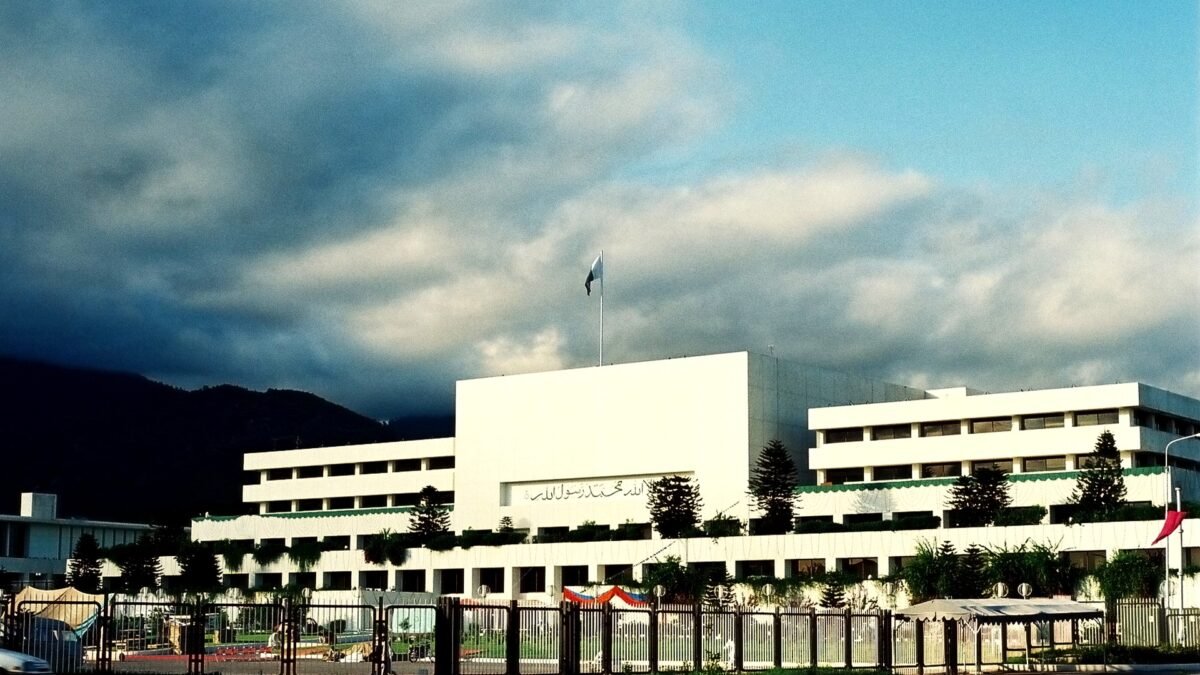
ISLAMABAD: Pakistan took the first formal step towards rewriting its election rules on Friday, as the government said a 30-member parliamentary committee on electoral reforms had been constituted, with only the names of its members left to finalise. The announcement came on the same day the opposition signalled it might take part — and as Maulana Fazlur Rehman pressed the government to agree to a new Charter of Democracy, warning that the opposition was ready for confrontation if it refused.
Federal Minister for Parliamentary Affairs Dr Tariq Fazal Chaudhry said formal approval for the formation of the Election Reform Committee had been obtained from the National Assembly, and that the committee had been formed “formally and technically”, according to a report published on Friday. The committee will consist of 30 members — 20 from the National Assembly and 10 from the Senate — and a notification will be issued by the Speaker of the National Assembly once the names are finalised.
On the National Assembly side, 15 members will come from the government benches and five from the opposition. In the Senate, two members each from the Pakistan Muslim League-Nawaz and the Pakistan Peoples Party will be included, with the remaining seats reserved for other parties and members. Representation will be determined in proportion to each party’s numerical position in the House, the minister said.
The minister also said the Pakistan Tehreek-e-Insaf did not oppose the motion regarding the formation of the committee in the National Assembly — a detail the government has been keen to highlight as evidence that the process enjoys at least tacit cross-party acceptance, even as the wider political confrontation continues.
The committee’s creation follows a motion adopted by the National Assembly on 16 October, moved by Dr Chaudhry under Rule 244B of the Rules of Procedure and Conduct of Business in the National Assembly, 2007. According to The News, the motion authorises the Speaker, in consultation with the Senate chairman and the leaders of parliamentary parties, to constitute a committee comprising members of both Houses, drawn from all parliamentary parties in proportion to their representation in parliament.
The committee’s mandate is broad. It will recommend electoral reforms aimed at ensuring free, fair and transparent elections, including the adoption of the latest available technology for conducting elections, and the preparation of draft legislation, including constitutional amendments where necessary. The Speaker may replace any committee member at the request of the leader of the parliamentary party concerned, the quorum for a meeting will be one-fourth of the committee’s total membership, and the committee will submit its report to parliament within the timeframe specified by the Speaker after the notification constituting it is issued. It may also constitute subcommittees.
Whether the committee becomes a genuine forum for consensus or another partisan talking shop will depend on a question that remained unanswered on Friday: will the opposition actually sit on it?
Opposition signals openness — but wants to consult Imran Khan first
Opposition leaders in both houses have signalled willingness to join the parliamentary election reforms committee, according to a report published on Friday by The Pakistan Daily, citing ARY News. Mahmood Khan Achakzai, the opposition leader in the National Assembly, and Allama Raja Nasir Abbas, his counterpart in the Senate, indicated their parties were open to participating — but both sought time to consult the PTI leadership before confirming.
The condition attached to that openness is the more revealing detail. Both leaders want to consult the PTI before committing, and the PTI’s major decisions still require the approval of its imprisoned founder, Imran Khan. A parliamentary committee on electoral law is therefore waiting, in effect, on a man in custody whose access is controlled by the government that would be its counterparty.
The Pakistan Peoples Party, meanwhile, has renewed its invitation to the opposition to join talks on electoral reforms, according to Geo News. PPP sources have said the opposition would soon respond to the party’s invitation, although — as The Pakistan Daily itself noted — no direct quotes from any named official appear in that account, and it should be recorded as a signal rather than a commitment.
What has not been published is the committee’s composition in full, its terms of reference, or any deadline for reporting. Nor has the government said whether electoral reform would extend to the conduct of elections held under emergency administration — a question that is not academic, given that one province is currently under governor’s rule and an emergency.
Fazl’s Charter of Democracy push
The committee’s formation coincided with a parallel opposition initiative. On Thursday, Jamiat Ulema-e-Islam-Fazl chief Maulana Fazlur Rehman invited the government to agree on a new Charter of Democracy, but warned that the opposition was ready for confrontation if it refused to change course.
“We are ready for ‘Damadam Mast Qalandar’ if you people do not mend your ways,” he said in the National Assembly, according to The News.
Fazl accused the federal government of misusing the Constitution to impose governor’s rule in Khyber Pakhtunkhwa, saying the move undermined democracy, constitutional supremacy and the rule of law. He called the governor’s rule in some areas and an emergency in others unprecedented, comparing it with the partial martial law imposed in Lahore in 1953, and criticised the invocation of Articles 232 and 234 of the Constitution.
He also alleged that governor’s rule was linked to foreign powers seeking access to mineral reserves in the province’s tribal areas, questioning why the matter was being concealed from the public and parliament. “We are not opposed to anyone investing in our land. But why is this being kept secret from the nation?” he asked.
Two government ministers publicly accused Fazl of blackmail in response, according to The Pakistan Daily, while the cabinet briefed that it was prepared to give the Khyber Pakhtunkhwa government another chance. Interior Minister Mohsin Naqvi, meanwhile, said an “anti-state” remark by Fazl had cost him his respect, according to The News.
The Charter of Democracy idea has a specific history in Pakistan. The original Charter of Democracy was signed in London in May 2006 by Benazir Bhutto of the PPP and Nawaz Sharif of the PML-N, when both were in exile under General Pervez Musharraf. It committed the two parties to civilian supremacy, an independent judiciary and an independent Election Commission, and it became the template for the democratic transition that followed Musharraf’s departure. Fazl’s call is, in effect, an attempt to revive that tradition — a cross-party pact on the rules of the game — at a moment when the rules themselves are the subject of dispute.
On Thursday, a PTI delegation led by party chairman Barrister Gohar Ali Khan and former National Assembly speaker Asad Qaiser met Fazl at his Islamabad residence, and the PTI and the Tehreek Tahaffuz Aiyeen-e-Pakistan backed his call for a new Charter of Democracy, after government ministers attacked his National Assembly speech. Two cross-party processes are therefore being discussed at once, with substantially overlapping participants: the government’s electoral reforms committee, and the opposition’s proposed Charter of Democracy.
An All-Parties Conference on the Charter is tentatively set for 9 and 10 November, according to The Pakistan Daily. The same report notes that the Peshawar High Court hears petitions against the Khyber Pakhtunkhwa emergency on 10 November — a collision of dates that underlines how closely the two tracks are linked.
Senate Opposition Leader Allama Raja Nasir Abbas and Fazl also endorsed the position that all political parties must sit together for a new charter of democracy, according to The News. Fazl, accompanied by a delegation, met the Senate opposition leader, who also heads the Majlis Wahdat ul Muslimeen, at his chamber in Parliament House, where other opposition leaders, including PTI chairman Barrister Gohar Ali Khan, were also present. According to a statement issued after the meeting, the participants endorsed Fazl’s stance on the floor of the House that, to overcome the current national crises, all political parties must sit together and move towards a new Charter of Democracy. In that context, the proposed All-Parties Conference was identified as an important initial step, and detailed consultations were held on convening an APC by the Tehreek Tahaffuz Aiyeen-e-Pakistan, headed by Mahmood Khan Achakzai.
The meeting strongly condemned the imposition of emergency and governor’s rule in Khyber Pakhtunkhwa, terming it contrary to the sovereignty of the people and democratic principles. It also expressed concern about the arrests of PTI leaders and workers, and demanded the immediate release of political prisoners and the protection of political freedoms.
The Khyber Pakhtunkhwa emergency behind the politics
None of this can be understood without the emergency in Khyber Pakhtunkhwa. On 11 October, the federal government imposed governor’s rule and a state of emergency in the province, pointing to the provincial government’s intentional detachment from anti-terrorism efforts, according to Dawn. Parliament subsequently approved the emergency and governor’s rule, and the prime minister said the province was at a “now-or-never” stage, according to The News.
The parliamentary affairs minister has said governor’s rule is scheduled for six months and that the emergency measures apply only to designated areas. The PTI says the whereabouts of the province’s chief minister have been unknown since governor’s rule was imposed, and the Election Commission has reserved its verdict on local government polls in the province.
The emergency is the backdrop to everything the electoral reforms committee will discuss. A party negotiating electoral reform while its provincial government is dissolved is negotiating from an unusual position. The opposition, in deciding whether to join the committee, has to judge which of the government’s positions is the actual one: the ministers accusing Fazl of blackmail, or the cabinet briefing that it is prepared to give the Khyber Pakhtunkhwa government another chance.
It is also the backdrop to Fazl’s intervention. The JUI-F chief has positioned himself as the opposition’s bridge-builder: he has met the government’s negotiating committee, he has been described by government sources as willing to help revive dialogue, and he has also been the most vocal critic of the emergency in parliament. Whether he is a mediator, a pressure valve, or simply a politician building his own platform will become clearer at the All-Parties Conference.
Senate clash over Imran Khan’s sister adds to the temperature
The week’s other flashpoint came in the Senate, where the health of Noreen Niazi, the jailed sister of former prime minister Imran Khan, became a point of clash between the government and the opposition, according to Dawn.
Noreen Niazi, 70, was moved from Lahore’s Kot Lakhpat jail to the Punjab Institute of Cardiology on Wednesday night after she developed chest pain and heart-related discomfort in detention, her lawyer said. She arrived at the hospital at about 7:30 pm, and doctors began initial medical tests. Reports said she had high blood pressure and that an ECG reading was abnormal, with blood tests pending. Her lawyer, Rana Mudassar Umar, said her family was not informed about the transfer.
In the Senate, the two sides gave different accounts of why she was moved. PTI parliamentary leader Barrister Ali Zafar told the Senate she had suffered a heart attack. Rana Sanaullah, the prime minister’s adviser on political affairs, told the Senate she had been moved for high blood pressure, had received immediate care, and that all her medical test results were normal and she was fine, according to Dawn. No independent medical report was published in the coverage, and the heart-attack claim remains unconfirmed.
PTI chairman Barrister Gohar Ali Khan said on Thursday that imprisoning non-political women was not part of the country’s traditions, that the arrests were increasing bitterness, and he called for the release of Noreen Niazi and her two sisters. He also categorically rejected speculation about any deal for Khan’s release.
Noreen Niazi has been detained since 21 September with Khan’s other sisters, Aleema Khan and Uzma Khan, under Section 3 of the Punjab Maintenance of Public Order Ordinance, 1960, on the orders of the Lahore deputy commissioner, Dawn reported. Aleema Khan was detained on 20 September. The Punjab government has since extended the sisters’ detention by another 30 days, according to a report it submitted to the Lahore High Court, which disposed of a release petition.
The detentions were imposed ahead of the PTI’s planned nationwide protest and long march in September. The episode has become a second front in the same confrontation: the government says the sisters were detained to prevent public turmoil and an attack on Islamabad; the PTI says the detention is illegal and political. Sanaullah told the Senate that inquiries would be made about family visitation permissions at the hospital.
Speaking on a point of order in the National Assembly, Gohar also said several party leaders remained missing and demanded an end to political victimisation, warning that the situation in Khyber Pakhtunkhwa would worsen otherwise. He said PTI leaders had been detained and regretted that the party’s non-political women had spent a month in prison before being detained for another month. “We have repeatedly stated that we stand with the country, the state and democracy,” he said, questioning the purpose of parliament if members and their children could not be protected. He demanded an end to abductions and detention in safe houses, noted that the Peshawar High Court and other courts had granted bail to party workers, and said that Junaid Akbar and some other opposition members of parliament needed medication. He alleged that removing PTI flags in the province violated democratic traditions. “You cannot establish a new nation in Khyber Pakhtunkhwa; our roots lie among the people,” he said.
Federal Law Minister Azam Nazeer Tarar, responding in the National Assembly, said there were no differences between the PPP and the government over the bills, adding that bills are discussed with coalition parties before being presented to the cabinet. He said the National Assembly Speaker had issued several production orders, adding that issuing a production order in view of the sensitivity of a matter was the Speaker’s authority, and that the Speaker exercises discretion in such matters. Regarding Junaid Akbar’s case, he said the matter was pending before the Peshawar High Court and further action would be taken in accordance with whatever order the court issues.
Why electoral reform matters now
The committee’s work matters because the last general election is still contested. In the February 2024 elections, candidates backed by the PTI won the largest number of seats, but the PML-N and the PPP formed a coalition government. The PTI has contested the results as rigged, and the dispute has shaped every parliamentary session since. A committee that can produce agreed rules for the next election — on the Election Commission, on technology, on the transparency of results — would address the central grievance of the opposition. A committee that cannot will simply add another chapter to the dispute.
There is precedent for this kind of exercise. A Parliamentary Committee on Electoral Reforms worked between 2014 and 2017, producing interim reports and the draft Elections Bill that became the Elections Act 2017, which consolidated Pakistan’s election laws. That committee, too, was formed in a moment of political crisis — after the PTI’s 2014 sit-in — and it, too, had to bridge a government-opposition divide. The difference now is that the divide is wider, one province is under emergency rule, and the leader of the largest opposition bloc is in prison.
The technology question will be one of the committee’s most consequential. The motion explicitly tasks it with recommending the adoption of the latest available technology for conducting elections. That phrase covers a range of possibilities, from electronic voting machines and biometric verification to the transmission of results from polling stations — the area where the 2024 dispute was sharpest, with the PTI alleging that results were changed after polling closed. Any recommendation on technology will need to satisfy both the government, which must implement it, and the opposition, which must trust it.
The committee will also have to consider the Election Commission itself. The Pakistan Daily report notes that the committee is meant to produce recommendations on transparency in future elections and amendments to the laws governing the Election Commission. The Commission’s composition, its powers, and the appointment of its members have been recurring points of contention, and the committee’s recommendations on those questions will be read as a test of whether the government is willing to share control of the electoral machinery.
Analysis: Why It Matters
A committee is not a consensus
The formation of a committee is the easiest part of electoral reform. The hard part is agreement, and nothing in the past fortnight suggests agreement is close. The government has constituted the committee; the opposition has signalled it might join; but the opposition’s condition — consulting a jailed leader — and the government’s simultaneous imposition of emergency rule in a PTI-governed province point in opposite directions. A committee can only work if both sides treat it as a negotiating table rather than a stage. The first test will be whether the opposition’s five National Assembly seats and its Senate representation are actually filled, and by whom. If the opposition sends its most senior figures, it is serious. If it sends junior members, or none at all, the committee will be a government exercise with opposition observers.
The founder-in-prison problem
The most unusual feature of this process is that the opposition’s participation depends on a man who cannot attend it. Imran Khan has been in prison for more than three years, and the PTI’s major decisions still require his approval. The opposition leaders’ request for time to consult the PTI leadership is, in practice, a request for time to consult him. That creates a structural problem for the committee: every decision the opposition takes will be filtered through a prison visit, a lawyer’s message, or a court order. It also gives the government leverage it may or may not use. If access to Khan is restricted, the committee stalls; if it is facilitated, the committee moves. The government’s handling of access — and of the Noreen Niazi episode, which has made the family’s treatment a political issue in its own right — will shape whether the opposition trusts the process enough to join it.
Fazl as the bridge — or the pressure valve
Maulana Fazlur Rehman is the most interesting figure in this story. He is simultaneously the government’s interlocutor and the opposition’s loudest critic in parliament. He has met the government’s negotiating committee, he has been described by government sources as willing to help revive dialogue, and he has also accused the government of misusing the Constitution, compared the emergency to partial martial law, and threatened confrontation. That duality is not confusion; it is leverage. Fazl is using the threat of confrontation to extract a seat at the table, and using the seat at the table to keep the confrontation from happening. The proposed Charter of Democracy is his vehicle: a document that would commit all parties to a set of rules, and that would give him a central role in writing them. Whether the government accepts a charter — and whether the PTI accepts Fazl as its co-author — will determine whether the APC on 9 and 10 November is a genuine negotiation or a rally.
The Khyber Pakhtunkhwa emergency is the elephant in the room
No discussion of electoral reform can ignore the fact that one of Pakistan’s four provinces is currently governed under emergency rule, with its elected government suspended. The committee is being asked to write rules for free, fair and transparent elections while an election cannot, in practice, be held normally in Khyber Pakhtunkhwa. The Peshawar High Court’s hearing of petitions against the emergency on 10 November will therefore matter as much as anything the committee does. If the court upholds the emergency, the opposition will argue that the government is writing election rules with one hand while suspending democracy with the other. If the court strikes it down, the government will have to explain why it imposed the emergency in the first place. Either way, the committee’s credibility depends on the emergency being resolved — and resolved in a way the opposition accepts.
The 2024 shadow and the technology question
Underlying all of this is the unresolved dispute over the February 2024 elections. The committee’s mandate explicitly includes the adoption of the latest available technology, and that is where the 2024 dispute will be fought again. The PTI’s core allegation was that results were altered after polling; the government’s core defence is that the results were legitimate. Technology — electronic voting, biometric verification, real-time result transmission — is presented as the solution, but technology does not resolve a trust deficit; it merely relocates it. If the opposition does not trust the institutions that would run the technology, it will not trust the technology either. The committee’s real task, therefore, is not technical but political: to build a set of rules that the loser of the next election will accept. That is a much harder task than choosing a voting machine, and it is the one by which the committee will ultimately be judged.
What to Watch Next
- The notification: The Speaker’s notification will reveal the committee’s actual membership — including whether the opposition takes its five National Assembly seats and its Senate places, and which names the parties put forward.
- The All-Parties Conference on 9 and 10 November: Whether the APC produces a draft Charter of Democracy, and whether the government attends or boycotts it, will show whether Fazl’s initiative is a negotiation or a rally.
- The Peshawar High Court hearing on 10 November: Petitions against the Khyber Pakhtunkhwa emergency will be heard on the same dates as the APC — a ruling either way will reshape the political context in which the committee works.
- Access to Imran Khan: Whether the opposition is able to consult the PTI founder, and how quickly, will determine whether it can commit to joining the committee — and whether the committee can begin work at all.
- The committee’s first report: The timeframe the Speaker sets for the report, and whether the committee meets its deadline, will be the first concrete measure of whether this exercise is serious.
Sources
- The News — “NA adopts motion to form panel on electoral reforms” (16 October 2026)
- The News — “Fazl invites govt to agree on democracy charter” (29 October 2026)
- The Pakistan Daily — “Opposition May Join Election Reforms Committee” (30 October 2026)
- The Pakistan Desk — “The Election Reform Committee will consist of 30 members, 20 from the National Assembly and 10 from the Senate, Tariq Fazal Chaudhry” (30 October 2026)
- Zark News — “Senate Clash Over Health of Imran Khan’s Sister as PTI Calls for Her Release and Rules Out Any Deal” (30 October 2026, reporting Dawn)

About the Author — Abdul Mannan
Related Articles
Pakistan Anti-Terrorism Court Sentences Rights Lawyers Imaan Mazari and Hadi Ali Chattha to 10 Years Each
An anti-terrorism court has sentenced human rights lawyers Imaan Mazari and Hadi Ali Chattha to 10 years each…
One Killed and Five Injured as Cross-Border Firing Hits Angoor Adda Market and Homes, Pakistan Says
One civilian was killed and five people were injured when firing struck houses and a market at Angoor…
Punjab Extends Detention of Imran Khan’s Sisters by 30 Days, Lahore High Court Told
The Punjab government told the Lahore High Court on Monday that it had extended the detention of Aleema…