
Hezbollah Lawmaker Admits Seized Explosives Belonged to Group, Says They Were Meant for Israel

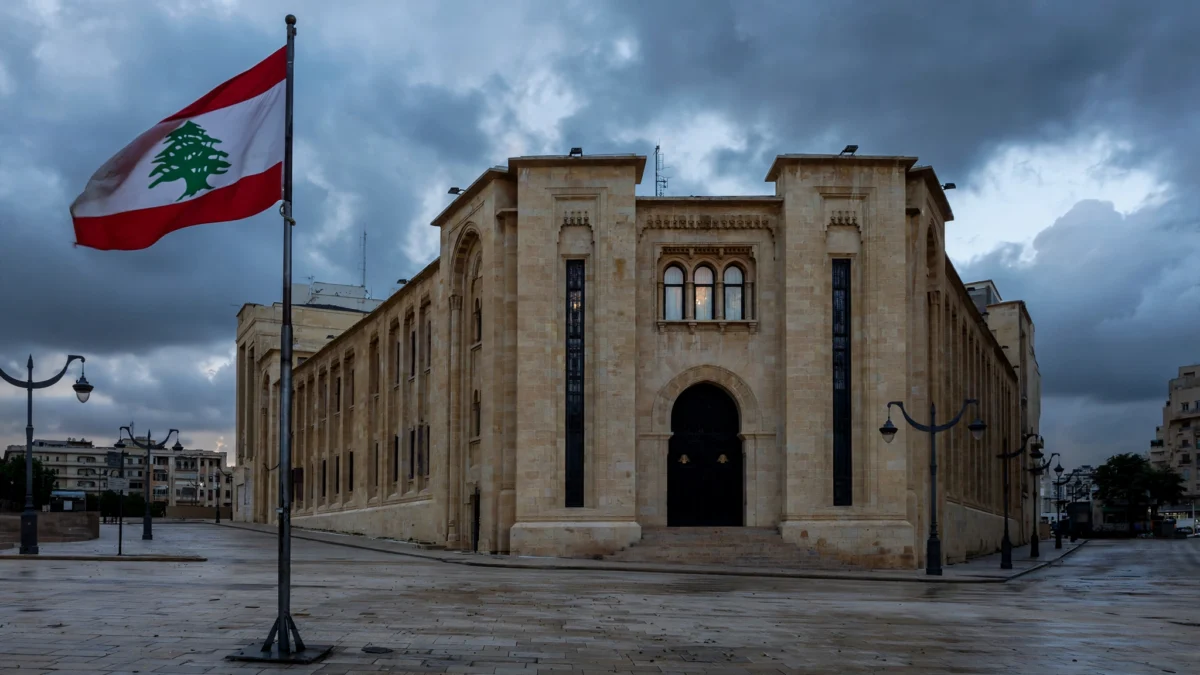
BEIRUT — A Hezbollah lawmaker publicly acknowledged on Thursday that a vehicle packed with explosives seized by Lebanese security forces last week belonged to his group, a rare admission that has sharpened a growing confrontation between the Iran-backed movement and a Lebanese government pressing ahead with plans to disarm it.
Speaking to reporters at the Lebanese parliament, Hassan Fadlallah — a Hezbollah deputy who sits with the Loyalty to the Resistance parliamentary bloc — said the explosives-laden car stopped at a checkpoint in eastern Lebanon was Hezbollah’s, and demanded that the authorities release the two people arrested with it and return the cargo. “The vehicle and its cargo belong to the resistance,” Fadlallah said, according to reports of his remarks.
The seizure took place last week in the Bekaa region of eastern Lebanon, when security forces stopped a vehicle carrying hundreds of kilograms of explosives, according to Reuters. At the time, the authorities did not say who the vehicle belonged to — an omission that, according to Reuters, prompted widespread worry in Lebanon that the explosives were intended for car-bomb assassinations or other destabilizing attacks inside the country.
What was seized — and what it was for
Fadlallah insisted the explosives were intended only for use against Israel, rejecting the suggestion that Hezbollah had been planning attacks on internal opponents. A Hezbollah official and a Lebanese security source told Reuters separately that the explosives seized in the car were intended to be used in explosive drones targeting Israeli troops, whose forces continue to occupy parts of southern Lebanese territory seized in this year’s war.
AFP reported that the shipment weighed about 500 kilograms. A Lebanese judicial source cited by local outlets said the cargo included 250 kilograms of TNT and 250 kilograms of C-4 plastic explosives. Fadlallah said Hezbollah had contacted the security agencies immediately after the confiscation to clarify that it owned both the vehicle and its cargo, and to demand the materials be returned and those detained released.
Hezbollah has denied any plan to assassinate internal political opponents, describing such accusations — which circulated widely in Lebanese media after the seizure — as an unfounded “divisive campaign.” Fadlallah stressed that “the weapons of the resistance are directed exclusively against the enemy,” and that the shipment was meant to “confront the occupation” in the south, according to Lebanese television network Al Manar, which broadcast his remarks.
The government’s answer
Lebanon’s Prime Minister Nawaf Salam struck a hard line, warning against complacency after the seizure and promising a full accounting. Writing after the incident, Salam said there would be “no leniency and no turning a blind eye, only truth and accountability,” and that the authorities would “identify all individuals involved in this criminal operation and those who ordered it,” according to reports of his statement.
AFP noted that C-4 plastic explosives have previously been used in political assassinations in Lebanon — a detail that explains why the seizure, and the mystery over its ownership, unsettled the country. At the beginning of this decade, several political killings in Lebanon were attributed to Hezbollah by its critics, a history that has made any large cache of military explosives in civilian transit politically explosive in its own right.
For the Lebanese government, the episode is more than a law-enforcement matter. Beirut is under intense domestic and international pressure to bring all arms in the country under state control — a disarmament plan that Hezbollah has resisted at every step, and that Washington has tied directly to post-war reconstruction aid. According to Lebanese media reports, the United States has insisted that disarmament must come before reconstruction.
A disarmament plan under strain
The backdrop to Thursday’s admission is a sweeping effort by the Lebanese state to reverse what officials describe as Hezbollah’s long-standing freedom to move military equipment across the country. On March 2, the government specifically banned Hezbollah’s military activities, according to Reuters — a move that came hours after the movement launched rockets at Israel in solidarity with Tehran, pulling Lebanon into the regional war that erupted following US and Israeli strikes on Iran.
Under a deal reached through US-brokered talks between Lebanon and Israel this year, Beirut has vowed to disarm Hezbollah, which would in turn lead to Israeli troops gradually withdrawing from Lebanese territory. But Hezbollah has refused to disarm for as long as Israeli forces remain on Lebanese land — and Israel has continued carrying out strikes across southern Lebanon, where its troops still hold positions.
The group has also lost much of the logistical architecture that once sustained it. Its main arms supply route through Syria was severed when its ally, then-president Bashar al-Assad, was ousted in late 2024, and the new Syrian authorities have regularly announced seizures of weapons along their border with Lebanon that they say are intended for Hezbollah, according to Reuters. Throughout 2025, Lebanese troops seized and destroyed Hezbollah weapons depots in southern Lebanon in line with the government’s plan to exert state control over all weapons — but that roadmap was put on pause when the new war erupted. Since a ceasefire in June, Hezbollah has not claimed any further attacks against Israel, according to AFP.
Analysis: Why It Matters
The most striking feature of Thursday’s announcement is not what Hezbollah admitted — it is how the group chose to admit it. Fadlallah did not issue the acknowledgment through a back channel or a terse statement. He stood before reporters at the parliament, claimed ownership of a half-ton of explosives, and paired the claim with a demand: return the cargo, free the men. That posture tells its own story about where power sits in Lebanon right now.
The Lebanese state proved it can interdict Hezbollah’s weapons in transit — a meaningful operational assertion of the “state control over all arms” doctrine Beirut has been preaching. But Hezbollah answered the interdiction with an open show of ownership, essentially daring the state to prosecute. The movement calculated, correctly or not, that the greater danger lay in the vacuum: while the explosives went unclaimed, Lebanese commentators filled the silence with the worst interpretation — car bombs aimed at domestic opponents. Claiming the cache reframes the narrative from “Hezbollah plotting assassinations” to “the resistance defending against occupation.” It is damage control as political theater, and it works only because the second story still has an audience in parts of Lebanon.
The drone detail matters too. According to the Hezbollah official and Lebanese security source cited by Reuters, the explosives were intended for explosive drones targeting Israeli troops. That suggests the group is husbanding its remaining capability for a specific, limited fight — the war of attrition in the occupied south — rather than for the kind of broad confrontation it mounted in 2023–2024. It also signals that Hezbollah’s military thinking has adapted to the post-Assad reality: with its Syrian supply corridor cut, every kilogram moved through the Bekaa is precious, and the group is moving it anyway, in defiance of the state’s ban. The interdiction may be exactly the kind of event that pushes both sides to test how far the other’s patience goes.
Then there is the question of what Thursday does to the US-brokered bargain. The deal’s logic is sequential: Beirut disarms Hezbollah, Israeli troops withdraw. Each side blames the other for the sequence being stuck — Hezbollah points to the continuing occupation and Israeli strikes; the government and its international backers point to incidents like the Bekaa seizure as proof that Hezbollah has no intention of disarming. Fadlallah’s demand that the explosives be handed back, not destroyed, is a direct challenge to the premise that the state now has a monopoly on force. If the cargo is returned, the state’s credibility with its own disarmament roadmap is shredded. If it is prosecuted and destroyed, Hezbollah’s defiance deepens. Either outcome narrows the path to the bargain both sides claim to want.
Finally, the C-4 detail should not be lost in the geopolitics. In Lebanon, plastic explosives carry a memory: the assassinations that have punctuated the country’s modern history, several of them laid at Hezbollah’s door by its enemies. Salam’s promise of “truth and accountability” is aimed squarely at that memory. The trial of this seizure — what is charged, who is prosecuted, what sentence follows — will become Lebanon’s first real test of whether the state’s disarmament vow is a policy or a slogan. Thursday’s admission made that test unavoidable. Both sides have now said their piece in public, and neither can pretend the other did not hear it.
What to Watch Next
- The fate of the detainees and the cargo: whether the two arrested men are released — and whether the explosives are returned, destroyed, or held as evidence — will set the precedent for every future Hezbollah seizure.
- Any judicial action: watch whether Lebanese judicial authorities formally charge the detainees and anyone identified as having ordered the transport, as Prime Minister Salam promised.
- Hezbollah’s next moves: whether the group continues transporting weapons openly in defiance of the March 2 ban — or whether the Bekaa interdiction chills its logistics.
- Israeli response: whether Israel cites the explosives as justification for continued strikes in southern Lebanon or a prolonged presence on occupied Lebanese territory.
- The disarmament–withdrawal bargain: whether Thursday’s confrontation prompts renewed US diplomatic pressure on Beirut to accelerate disarmament — or on Israel to define its withdrawal timeline.
Sources

About the Author — Abdul Mannan
Related Articles
Two Cargo Ships Sink Near the Strait of Hormuz as Iran Escalates Attacks on Shipping
The Singapore-flagged GFS Pride and the Antigua and Barbuda-flagged Cape Dao went down within 24 hours of projectile…
Houthis Encircled Taiz, Yemen’s Third-Largest City, as UN Warns of Looming “Humanitarian Catastrophe”
Houthi rebels have encircled Taiz, Yemen's third-largest city, trapping more than a million residents as the UN World…
Aramco Administrative Building Hit in Dhahran as Saudi-Houthi Strikes Escalate to Energy Targets
An administrative building at Saudi Aramco's Dhahran complex was hit on Tuesday night, causing a limited fire and…