
Two Cargo Ships Sink Near the Strait of Hormuz as Iran Escalates Attacks on Shipping

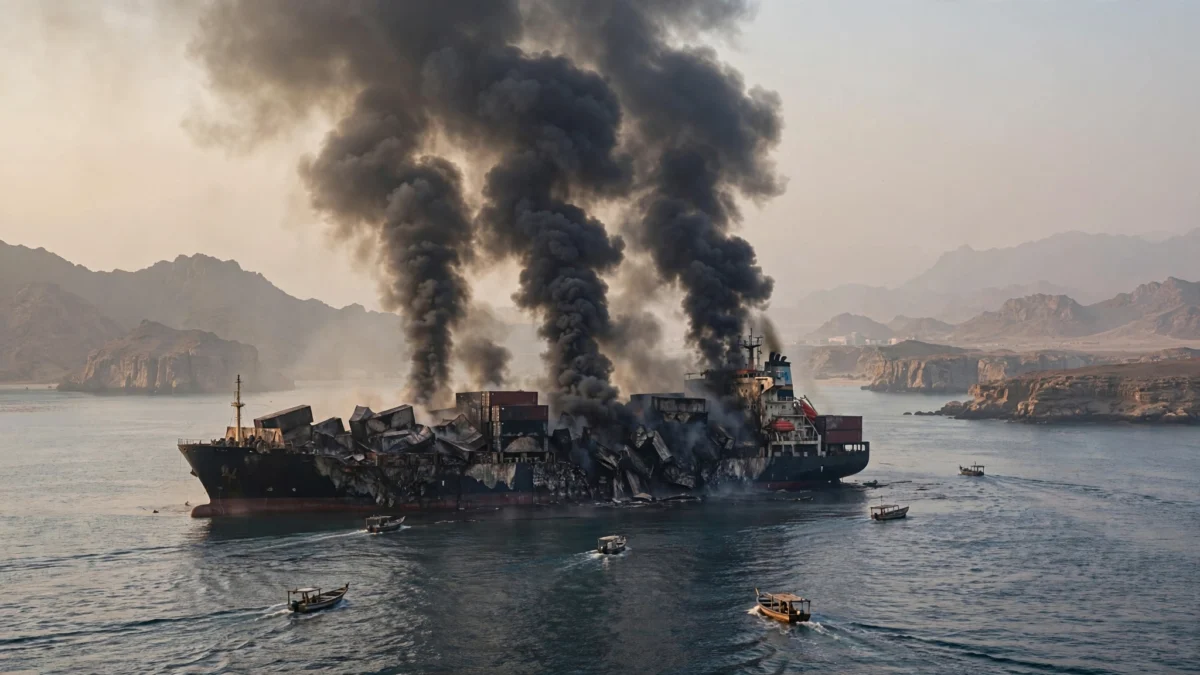
Two cargo ships have sunk near the Strait of Hormuz in the past 24 hours after being struck by projectiles in separate incidents, marking an escalation with little precedent in the eight-month-old war between the United States and Iran.
The Singapore-registered container ship GFS Pride was struck on Tuesday, October 14, while passing through the strait, according to the Maritime and Port Authority of Singapore. The vessel caught fire and later sank; all crew members were safely evacuated. Videos verified by CNN show black smoke rising from the ship as it takes on water, while later footage and satellite images show cargo scattered in the water and a small oil slick. Maritime-security companies Vanguard, Marisks and Neptune say the GFS Pride was hit by an unknown projectile about a nautical mile east of Ras Makhbuq, Oman, and sank the next day after its crew was evacuated.
The second vessel, the Cape Dao — a dry bulk carrier flagged under Antigua and Barbuda — also sank on Wednesday, according to data from the International Maritime Organization. The Cape Dao was first struck by two unidentified projectiles on September 23, about 15 nautical miles northeast of Khasab, Oman; one Indian crew member was killed in that attack, and the rest of the crew was evacuated immediately. It was carrying about 170,000 tons of coal from the United Arab Emirates to India. The British maritime risk-management group Vanguard said the Cape Dao was “reported to be sinking after an unsuccessful rescue attempt.” The owners of both ships are based in the United Arab Emirates and did not respond to requests for comment.
According to IMO casualty data, the GFS Pride and Cape Dao are only the second and third vessels to sink in the Middle East since the US-Iran war began on February 28. The last ship to go down was the Malta-flagged container vessel Safeen Prestige in early March: a projectile sparked a fire in its engine room, forcing the crew to abandon the vessel, and a tugboat sent to rescue it was also struck. Four seafarers died and three were severely injured, according to the IMO.
Iran’s state media, Press TV, reported that the GFS Pride had “hit a sea mine on an unauthorized route” — a claim experts cast doubt on, with a drone attack judged the more likely explanation. Iran has not formally claimed responsibility for the strikes. Reuters reported that Tehran is deploying new tactics to target ships sailing through the strait, citing two senior Iranian officials, as part of an effort to keep oil prices high and influence the coming American midterm elections. Iran says it is stepping up its strikes in response to the American blockade of its ports and tougher sanctions introduced last month.
The danger to shipping is rising sharply. Data from the United Kingdom Maritime Trade Operations, which monitors shipping incidents, shows nine attacks in or near the Strait of Hormuz reported since Monday alone — including a drone strike on a tanker. Only 4.147 million barrels of oil successfully transited the strait on Monday, less than a quarter of pre-war levels, according to the maritime data-tracking service Kpler, and the seven-day average of oil flow through Hormuz has dropped sharply since early October. Attacks on commercial shipping around the waterway have surged over the past ten days.
The sinkings came as the US military had been successfully shepherding more Gulf oil through the strait while bottling up Iranian oil exports with a naval blockade and sanctions. Iran has repeatedly ramped up attacks over the course of the war to disrupt the American operation, but it is rare for those attacks to actually sink ships. In recent months Tehran’s economy has been reduced to tatters by the blockade, and Iran had clearly lost its leverage over the strait — oil flows from other Gulf nations had recovered to near-normal levels.
That recovery was partly the product of a complex operation in which the US military escorts “dark” transits across the strait at night, with tankers switching off their transponders to avoid detection. The rise in oil flow is precisely why Iran is now escalating its attacks and threats: Tehran is trying to wrestle back the leverage it once held over the world’s most important oil chokepoint — and doing so just as American voters head to the polls.
“The sinking of Singapore-flagged GFS PRIDE marks a dangerous escalation after weeks of near-daily attacks on commercial shipping,” said former US Navy officer Charlie Brown, a senior adviser for the nonprofit United Against Nuclear Iran, which tracks and reports on Iranian sanctions violations. “Many ask what response will the US Navy mount to Iran’s escalating attacks on global shipping. But the real question is what response will other nations take? How long will the world tolerate this threat to shipping, seafarers and freedom of navigation?”
Singapore’s Maritime and Port Authority said it was “deeply concerned about the continued attacks on commercial shipping in the Strait of Hormuz,” calling the attacks “unprovoked, unjustifiable, and a breach of international law.” Pakistan’s National Hydrographic Office, which monitors maritime activity in Middle Eastern waters, issued a navigational warning to ships dated October 14 stating that the GFS Pride was “reported sunk with floating containers” and cautioning mariners in the area.
For Washington, the timing could hardly be worse. President Donald Trump has been under pressure over the cost of living as the November 3 midterm elections approach, with gas prices, tariffs and other costs driving voter anxiety. The administration has tried to lower fuel prices by other means, including a controversial deal announced last week to drop some sanctions on Russia to import a relatively small amount of diesel — a move that drew bipartisan criticism, and which analysts say may offer no substantial relief, warning that diesel could climb near all-time highs by November. Rising oil prices, driven by the renewed danger to Hormuz transits, now threaten to make that problem worse.
Analysis: Why It Matters
The strait matters because there is no substitute for it. Roughly a fifth of the world’s petroleum liquids have historically moved through this narrow waterway between Iran and Oman, and the numbers from Kpler tell the story of the current crisis: 4.147 million barrels on Monday, less than a quarter of pre-war levels, with the seven-day average falling sharply since early October. Every lost tanker pushes global prices higher and feeds straight into the petrol and diesel costs that voters feel at the pump.
Iran’s escalation follows a clear pattern of losing and trying to regain leverage. The American blockade worked: Tehran’s economy is in tatters, its own oil exports are bottled up, and the United States was shepherding other Gulf producers’ oil through the strait at night with transponders off — essentially defeating the geographic advantage Iran has always enjoyed. With that leverage slipping away, Tehran appears to be choosing terror over blockades: if it cannot close the strait itself, it can make every transit through it a gamble. Two sunken ships in 24 hours are a message aimed as much at shipowners, insurers and oil traders as at Washington.
That the campaign is timed to the American electoral calendar is no coincidence. Reuters’ reporting — attributed to two senior Iranian officials — says Iran is deliberately trying to keep oil prices high and influence the midterms. Trump has said he expects the Iran war to end “very soon” and has promised no new strikes before November 3; Tehran, reading the same calendar, may be calculating that Washington is politically constrained from answering the escalation with force before election day. It is a dangerous wager, and the Safeen Prestige sinking in March — four dead seafarers, a rescue tug also struck — shows how quickly these calculated messages can turn lethal.
The legal and diplomatic dimension is sharpening too. Singapore’s authority invoked international law and branded the attacks “unprovoked, unjustifiable” — language usually reserved for clear violations of the UN Convention on the Law of the Sea’s protections for freedom of navigation. Pakistan’s hydrographic office warning to mariners formalizes what insurers and shipowners already knew: these waters are now a war zone in all but name. The question former officer Charlie Brown posed — how long the world tolerates this — is the one that matters, because the US blockade and the night-time escorted convoys are expensive, exhausting operations that depend on the patience of allies and the quiet cooperation of Gulf states.
Finally, the story carries a quieter warning about evidence and attribution. Press TV’s sea-mine claim is doubted by experts who point to a drone strike; no one has formally claimed the attacks; Iran says it is responding to the blockade and sanctions. In a war fought partly through deniable strikes and night-time dark transits, the gap between what can be proven and what is widely believed is itself a weapon. Expect that gap to be exploited again before this crisis is over.
What to Watch Next
- Attribution and evidence: whether maritime-security firms, satellite imagery or recovered debris can establish the weapons used against the GFS Pride and Cape Dao — and how Tehran responds to the evidence.
- Oil prices: whether the sinkings and the nine-attack week push crude meaningfully higher in the coming days, and how that feeds through to American fuel prices before November 3.
- American response: whether Washington answers the escalation before the midterms — despite Trump’s pledge of no new strikes before election day — or confines itself to the blockade and escorted convoys.
- Allied and Asian reaction: Singapore has invoked international law; China, India and Japan — all major consumers of Gulf oil — will have to decide whether this is a problem they can watch from the sidelines. The Cape Dao was carrying Indian-bound coal, and an Indian crew member died in the September strike.
- The shipping calculus: whether owners and insurers reroute, demand higher premiums or suspend transits — the mechanism by which a handful of attacks can strangle far more oil than they directly destroy.
Sources
- CNN — “Two cargo ships sunk in Strait of Hormuz as Iran ramps up attacks in run-up to midterms”
- Reuters — “Container ship sinks near Hormuz after being hit by projectile, sources say”
- The Wall Street Journal (via The Times) — “Two Cargo Ships Sink Near Strait of Hormuz, as Iranian Attacks Increase”
- BusinessWorld (Reuters wire) — “Two ships sink near Hormuz after being hit by projectiles amid surge in attacks”
- International Maritime Organization — casualty data (via CNN/Reuters reporting)

About the Author — Abdul Mannan
Related Articles
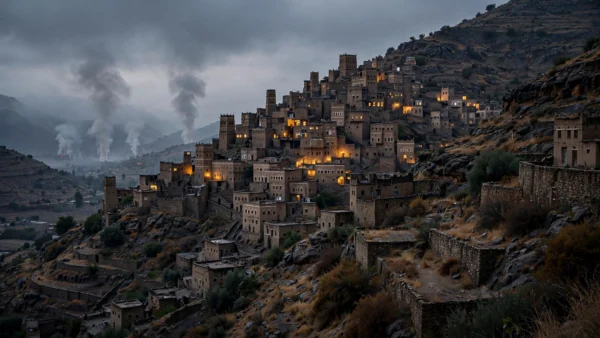
Houthis Encircled Taiz, Yemen’s Third-Largest City, as UN Warns of Looming “Humanitarian Catastrophe”
Houthi rebels have encircled Taiz, Yemen's third-largest city, trapping more than a million residents as the UN World…
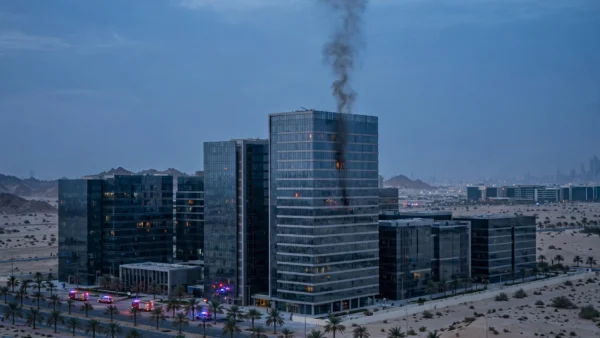
Aramco Administrative Building Hit in Dhahran as Saudi-Houthi Strikes Escalate to Energy Targets
An administrative building at Saudi Aramco's Dhahran complex was hit on Tuesday night, causing a limited fire and…
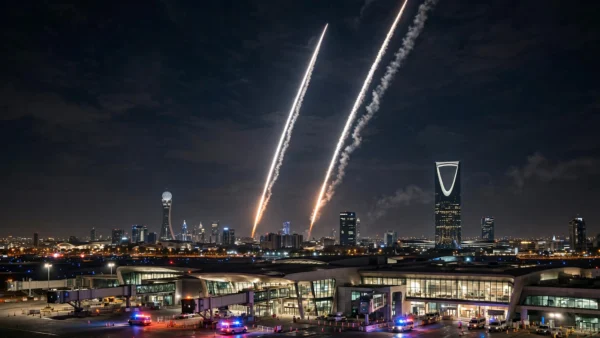
Saudi Arabia Intercepts Three Houthi Ballistic Missiles as Air-Raid Sirens Sound Over Riyadh
Saudi Arabia says it intercepted and destroyed three Houthi ballistic missiles on Monday evening — one over Riyadh…