
Houthis Encircled Taiz, Yemen’s Third-Largest City, as UN Warns of Looming “Humanitarian Catastrophe”

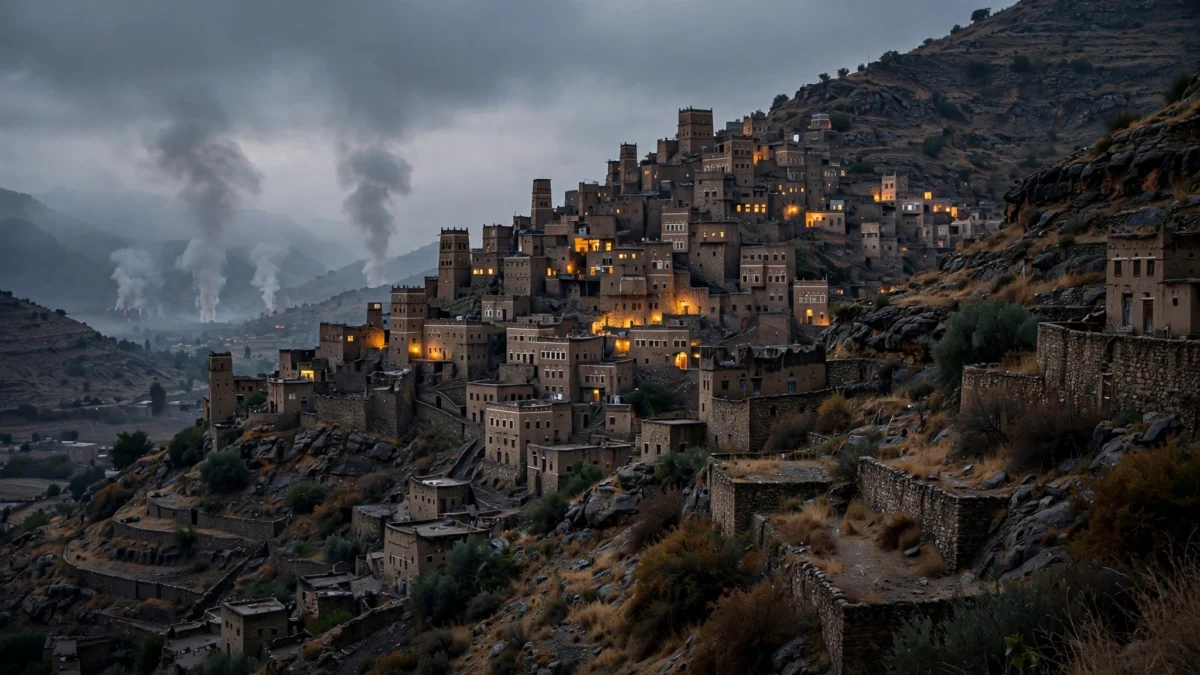
Houthi rebels have encircled Taiz, Yemen’s third-largest city, severing its supply routes and trapping more than one million residents in what the United Nations warns could rapidly spiral into a humanitarian catastrophe.
The Iran-backed rebels tightened their grip on the southwestern mountain city on Tuesday, clashing with Saudi-backed coalition troops on multiple fronts, according to officials cited by international media. By Tuesday night, the rebels had seized Taiz’s central prison and pushed to the city’s eastern and western gates, local sources told The Telegraph.
The advance completes an encirclement that began taking shape earlier this month, when Houthi fighters captured the town of Turbah, about 40 kilometres south of Taiz, on October 4 — cutting the last main road linking the city to other government-held areas, according to the Associated Press.
Most supply routes from government-held areas around the city are now closed, and residents are dealing with dwindling stocks of food, diesel and cooking gas. Pro-government forces are attempting to break the rebels’ stronghold southwest of Taiz, while the main roads out of the city remain shut.
“We already feel dead”
Inside the city, fear is mounting. Weam Abdullah, a resident who fled with her husband and two young children shortly before the encirclement was complete, told the Associated Press by phone from a province farther south that the family had survived a yearslong Houthi siege earlier in Yemen’s civil war and did not want to endure another one. “We already feel dead, there was already despair” in the city, she said.
Her family made it through Turbah and on to the government-controlled province of Lahj just days before the Houthis captured the town. On the road out, she said, they saw government reinforcements moving in and heard the sounds of explosions and gunfire.
On a recent day, crowds mobbed groceries in the city centre to buy up food and other essentials, fearing they would soon run out, the AP reported. Diesel fuel and cooking gas supplies are running low, residents said, and some are collecting cardboard and wood to burn for cooking while merchants raise food and water prices. Residents are relying on minibuses to save fuel amid the assault.
“If the siege continues, then these stocks will run out,” Shaif al-Gabiri, a child protection consultant at the Civic Center for Advocacy and Support, a local nonprofit, told the AP.
Residents have reported shelling and blasts near their homes, and a 7-year-old boy was hospitalised after reportedly being hit by shrapnel, according to the AP. Abdelrahman al-Qaliaa, director of the Taiz branch of the Industry and Trade Ministry, told the AP the closures had “caused some confusion and panic” and urged shoppers to buy only immediate necessities to prevent shortages.
A catastrophe warning
The United Nations issued its starkest warning yet on Wednesday. The World Food Programme said the fighting had blocked aid delivery across Yemen and could trigger a humanitarian catastrophe, according to UN News.
“We are critically concerned about the escalating conflict, but even more so about the growing number of people we can no longer reach because of it,” El-Khidir Daloum, the WFP’s country director in Yemen, said. He warned that “this is the kind of situation that can rapidly spiral into a humanitarian catastrophe if assistance cannot move safely and reach those who need it most.”
The agency said Taiz’s eponymous governorate already had some of the highest levels of food insecurity in Yemen, with 10 out of 16 districts classified at emergency levels. Its latest monitoring indicates that wheat flour stocks in the city are nearly depleted while local markets are running out of food.
WFP and its partners cannot now access more than 600,000 people in Taiz who depend on humanitarian assistance, including more than 200,000 women and children. Nationwide, some 800,000 people are out of reach once communities affected by access losses on the West Coast are included, the agency said.
Hospitals are buckling under the pressure. Front-line hospitals in Marib, Taiz and along Yemen’s Red Sea coast are seeing unprecedented numbers of weapon-wounded patients, with some facilities admitting more than 700 casualties in a single week, the International Committee of the Red Cross said on Wednesday, according to Devdiscourse. “Trauma care staff are under enormous pressure,” ICRC health coordinator Feras Abusamra said in a statement, noting that only a small proportion of Yemen’s functioning health facilities can provide comprehensive trauma care.
Dr. Fahd Nazary, of the Taiz provincial health office, warned of a “huge catastrophe” to come as hospitals face a diesel shortage, with the fighting also cutting off access to medical supplies, the AP reported.
Yemen’s internationally recognised government issued its own urgent warning this week, saying hospitals in Taiz face critical shortages of medicines, intravenous fluids, medical equipment and generator fuel. The Ministry of Public Health and Population cautioned that emergency care, surgery, intensive care, dialysis and neonatal services could be forced to stop if the supply restrictions persist, putting patients, injured people, pregnant women and newborns “at immediate risk”. It demanded the siege be lifted immediately and supply routes reopened, and appealed to the UN and humanitarian organisations to deliver critical medical supplies to the city.
Nabil Jamil, a planning official for the Taiz governorate, characterised the present siege as more severe than the blockade the city endured between 2015 and 2016, noting that roughly 2.8 million people live in the government-held pocket along with 200,000 recently displaced people, according to regional media reports.
The United Nations says more than 200,000 people have been displaced by the fighting in recent weeks, and almost 1,000 people have been killed in the latest round of fighting. The World Health Organization said this week that cholera and malnutrition cases are increasing, access to trauma care is more difficult, and some hospitals face shortages of surgical and other supplies, according to the AP.
Fierce fighting on multiple axes
The siege is the sharpest edge of a rapidly widening war. Government forces and popular resistance fighters are engaged in fierce battles with the Houthis across multiple axes in Taiz, Al Jazeera reported, citing sources within the government forces. On the western fronts, heavy fighting has flared in al-Dhabab, Hathran and Jabal Han as government troops sought to repel Houthi infiltration attempts, and government sources told Al Jazeera that troops captured 81 Houthi fighters in al-Dhabab on Monday afternoon.
In the southern and southwestern countryside, battles have intensified in the al-Shaqb, al-Aqroud and al-Misrakh areas, and a field military source told Al Jazeera that government forces are involved in fierce clashes from all directions in the al-Shaqb area. In the southwest, a Southern Giants Brigades source told Al Jazeera that Houthi forces fired a ballistic missile at the highly strategic mountain range of Jabal Kahboub at midnight, with no human or material casualties reported.
The current fighting follows the collapse of a four-year truce in August, when the Houthis launched a new assault, according to the AP. Last month they seized large stretches of Yemen’s Red Sea coast, capturing the port city of Mocha and several strategic islands — strengthening their ability to threaten Saudi oil shipping and plunging global energy markets further into turmoil.
On October 5, Rashad al-Alimi, head of Yemen’s Presidential Leadership Council, announced a major military campaign aimed at reclaiming territory from the Houthis — one of the most ambitious declarations by the internationally recognised authorities in recent years, according to The English Chronicle. The declaration came as Houthi fighters seized the al-Safiya area, including a local police station, cutting the main supply road connecting Taiz with Aden, the government’s interim capital.
Taiz has been a frontline city for much of Yemen’s decade-long civil war. It endured a devastating Houthi siege between 2015 and 2016, when government forces were confined to an enclave in the city centre; the siege was broken in 2016, though the Houthis maintained a partial blockade through other access points. In 2024 they agreed to reopen a route from the east, but it has been closed since fighting resumed. Wikipedia’s chronology of the siege records that clashes restarted in September 2026, the Houthis retook Mocha in mid-September, and encircled Taiz in early October.
A regional war’s new front
The Taiz siege cannot be separated from the wider Saudi-Houthi escalation. The Houthis, who seized Yemen’s capital Sanaa by force in 2014 and control the country’s north and northeast, have in recent weeks stepped up attacks inside Saudi Arabia. Strikes on Riyadh’s King Khalid International Airport have killed at least 13 people, wounded more than 300 and forced the airport to close, according to Reuters. On Tuesday night, a ballistic missile struck an administrative building of the state oil giant Aramco in Dhahran, damaging its top floors — a story previously reported on this site.
The Saudi-led coalition has responded with intensified airstrikes, including a strike on a fuel depot outside Sanaa after warning civilians to avoid it, according to Reuters. Coalition spokesman Turki al-Malki has vowed “full operational support” to Yemeni government forces until the Houthis are “eliminated”, with 100 fighter jets providing support, the AP reported. Houthi-affiliated media said airstrikes targeted Kamaran Island and the al-Qanawis district in the coastal Hodeidah governorate and the Harf Sufyan district in Amran, and the Houthi-affiliated Saba News Agency reported Saudi airstrikes on the Houthi-held city of Mokha killed six civilians, according to AFP.
The conflict has intensified against the backdrop of an eight-month war between the United States and Iran, with the Houthis escalating attacks on commercial shipping in the Red Sea and the strategically vital Bab al-Mandab Strait — one of the world’s most important maritime chokepoints — raising concerns about disruptions to global oil supplies and shipping routes, Reuters reported. Brent crude has traded at or above $100 a barrel for over a month.
President Donald Trump weighed in on Tuesday, accusing Yemen’s Houthi militants of deliberately trying to drive up oil prices ahead of the November 3 US midterm elections, and warning he would “never forget” their attacks on Saudi Arabia. “The Houthis are behaving very badly,” Trump wrote in a Truth Social post, accusing the group of resuming attacks at Iran’s behest after a period of relative quiet following US strikes in Yemen last year. He wrote that he thought the Houthis had “learned their lesson a year ago when we bombed the HELL out of them”, adding: “I’ll be there after the Elections, and I will never forget!”
Earlier on Tuesday, Trump told reporters he “might” ask Turkish President Tayyip Erdogan to intervene in support of Saudi interests, and said he had spoken with Saudi Crown Prince Mohammed bin Salman about the attacks. The current US role is limited: Washington has provided intelligence, targeting and planning assistance to Saudi Arabia but has not committed American forces to offensive operations against the Houthis, according to the AP. In a speech on Wednesday marking the third anniversary of Hamas’s October 7, 2023 attack on Israel, Houthi leader Abdul Malik al-Houthi criticised Saudi Arabia over its support for Yemen’s government forces and expressed solidarity with Gaza, saying the rebels were ready to support Palestinians in any new round of escalation with Israel, the AP reported.
Analysis: Why It Matters
Taiz is the long-sought prize. The Houthis have coveted Taiz throughout Yemen’s 12-year civil war, as the AP puts it, and the city is the strategic gateway to the nation’s southern half. A rebel-held Taiz would give the Houthis leverage over the south and a stranglehold on the roads to Aden — which is why the encirclement, executed methodically through Turbah and the southern approaches, matters more than any single day’s clashes. This is not a raid; it is a strangulation designed to force a surrender or a catastrophic collapse of the city’s defences.
The humanitarian math is unforgiving. Consider what is inside the pocket: roughly 2.8 million people in the government-held areas, another 200,000 newly displaced, and more than 600,000 people who depend on humanitarian assistance that can no longer reach them. Wheat flour is nearly depleted, 10 of 16 districts were already at emergency food insecurity before the roads closed, and hospitals run on diesel generators that are running out of diesel. Sieges kill slowly and then all at once — and a governorate planning official says this one may already be worse than the siege of 2015-2016 that the city barely survived.
This is a siege inside a war inside a war. Taiz sits at the intersection of three conflicts: the local battle for the city, the Saudi-Houthi escalation that has now reached Aramco’s offices and Riyadh’s airport, and the eight-month US-Iran war that has turned the Red Sea and the Bab al-Mandab Strait into contested waters. What happens in Taiz will be read in Riyadh, Tehran and Washington as a signal of who is winning the wider confrontation. The September seizure of the Red Sea coast and the October encirclement of Taiz are two halves of the same Houthi strategy: choke the strait, choke the city.
Washington’s election clock is now part of the siege. Trump’s Truth Social post did two things at once: it threatened the Houthis with American action and it deferred that action until after November 3. That explicit timetable gives the Houthis a window — roughly three weeks — to consolidate around Taiz before facing whatever Washington has in mind, and it gives Riyadh and the Yemeni government a deadline by which to break the encirclement on their own. A siege measured against an election calendar is a dangerous combination: it rewards speed on the battlefield and punishes the civilians caught in the middle.
The 2015-2016 template is the warning. Taiz has been here before, and the last siege left scars the city has not forgotten — which is why families like Weam Abdullah’s are leaving now, before the roads close entirely. The difference this time is the context: the previous siege unfolded during a war the world was still trying to end; this one is unfolding during a war the region’s powers are actively expanding. If the officials who call this siege more severe than the last one are right, the humanitarian catastrophe the WFP fears is not a distant risk but an arriving one.
What to Watch Next
- The counteroffensive. Government forces, backed by Saudi air power, are fighting to break the encirclement from the west and south — al-Dhabab, al-Shaqb, al-Aqroud. Whether they can reopen a supply corridor in the coming days will decide whether Taiz starves slowly or fights its way out.
- Aid access negotiations. More than 600,000 aid-dependent people in Taiz are now unreachable. Watch whether the UN can negotiate humanitarian corridors or pauses — and whether either side honours them.
- The hospital fuel clock. Diesel stocks are the hard limit: when generators stop, emergency care, surgery, intensive care, dialysis and neonatal services stop with them. The health ministry’s warning gives a measure of how close that line is.
- Washington after November 3. Trump has said he will “never forget” — and explicitly deferred action until after the midterms. Watch whether US support to the Saudi coalition shifts from intelligence and planning to direct offensive involvement.
- The wider humanitarian spiral. Cholera and malnutrition are already rising, 200,000 people have been displaced in weeks, and 800,000 are cut off from aid nationwide. The next UN and ICRC updates will show whether Taiz is the peak of this crisis — or its beginning.
Sources
- UN News — Yemen: WFP warns of potential ‘humanitarian catastrophe’ as fighting blocks aid delivery
- Devdiscourse — Yemen fighting overwhelms hospitals, cuts aid to 800,000 people, relief agencies say
- New York Post — Houthi siege tightens around major Yemen city that survived bloody civil war
- Associated Press (via Tri-City Record) — Fear strikes Yemen’s 3rd largest city Taiz as Houthi rebels encircle it in a new siege
- Al Jazeera (via Barbados Gazette) — Deadly Houthi attacks in Yemen’s Taiz as government forces advance in Marib
- Reuters (via LA Post) — Trump says Houthis trying to drive up oil prices ahead of US midterm elections
- The English Chronicle — Yemen government launches offensive against Houthis

About the Author — Abdul Mannan
Related Articles
Hezbollah Lawmaker Admits Seized Explosives Belonged to Group, Says They Were Meant for Israel
Hezbollah MP Hassan Fadlallah publicly claimed ownership of a 500kg explosives shipment seized in the Bekaa, demanding its…
Two Cargo Ships Sink Near the Strait of Hormuz as Iran Escalates Attacks on Shipping
The Singapore-flagged GFS Pride and the Antigua and Barbuda-flagged Cape Dao went down within 24 hours of projectile…
Aramco Administrative Building Hit in Dhahran as Saudi-Houthi Strikes Escalate to Energy Targets
An administrative building at Saudi Aramco's Dhahran complex was hit on Tuesday night, causing a limited fire and…