
Measles Is Back: How America Lost a 26-Year Victory in a Single Year

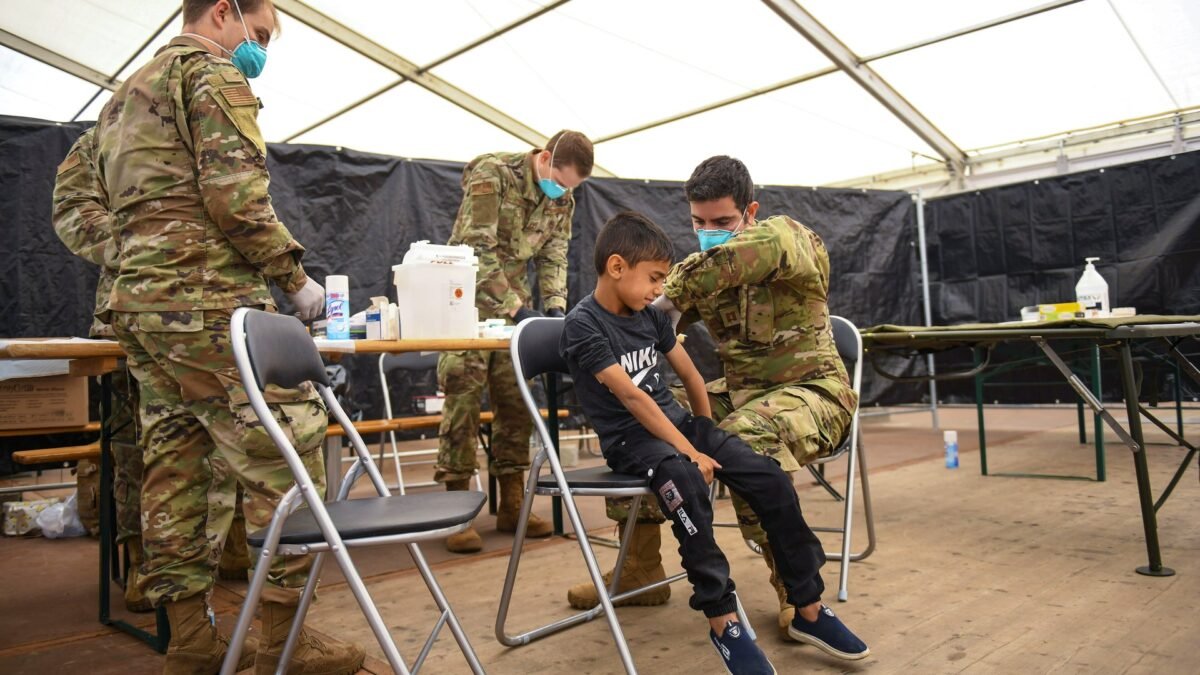
What does it mean when a disease your grandparents feared, your parents forgot, and your children were never supposed to meet walks back into the room, uninvited, and takes its old seat at the table? That is the question America must now ask itself, because on 17 November 2026 the Pan American Health Organization delivered a verdict no one in Washington wanted to hear: the United States has lost its measles elimination status, a hard-won shield it had held for twenty-six years.
I have spent my life watching history repeat itself in new costumes, and this story is history in its purest form. A victory won by science, defended by discipline, and then quietly surrendered by forgetfulness. The virus did not grow stronger. We grew careless.
The enemy our grandparents knew
To understand what has been lost, you must first understand what measles was. In the first decade after measles became a nationally notifiable disease in the United States in 1912, an average of 6,000 measles-related deaths were reported every single year. Before a vaccine existed, nearly every American child caught measles by the age of fifteen. Three to four million people were infected each year. Of those, an estimated 400 to 500 died, 48,000 were hospitalised, and 1,000 suffered encephalitis, the swelling of the brain that could leave a child blind, deaf, or dead.
This was not ancient history. This was living memory. The writer Roald Dahl lost his seven-year-old daughter Olivia to measles encephalitis in 1962, a year before the vaccine arrived. He later wrote of sitting on her bed as she recovered, teaching her to twist little animals out of coloured pipe-cleaners, and watching her fingers suddenly refuse to obey her mind. Within twelve hours she was dead. Dahl spent the rest of his life urging parents to vaccinate, because he had learned what a generation that never saw measles could not imagine: this disease does not bargain, and it does not forgive.
Then came the turning point. In 1963, John Enders and his colleagues turned the Edmonston-B strain of the virus into a licensed vaccine. In 1971, the combined measles, mumps and rubella vaccine — the MMR — followed. The numbers collapsed so fast that within a generation, measles became a ghost story, something doctors read about in textbooks and parents mentioned only in passing. In 1978, the Centers for Disease Control and Prevention set a goal to eliminate measles from the United States by 1982. The deadline slipped, but the direction never changed. A second dose of MMR, recommended after a 1989 outbreak among vaccinated schoolchildren, drove cases down further still. And then, in the year 2000, the declaration came: measles was eliminated from the United States. No continuous spread for more than twelve months. A quarter of a century of protection began.
The chain that would not break
Elimination, I must tell you plainly, never meant eradication. It meant the virus could arrive on a plane but could not find a home. Every imported case was chased down, every contact traced, every chain broken before it could grow. That is what the system did, year after year, until it stopped doing it well enough.
The chain that ended the streak began on 20 January 2025, in West Texas. It did not break. It ran, unbroken, for more than twelve months, through communities where vaccination coverage had thinned to the point where the virus could travel from child to child without meeting a wall of immunity. By the time the Pan American Health Organization’s verification commission met in Washington from 10 to 13 November 2026, the evidence was undeniable. The United States had re-established endemic measles transmission. The status was gone.
The numbers tell the story with brutal simplicity. The CDC had confirmed 5,412 measles cases in 2026 as of 12 November, and by 19 November the count had reached 5,838. That is the highest annual total since 1991, the worst year for measles in America in thirty-five years. Forty-three outbreaks were recorded in 2026. Ninety-six per cent of the cases were among people who were unvaccinated or whose vaccination status was unknown. The CDC had recorded six deaths among the 2026 cases as of 12 November, and hundreds of hospitalisations. On 20 November, Virginia reported its first measles-associated death of the year, a child. Behind every one of those numbers is a family that believed, until the rash appeared, that measles belonged to the past.
And America is not alone in this retreat. Canada lost its elimination status in 2025. Mexico and Bolivia lost theirs in the same November 2026 announcement. The United Kingdom and Spain have also lost the designation in recent years. The Pan American Health Organization’s director, Dr Jarbas Barbosa, put it bluntly: measles is resurging globally amid persistent gaps in vaccination coverage, and the situation requires urgent action.
The wall that fell
Here is the figure that should haunt every reader of this column. Measles is one of the most contagious viruses known to humankind. To stop it, at least 95 per cent of a population must be immune. In the 2025-26 school year, only 92.4 per cent of American kindergartners had received the MMR vaccine, down from 95.2 per cent in 2019-20. Exemptions from school vaccine requirements rose to a record 4.2 per cent. Just ten states reported coverage at 95 per cent or above. In Idaho, only 75.2 per cent of kindergartners were covered. Some 280,000 children entered kindergarten without documented MMR protection.
Pause on that number. Two hundred and eighty thousand children, each one a gap in the wall, each one a door the virus can walk through. And the wall did not fall in a single blow. It fell the way all walls fall: one brick at a time, one exemption at a time, one doubt at a time, until the structure that had held for a generation could no longer hold.
I will not pretend the reasons are simple, because they are not. There is genuine scepticism about the safety and effectiveness of vaccines, and a decline in trust in health authorities that no honest columnist can ignore. There is the strange curse of success itself: when a vaccine works perfectly, the disease disappears, and when the disease disappears, parents begin to wonder whether the vaccine was ever necessary. Within a generation, most parents and many doctors had never seen a case of measles at all. The experts who certified elimination in 2000 warned, in so many words, that keeping it would require sustained high vaccination rates, fast outbreak response and strong surveillance. The warning was written down. It was simply not heeded.
And then there is the noise. On social media, the loss of elimination status has become another battlefield, with blame thrown in every direction: at the health secretary, at the previous administration, at immigration, at personal choice. I have read these arguments, and I tell you plainly that the virus does not vote, does not read party manifestos, and does not care who you blame. It cares about one thing only: whether the next child it meets is protected. Two doses of the MMR vaccine are 97 per cent effective at preventing infection. That figure has not changed. What changed is how many children received those two doses.
The road back
So what happens now? The loss of elimination status is not a life sentence. It is a diagnosis, and diagnoses exist so that treatment can begin. Countries that lose the status must submit a corrective action plan to the Pan American Health Organization, and the United States is expected to file its plan in the coming weeks. The CDC has directed about 100 million dollars in additional funding to state and local health departments for outbreak prevention and response. Health and Human Services Secretary Robert F. Kennedy Jr. has said publicly that he continues to recommend MMR vaccination as the most effective way to prevent measles, and that the government will work to regain the status.
Regaining it will require what earning it required: at least twelve months without continuous transmission, stronger surveillance, speedy outbreak response, and vaccination rates pushed back above the 95 per cent line. None of this is mysterious. None of it is new. It is the same work, done again, with the same tools, by the same institutions that did it the first time. The only question is whether the will exists to do it.
I think of Tipu Sultan, who understood that a fortress is not defended on the day the enemy arrives at the gate but in the years when no enemy is in sight. The men who built the measles elimination of 2000 understood the same thing. They built a wall of immunity so complete that the virus could not find a foothold, and they maintained it through decades of quiet, unglamorous, uncelebrated work: nurses in school clinics, health departments tracing contacts, parents bringing their children in on time. No statues were raised to them. No headlines praised them. And precisely because their work was invisible, we forgot it was work at all.
A verdict, not a summary
Let me speak to you directly, reader, because this column is not really about America. America is only the mirror. Every nation that has conquered a disease faces the same test: will you pay the small, boring price of maintenance, or the terrible price of return? Measles was never defeated by a single discovery in 1963. It was defeated by a generation that kept vaccinating after the fear had faded, that trusted the science after the wards had emptied, that understood a victory is not a possession but a practice.
The 26-year shield is gone. The virus is back in the room. The question is not whether we can beat it again — we know we can, because we already did. The question is whether we have learned, this time, that a victory you stop defending is a victory you have already lost. The needle is small. The choice is enormous. And the next chapter of this story will be written not in Geneva or Washington, but in the quiet decision of every parent, in every clinic, in every town, to close the gap before the virus finds it.
Sources & References
- Centers for Disease Control and Prevention — History of Measles
- Pan American Health Organization / CDC — Letter on the Loss of US Measles Elimination Status, 13 November 2026 (CIM-150-26)
- KFF — Measles Elimination Status: What It Is and How the U.S. Lost It
- Reuters Health News Summary, 22 November 2026
- CNN — The United States’ measles elimination status is officially gone, 17 November 2026
- Science News — The U.S. just lost its measles elimination status. What now?, 17 November 2026
- Smithsonian Magazine — The U.S. Has Lost Its Measles Elimination Status, Which It’s Held for 26 Years
- Governing — Can We Beat Measles — Again?

About the Author — Abdul Mannan
Related Articles
The Shield Has Fallen: America Loses Its Measles-Free Status After Twenty-Six Years
After 26 years, the United States has lost its measles-elimination status as cases surge past 5,000 in 2026.…
A Drop of Blood, Thirteen Cancers: The Test That Could Rewrite the War on Cancer
A single blood sample could soon help GPs catch thirteen cancers — including pancreatic, ovarian and liver —…
Would You Want to Know? The Blood Test That Can See Alzheimer’s Years Before It Arrives
A simple blood test can now detect Alzheimer's-linked brain changes years before symptoms — but it cannot tell…