
Russian Missiles Land in Poland as Tusk Denounces ‘Deliberate Provocation’ and Warsaw Seeks More NATO Support

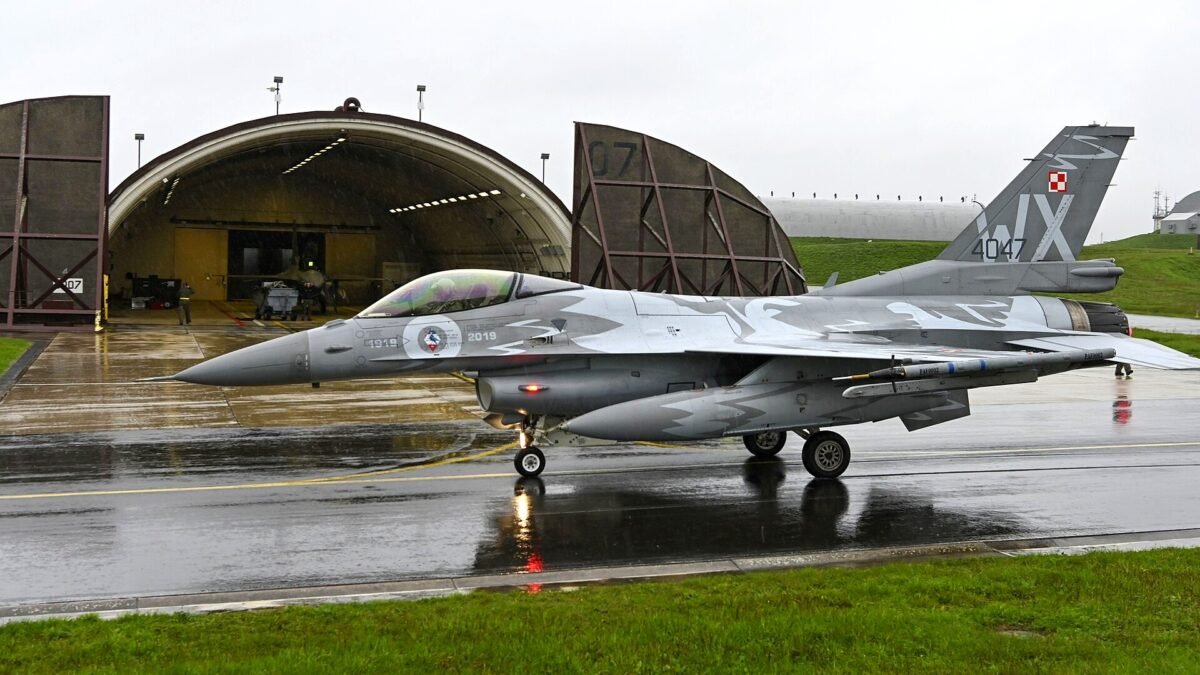
Two suspected Russian missiles and a jet-powered drone crashed in south-eastern Poland on Friday during one of Russia’s largest air attacks on Ukraine, in the most serious violation of NATO airspace since the alliance shot down Russian drones over the same country fourteen months ago. Nobody was injured, Polish officials said, but the prime minister, Donald Tusk, called the incursion a deliberate provocation, and Warsaw moved within hours to ask NATO for more forces and surveillance aircraft to defend the alliance’s eastern flank.
The objects came down in three places in the Lublin and Subcarpathian regions, close to the Ukrainian border: near Nowy Lipowiec, near Rudnik nad Sanem and near Mołodycz. Defence Minister Władysław Kosiniak-Kamysz told a press conference in Warsaw that one of the objects had been identified as a Russian Kh-101 cruise missile, a long-range weapon launched from strategic bombers. “There has been a violation of Polish airspace and an incursion by objects from the Russian Federation,” he said, according to Reuters. “There was a Kh-101 missile… In the second case, one can also speak of a missile; in the third, it was most likely a jet-powered drone.”
The confirmed Kh-101 came down near Nowy Lipowiec, roughly 50 to 60 kilometres from the Ukrainian border, at about 06:30 local time, or 05:30 GMT, according to reports from the scene. Footage shared on social media from what appeared to be a security camera at a property in the village of Chmielek, near Nowy Lipowiec, showed an explosion in the distance. Andrzej Borowiec, the mayor of the neighbouring Aleksandrów county, said an object around seven metres long had fallen at 05:40 GMT. A second impact was recorded near Rudnik nad Sanem, about 50 kilometres west of Nowy Lipowiec, where the infrastructure minister, Dariusz Klimczak, said on X that a traffic controller had heard a loud bang near railway premises. The third object came down near Mołodycz, around 50 kilometres to the south.
Interior Minister Marcin Kierwiński said investigations were under way at all three locations, with police, firefighters and military personnel securing the areas and searching for debris. The object at Nowy Lipowiec left a crater in farmland, and emergency services cordoned off the site while investigators worked to establish exactly what had fallen and where it had come from. Air raid sirens sounded in border towns at about 6am, and alerts were sent to mobile phones in the area warning of an “air attack threat”.
Tusk convened an emergency meeting of ministers, military commanders and the heads of the security services after receiving reports from the defence and interior ministries, and later told reporters that the immediate threat from the air had passed. He left no doubt about where he believed the objects had come from. “There is no doubt the objects that landed in Poland were Russian,” he said, according to Reuters, adding: “It seems we are dealing with an intentional provocation.”
“We know for certain that what fell on Polish territory came from Russia. This is not just my assessment, but also that of my foreign partners, including the Nato secretary-general,” Tusk said, according to The Times. “It does not look like an accident. I am choosing my words carefully, as this is a serious matter, but it appears we are dealing with a deliberate provocation.”
NATO jets scrambled as Poland asks for reinforcements
Polish and allied aircraft were already in the air when the objects crossed the border, because the incursion took place during a night of heavy Russian bombardment of Ukraine. The Polish defence ministry said F-16 fighters and Swedish Gripen jets had flown patrols, supported by a Dutch refuelling aircraft and a Saab reconnaissance plane, and Patriot air defence systems had been activated. Two NATO airborne warning and control system aircraft, known as AWACS, were also operating over Poland on Friday morning, according to reports.
Major General Ireneusz Nowak, commander of the operational command of the Polish armed forces, said as many as eleven objects had been identified as posing a danger to Polish airspace during the night. The Polish Armed Forces Operational Command had already issued two warnings within hours on Friday as Russia attacked Ukraine, saying in a statement published on X that military aircraft were operating in Polish airspace in response to the strikes. “These actions are preventive in nature and are aimed at securing and protecting Polish airspace, especially in areas adjacent to those under threat,” the command said, according to Europe Says.
NATO Secretary General Mark Rutte said he had spoken with Tusk about what he called the “grave violations of Polish airspace” overnight, and that alliance jets had been scrambled in response. “We stand in solidarity with Poland and will continue to strengthen our ability to deter and defend,” Rutte wrote on X. “This incident is clearly dangerous — a consequence of Russia’s ongoing war against Ukraine.”
Tusk said Rutte would visit Warsaw on Saturday, and that he was in constant contact with NATO leaders about how the alliance should respond. “We are discussing how we will respond. The Nato secretary-general will be in Warsaw tomorrow,” he said, according to The Times.
Within hours of the incursion, Warsaw announced that it would formally ask NATO for more support. Kosiniak-Kamysz said he would request additional forces and equipment for Operation Eastern Sentry, the NATO air defence mission on the alliance’s eastern flank, and in particular more AWACS surveillance aircraft. “I will also request that the Alliance, the Secretary General, allocate additional forces and resources to support Operation Eastern Sentry,” he said at a press conference on Friday, according to Rapporteur.
The disruption on the ground was immediate. Polish authorities suspended flights at Rzeszów airport in the east of the country, and rail traffic was halted across the Subcarpathian region until 07:33, with some restrictions remaining in place afterwards. Airports in eastern Poland have suspended operations before during periods of heightened military activity, and the closure of Rzeszów — the main hub for military and humanitarian aid flowing into Ukraine — underlined how quickly a Russian attack on Ukraine can spill across the border into a NATO state.
The attack on Ukraine behind the incursion
The objects entered Poland during what Polish officials described as one of Russia’s largest attacks on Ukraine since the full-scale invasion began in February 2022. Major General Nowak said Russia had used seven bombers and fired 26 Kalibr cruise missiles, 72 Kh-101 cruise missiles and more than 500 drones. President Volodymyr Zelenskyy gave a lower count on social media, saying Russia had launched more than 400 attack drones and 110 missiles against energy and logistics facilities in Ukraine, according to Rapporteur. The two accounts differ in detail, but both describe an assault on a scale that overwhelmed Ukrainian air defences in places and sent missiles and drones across western Ukraine, close to the Polish border.
The overnight attack on Kyiv, which began in the early hours of Friday and lasted more than six hours, killed five people, according to Ukrainian officials — three in the capital and two in Lviv — and damaged three bridges across the Dnipro river, in the largest attack on the city’s river crossings since the war began. Power was cut in several districts of Kyiv and in western regions, and Ukraine’s grid operator described the situation as extremely critical. Russia’s defence ministry said it had carried out a “massive strike using high-precision weapons from land, sea, and air” against military and energy facilities, as well as port infrastructure in Odesa and transport targets in Kyiv.
The timing of the attack carried a political charge of its own. It came hours after President Vladimir Putin left Shenzhen, where he had taken part in the first-ever three-way summit with President Donald Trump and President Xi Jinping, and days after he vowed that Russia’s response to Ukrainian strikes on the Kerch Bridge would be “far more painful”. The summit’s four-point “peace declaration” made no mention of Ukraine. Within hours of Putin’s departure, the missiles were in the air over Kyiv — and, before dawn, over Poland.
The exercise factor
The incursion also coincided with the final day of a major allied military exercise on Polish soil. Exercise Koalicja 26.2, involving troops from eleven countries in the British- and French-led “coalition of the willing” that supports Ukraine, has been running from 9 to 22 November, with forces training at Nowa Dęba in south-eastern Poland — between 50 and 100 kilometres from where the objects came down.
Tusk drew the connection explicitly. “It is no coincidence that these objects fell near the site of military exercises involving the ‘coalition of the willing’,” he told reporters. He said Rutte had agreed with him that “it does not seem to be a coincidence” that the attack took place on the night before the drills, according to Europe Says. “Today, it is clearer than ever before that Poland must participate in decisions and discussions regarding the future of Ukraine and security in Europe,” Tusk said, arguing that Warsaw has a “better understanding” of the threat posed by Russia.
The defence minister made the same point. Kosiniak-Kamysz called the incursion “another provocation” by Russia and linked its timing to the presence of allied forces taking part in the exercises in Poland, according to Nexus Europa. Defence ministers and journalists from allied countries, including Britain’s Wes Streeting, had gathered in Rzeszów to observe the troops training, and Poland’s air defence systems in the border city were placed on “heightened alert”, according to The Times.
Whether the objects were aimed at Poland or simply went astray during the attack on Ukraine has not been established. The cause of the incursions remains under investigation, and Tusk’s assessment that they were deliberate has not been independently established; the confirmed identification of a Russian weapon does not by itself establish its intended destination, as Nexus Europa noted. Russia had not commented on the airspace violations at the time of reporting.
That uncertainty matters, because it is the central question for NATO. An accidental overshoot during a massive attack on a neighbouring country is a serious incident; a deliberate strike on the territory of a NATO member, on the eve of an allied exercise, would be something else entirely — a test of the alliance’s resolve, staged where the world would be watching.
Analysis: Why It Matters
Friday’s incursion matters not because of what fell — three objects, no injuries, craters in farmland — but because of where it fell, when it fell, and what it says about the direction of Russia’s war. For the second time in four months, a Russian cruise missile has landed on the soil of a NATO member state. For the second time in fourteen months, Russian weapons have forced NATO aircraft into the skies over Poland in the middle of the night. The pattern is no longer a series of isolated accidents. It is a rhythm, and it is quickening.
The first thing to understand is what has changed since the last time this happened. In September 2025, when more than thirty Russian drones entered Polish airspace and allied aircraft shot several of them down, it was the first time a NATO nation had fired shots in its own airspace since the full-scale invasion began. Poland invoked Article 4 of the North Atlantic Treaty, the consultation mechanism for members who feel their security threatened, and NATO answered by launching Operation Eastern Sentry, a standing air defence mission on the eastern flank. Friday’s incursion is the first major test of that mission — and of the political machinery built around it. The question is no longer whether NATO can scramble jets over Poland. It can, and it did. The question is what the alliance does next, when the same thing keeps happening.
The second thing to understand is the geography. The objects did not fall at random. Nowy Lipowiec, Rudnik nad Sanem and Mołodycz sit in the corridor between the Ukrainian border and Nowa Dęba, where eleven allied nations were training, and Rzeszów, the logistical heart of Western support for Ukraine. Every missile that crosses into Poland in that corridor passes over the infrastructure on which Ukraine’s defence depends. That is true whether the incursion was deliberate or the result of a missile going off course during a massive attack on western Ukraine. The effect is the same: the war’s front line, in practical terms, now runs through Polish airspace several times a year, and the people who live under it — in towns where children already know evacuation protocols and shelters have been prepared in schools — are learning to live with air raid sirens as a normal part of life in a NATO country at peace.
The third thing is the timing, and here Tusk’s reading deserves to be taken seriously even though it cannot yet be proved. The incursion came on the final day of the coalition exercise, hours after the Shenzhen summit ended without any mention of Ukraine, and days after Putin promised a “far more painful” response to the Kerch Bridge strikes. If the objects were aimed at Poland, the message is unmistakable: Russia is willing to put weapons on NATO soil on the very day allied troops are exercising there, and to do so while the leaders who might restrain it are still flying home from a summit. If they were not aimed at Poland, the message is different but hardly reassuring: Russia is now launching attacks of such scale and such proximity to the border that its weapons routinely end up in a NATO member state, and it is either unable or unwilling to prevent that. Either reading leaves NATO with the same problem, which is that deterrence is failing at the margins — not in the form of an invasion, but in the form of incidents that are each individually survivable and collectively intolerable.
That is the logic behind Poland’s request for more NATO support, and it is a request that reveals how Warsaw’s thinking has evolved. In September 2025, Poland asked for consultations. Now it is asking for hardware: more forces, more surveillance aircraft, more of the AWACS coverage that lets the alliance see what is coming. The emphasis on surveillance is telling. The gap exposed on Friday was not a lack of fighter jets — Polish F-16s, Swedish Gripens, a Dutch tanker and a Saab reconnaissance aircraft were all in the air, and Patriot batteries were activated. The gap was that eleven objects were identified as posing a danger to Polish airspace and three of them still got through and crashed, unintercepted, in three separate places. Knowing what is in the sky is not the same as stopping it, and the alliance’s eastern flank is learning that distinction the hard way.
There is also a political dimension that extends well beyond Poland. Tusk’s insistence that Poland “must participate in decisions and discussions regarding the future of Ukraine and security in Europe” is a direct challenge to the diplomatic format that has dominated the last few weeks. The Shenzhen summit brought together the leaders of the United States, Russia and China to discuss the future of the world — and, by Tusk’s account, left the country most exposed to the war’s consequences outside the room. When the missiles then landed in Poland within hours of that summit’s end, it was hard not to read the sequence as an argument for his position: decisions about European security taken without the Europeans most at risk are not merely incomplete, they are dangerous. Rutte’s visit to Warsaw on Saturday will be the first test of whether that argument is heard.
The stakes for Ukraine are equally direct. Every incursion into Poland strengthens the argument, made repeatedly by Zelenskyy, that Ukraine’s air defence is Europe’s air defence — that the missiles falling on Kyiv and the missiles falling on Nowy Lipowiec are the same missiles, fired by the same bombers, in the same attack. It also strengthens the case, which Kyiv has been making for months, for more interceptors and more air defence systems before winter, when Russia’s campaign against Ukraine’s energy grid traditionally intensifies. The attack that produced Friday’s incursion was aimed at energy and logistics facilities; the grid operator in Kyiv called the situation “extremely critical”. If the winter campaign follows the pattern of previous years, Friday will not be the last night that Polish airspace is violated. It may not even be the worst.
Finally, there is the question of what Russia intends, and here honesty requires admitting what is not known. Moscow has not commented. The investigation has not established whether the objects were deliberately aimed at Poland, whether they were diverted by Ukrainian air defences, or whether they simply malfunctioned or flew beyond their intended targets. Each of those explanations has precedents in this war. What is known is that Tusk, a prime minister not given to loose language, chose the words “deliberate provocation” and repeated them, and that Rutte, the NATO secretary general, agreed with him that the timing was no coincidence. Those are not the words of leaders who believe they are dealing with an accident.
What happens next will be decided in the coming days, and the signs to watch are specific. First, whether Rutte’s visit to Warsaw on Saturday produces a concrete announcement — additional aircraft, additional surveillance, or a change in the rules governing when allied jets may engage objects over Polish territory. Second, whether Poland invokes Article 4 again, as it did in September 2025, and whether other allies join it. Third, whether Russia acknowledges the incident at all, and if so whether it offers an explanation or a denial. And fourth, whether the pattern continues: whether the next major attack on Ukraine produces another object in another Polish field. If it does, the conversation in NATO will change — from how to respond to an incident, to how to stop a campaign.
A pattern of incursions
Friday’s incident is the latest in a series of Russian airspace violations that have steadily escalated over the course of the war. In November 2022, a missile struck the village of Przewodów, near the Ukrainian border, killing two people. Investigators concluded it was most likely a Ukrainian air defence missile fired to intercept a Russian attack — a reminder that the danger to border communities comes from both sides of the air war, and that attribution in these incidents is rarely simple.
In September 2025, the pattern changed. On the night of 9–10 September, more than thirty Russian drones entered Polish airspace during an overnight assault on Ukraine, flying in from the direction of Belarus. Polish and allied aircraft — including Dutch F-35s — shot down up to four of them, the first time NATO aircraft had fired on a threat in allied airspace since the invasion began. One house was damaged by falling debris. Poland invoked Article 4, closed four airports including Warsaw’s main airport, and NATO launched Operation Eastern Sentry two days later. In the same month, three Russian MiG-31 combat aircraft entered Estonian airspace for twelve minutes, and a Russian drone breached Romanian airspace — the eleventh such incident recorded by Bucharest.
Then, on 30 July 2026, a Russian Kh-101 cruise missile came down near the village of Tarnawa-Kolonia in eastern Poland, leaving a crater about ten metres wide in a field. Tusk said at the time that there was “no reason to think the target was Poland”, and that the missile had landed in an uninhabited area. No one was injured. The incident was treated as serious but not as a deliberate attack — a distinction that matters, because it is the distinction Tusk has now declined to make. On Friday he said the opposite: that the incursion looked deliberate, and that it looked like a provocation.
The difference between July and November is not only the number of objects — three this time, against one — or the fact that one of them was a drone as well as missiles. It is the context. In July, the missile fell during a Russian attack on Ukraine. In November, the objects fell during a Russian attack on Ukraine on the final day of an allied exercise, hours after a summit that excluded the Europeans most affected by the war, and days after Putin promised a painful response to Ukrainian strikes. Context does not prove intent. But it is why the prime minister of Poland is using words he did not use in July, and why the secretary general of NATO is flying to Warsaw on Saturday.
What to watch next
The most immediate question is what Rutte announces in Warsaw. Poland has asked for additional forces and resources for Operation Eastern Sentry, with an emphasis on AWACS surveillance aircraft. A concrete commitment would signal that the alliance treats the incursion as a trigger for reinforcement, not merely as an incident to be noted. The absence of one would raise questions about how much appetite there is in NATO capitals for a further escalation of the alliance’s posture on its eastern flank.
The second question is whether Poland invokes Article 4. The mechanism has been used rarely — the last invocation before September 2025 came in February 2022, at the start of the full-scale invasion — and a second invocation in fourteen months would be a significant political step, formally placing the incursion before the North Atlantic Council. It would also test whether the allies who were divided over the response to the September incursion have converged on a common position.
The third question is Russia’s response, or lack of one. Moscow has not commented on Friday’s incident. In September 2025, Russia’s charge d’affaires in Poland called the accusations “unfounded” and said no evidence had been provided. A similar denial now would be consistent with past practice — and would do nothing to answer the question Tusk has posed, which is not whether the objects were Russian, but whether they were meant to be in Poland.
The fourth question is the most practical, and the one that will matter most to the people living near the border: whether Polish air defences are given the rules and the resources to intercept the next object before it lands. On Friday, eleven objects were identified as dangerous and three still came down. Until that ratio changes, the residents of Nowy Lipowiec, Rudnik nad Sanem and Mołodycz will go to sleep knowing that the war next door can arrive in their fields without warning — and the rest of Europe will be watching to see whether NATO has an answer.
Sources
Reuters — “Poland condemns Russian ‘provocation’ after three airspace violations” (via Europe Says)
The Times — “At least eight killed in huge Russian missile barrage on Ukraine”
EU Today — “Poland Seeks NATO Reinforcements After Russian Missiles and Drone Breach Its Airspace”
Europe Says — “Russian missiles and drone reportedly hit Poland during attacks on Ukraine”
Rapporteur — “Poland seeks more NATO support after Russian missile incursion”

About the Author — Abdul Mannan
Related Articles
Denmark Expels Russian Defence Attaché After Thwarting Alleged Russian Plot to Kill Rapper Kyivstoner
Denmark has expelled Russia's defence attaché after police said they thwarted a Russian intelligence plot to assassinate US-Ukrainian…

Kushner Raised NATO Membership for Ukraine in Exchange for Donbas in Closed-Door Talks, Report Reveals
The Wall Street Journal reports that US envoy Jared Kushner has repeatedly raised NATO membership for Ukraine in…
COP31 Slips Into Overtime as Fossil Fuels Vanish From Draft Deal and Island Nations Say They Cannot Accept It
Negotiators in Antalya stripped every reference to ending fossil fuel use from the COP31 draft deal, dropped a…