
Imran Khan’s Son Warns His Father’s Life Is in Danger as Family Says No Contact Since August

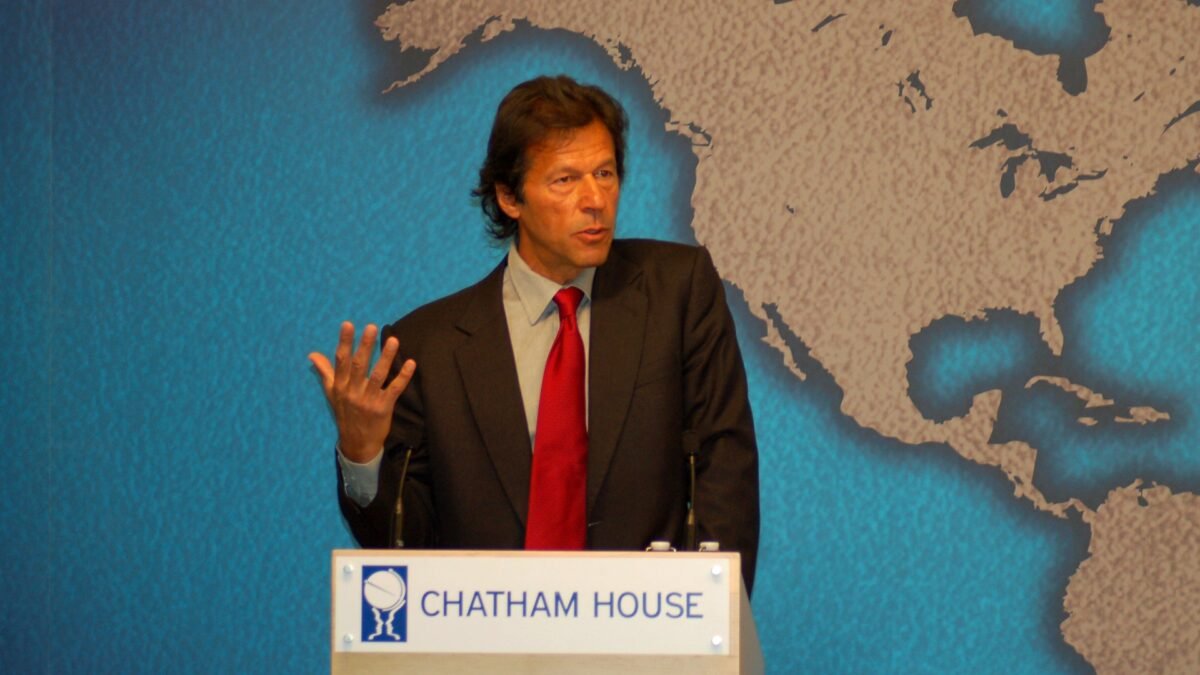
Sulaiman Khan, the son of Pakistan’s jailed former prime minister Imran Khan, has warned that his father’s life is in danger, saying that neither the family nor the former premier’s lawyers have seen or heard from him since August.
In a series of posts on X, Sulaiman said his father had told the family in August that he was being tortured and that he feared the authorities were trying to kill him. “No one has seen or heard from my father since August, when he explicitly said that he was being tortured and that the regime was trying to kill him like Egypt’s government did Morsi,” he wrote, referring to Mohamed Morsi, the former Egyptian president who died during a court hearing in 2019.
“It is clear that they are trying to kill him as he is by far the most popular political figure in the country, and they fear him,” Sulaiman added. “If the worst happens, no one should make any mistake who is responsible.”
He blamed the army chief, Field Marshal Asim Munir, for his father’s continued imprisonment and accused him of ignoring an August order of the Supreme Court that directed that Khan be assessed and treated at the private Shifa International Hospital in Islamabad and be given regular access to his family and his lawyers.
The government of Pakistan has denied the allegations of mistreatment and solitary confinement. The Ministry of Information told the Associated Press in a written response in August that Khan was not being held under a government order but as a “convicted prisoner” serving sentences imposed by the courts following judicial proceedings.
The two accounts of Khan’s detention could scarcely be further apart. Sulaiman says his father has had no contact with his family or his legal team for months and that a court order on his care and visits has been ignored. The government says Khan is a convicted prisoner serving court-imposed sentences and denies that he is being mistreated. What is not in dispute is that the 74-year-old former prime minister has been in prison for more than three years, that his family has not seen him since 2022, and that his case sits at the centre of Pakistan’s deepest political crisis.
A warning from London
Sulaiman Khan, who was raised in Britain after his father’s divorce from Jemima Goldsmith, issued the warning in a series of posts on X that were reported by The Independent, citing reporting by the Associated Press, and carried by outlets in Pakistan and abroad on Thursday and Friday. The posts mark the sharpest public intervention yet by either of Khan’s sons, who have previously spoken about their father’s detention in interviews but have not before accused the authorities of trying to kill him.
Sulaiman said his father’s health was deteriorating “because of the inhumane treatment he has been subjected to in prison”, according to the reports. He said he feared that if his father died in custody, the authorities would attribute his death to natural causes or old age.
He also criticised foreign governments that maintain relations with Pakistan’s current leadership, arguing that such engagement was incompatible with claims of supporting democracy and human rights.
Sulaiman and his brother Kasim have not seen their father since 2022, in the absence of a visa, and have reportedly been advised against travelling to Pakistan to campaign for his release after the arrests of other family members. In interviews in December 2025, the brothers described their father’s conditions in stark terms, with Kasim telling Sky News that Khan was being held in a “death cell” in solitary confinement for 23 hours a day, with filthy water and inmates dying of hepatitis nearby. Sulaiman described the cell in the same interviews as a place where their father spent 23 hours a day in conditions that, he said, did not meet international law for any prisoner.
A spokesperson for Prime Minister Shehbaz Sharif, Mosharraf Zaidi, rejected those claims in December, telling Sky News that Khan had designated living quarters, gym facilities, outdoor space and a personal cook, and that he had received about 870 visits in approximately 860 days in prison, despite being entitled to one visit a week.
The Supreme Court order at the heart of the dispute
At the centre of Sulaiman’s complaint is an order of the Supreme Court dated 18 August, which directed that Khan be assessed and treated at Shifa International Hospital and be allowed regular access to his family and his lawyers. The court’s order also required prison officials to permit weekly family meetings and telephone calls with his sons.
What happened after the ruling is contested. According to Independent Pakistan, Khan was taken to Shifa and examined by a six-member team of specialists, who concluded that he could safely remain in prison, and he was returned to Adiala jail the same week. The court had said he should stay in hospital until its next hearing on 16 September. His sister, Uzma Khan, has since filed a contempt petition over the alleged non-implementation of the order, which the court fixed for hearing alongside the main case on the same day. The government also sought a review of the ruling, arguing that it gave Khan treatment different from other prisoners; the Supreme Court registrar’s office reportedly returned the petition over procedural objections.
Concern over Khan’s health has centred on his eyesight. His family said in January that he had lost about 85 per cent of the vision in his right eye, a claim the government disputed. Jail authorities told the Supreme Court before its August order that his sight had improved significantly after treatment at the Pakistan Institute of Medical Sciences.
Sulaiman also cited the United Nations special rapporteur on torture, Alice Jill Edwards, saying the official had repeatedly stated that his father’s treatment amounted to torture. The rapporteur has warned that Khan is being held in conditions that could amount to inhuman or degrading treatment, and raised concerns over his detention conditions in December 2025. A government aide has rejected those findings, insisting that Khan is treated strictly in line with prison rules.
Three years behind bars
Khan was prime minister from 2018 until he lost a parliamentary no-confidence vote in April 2022. He has been imprisoned since August 2023, following a conviction in a case concerning the sale of state gifts, and he faces charges in more than 100 cases. He has denied all of them, describing them as politically motivated.
He survived an assassination attempt in November 2022, when he was shot in the leg during a protest march in Wazirabad. Sulaiman noted that his father had been in exceptionally good physical condition when he was jailed three years ago, despite having survived the shooting.
His supporters have repeatedly raised concerns about his health and his access to legal counsel. In December 2025, his sons said in an interview with the journalist Mehdi Hasan that court-mandated weekly calls had largely been blocked during more than two years in prison, and that Sulaiman had last spoken to his father at the end of July while Kasim had managed a six-minute conversation in September. The brothers said guards were prohibited from speaking to Khan to enforce complete isolation, and rejected claims that he was treated “like a prince” in jail.
The family’s fears have been sharpened by the treatment of Khan’s sisters. Aleema Khan, Uzma Khan and Noreen Niazi were detained in September 2026 under the Punjab Maintenance of Public Order Ordinance ahead of planned protests, and their detention was extended for another 30 days on Monday, according to officials from the Punjab government. Noreen Niazi, the 70-year-old sister of the former prime minister, was taken from a Lahore prison to a cardiac hospital on Wednesday after suffering heart-related discomfort, her lawyer said.
A province under emergency rule
Sulaiman’s warning comes at a moment of acute political tension in Pakistan, three weeks after the federal government imposed a state of emergency and governor’s rule in Khyber Pakhtunkhwa, the northwestern province governed by Khan’s party, the Pakistan Tehreek-e-Insaf (PTI).
President Asif Ali Zardari declared the emergency on 11 October, suspending the PTI-led provincial government and citing Islamist militancy in the province bordering Afghanistan. The prime minister’s office said the cabinet had taken note of the provincial government’s “deliberate disengagement from the fight against terrorism”. PTI described the move as “more of a coup disguised as an emergency”. The provincial governor, Faisal Karim Kundi of the Pakistan Peoples Party, now exercises the provincial government’s functions with the assistance of an 11-member advisory council, while parliament exercises the provincial assembly’s legislative powers. Parliament later approved the move despite opposition criticism.
The province’s chief minister, Sohail Afridi, whom Khan named to the post in October 2025 after his predecessor, Ali Amin Gandapur, resigned on the former prime minister’s instructions, has not been seen since the emergency was imposed. A junior interior minister, Tallal Chaudhry, confirmed to Reuters the next day that Afridi and some of his cabinet members had been taken into preventive custody. A senior police official said eight people had been detained, including the PTI lawmaker Junaid Akbar and the provincial assembly speaker, Babar Saleem Swati.
On Thursday, the PTI reaffirmed its support for Afridi, ruling out any move to consider an alternative candidate for the office. In a notification issued by the party’s central secretariat, PTI chairman Barrister Gohar Ali Khan said Afridi “remains and shall continue” to serve as chief minister with “the confidence and support” of Khan, and directed all party members not to convene or participate in any meeting or discussion concerning the nomination or replacement of the chief minister. Gohar said the notification had been issued because of “unnecessary speculation and discussions circulating on social media and certain TV channels” about the post, and that decisions within the party were made solely on Khan’s directives. The party has also asked the Peshawar High Court to declare the emergency unconstitutional and to restore Afridi and his cabinet to office.
The move followed open dissent within the party. Heated arguments broke out at a joint parliamentary party meeting on Tuesday that ran for more than seven hours, with some members questioning why the leadership had handed so much authority to Afridi, who holds no position in the party hierarchy, and criticising Gohar and the secretary general, Salman Akram Raja.
Shehbaz defends the takeover
On Saturday, Prime Minister Shehbaz Sharif used a meeting of the Pakistan Muslim League-Nawaz (PML-N) parliamentary party from Khyber Pakhtunkhwa to attack the PTI’s record in the province and to defend the federal takeover, saying it had been a timely move.
“Very little, if anything, done for KP,” the prime minister said of the PTI’s 13 years in power in the province, questioning whether funds allocated to the province had been used transparently for public welfare. He said the party had failed to fulfil its pledges to build hospitals, universities, schools, dams and solar power projects, and questioned the lack of Safe City projects and improvements to the Counter-Terrorism Department, noting that substantial funds had been provided to the province under National Finance Commission arrangements to combat terrorism.
Shehbaz said long-term projects in the province should be suspended in favour of short-term measures that would bring immediate relief. “If you take small steps to improve law and order, build a school, and ensure medicines reach hospitals, people who have been deprived for 13 years will pray for you,” he said, according to the DNA news agency.
He said the government had attempted to resolve the situation through negotiations, with committees representing the PML-N and the Pakistan Peoples Party holding talks for 48 hours, but that approval of a draft agreed during the negotiations had not come. He linked the province’s renewed terrorism challenge to decisions taken in 2019 and 2020, saying terrorists had been brought back from Afghanistan and resettled in Pakistan, and maintained that the government would continue working for the province’s development, prosperity and public welfare.
The prime minister’s remarks underscore how deeply the two sides disagree about the province. The federal government says the emergency was forced on it by a provincial administration that had stopped cooperating in the fight against militancy. The PTI says the takeover was a political operation designed to weaken the movement demanding Khan’s release, and to stop a planned march on Islamabad. That march was originally scheduled for 27 September but was postponed until 4 October to allow talks between the government and the PTI leadership to take place.
A judiciary under strain
Sulaiman’s warning also lands against a backdrop of mounting concern about the independence of Pakistan’s courts. On Thursday, an anti-terrorism court in Rawalpindi sentenced the human rights lawyers Imaan Mazari-Hazir and her husband, Hadi Ali Chattha, to ten years in prison each, a verdict that Amnesty International described as an indictment of the justice system. The couple had already been sentenced to prison terms ranging from 10 to 17 years in January under the Prevention of Electronic Crimes Act over social media posts criticising the military and expressing solidarity with Baloch and Pashtun activists, before the Supreme Court suspended those sentences and granted them bail in September, only for them to be rearrested the same day on separate anti-terrorism charges.
Four senior judges have resigned since the passage of the 26th and 27th constitutional amendments, most recently Justice Tariq Mehmood Jahangiri of the Lahore High Court, who resigned on 28 October. The amendments, which reshaped the appointment and powers of senior judges, have been the subject of sustained criticism from lawyers’ bodies and human rights groups.
Khan’s own legal position remains unresolved. More than 100 cases have been filed against him, and while some convictions have been suspended or overturned on appeal, others remain in force. His supporters say the sheer number of cases is itself evidence of political persecution. The government says the cases are the product of judicial proceedings and that Khan is a convicted prisoner serving court-imposed sentences.
Analysis: Why It Matters
A family that can no longer reach its father
The most important fact in Sulaiman Khan’s intervention is not an allegation about conditions inside Adiala jail. It is a simple, verifiable claim about access: that nobody in the family, and none of Khan’s lawyers, has seen or heard from him since August. If that is true, it matters regardless of what else is disputed, because access to family and counsel is not a privilege granted to a former prime minister. It is a basic requirement of any functioning system of detention, and it is one the Supreme Court itself ordered in August when it directed weekly family meetings and telephone calls with his sons.
The government has not, so far, offered a public account of when Khan was last seen by his family or his lawyers, or why contact appears to have stopped. Its August response to the Associated Press addressed the legal basis of his detention, not the question of access. That silence is what gives Sulaiman’s warning its force. A state that can show a prisoner is alive, well and in regular contact with his family has little to fear from a son’s public statement. A state that cannot, or will not, show it invites the worst possible interpretation.
The Morsi comparison is the point
Sulaiman’s reference to Mohamed Morsi was not casual. Morsi, Egypt’s first democratically elected president, died during a court hearing in 2019 after years in detention in which his family and supporters said he had been denied adequate medical care. By invoking him, Sulaiman was doing two things at once: warning that his father could die in custody, and pre-emptively rejecting any official explanation that attributed such a death to natural causes or old age.
The comparison is, of course, contested. The Egyptian and Pakistani cases differ in many respects, and the government disputes every element of Sulaiman’s account. But the comparison tells us something important about how Khan’s family now sees the situation: not as a legal dispute that can be resolved in court, but as a physical danger that requires outside pressure. That shift in framing, from legal process to personal safety, is itself a significant development, and it is likely to shape how the case is discussed internationally.
Two irreconcilable accounts, and a court caught between them
The dispute over Khan’s treatment has now produced two entirely separate narratives. In one, a former prime minister is being held in solitary confinement, denied medical care and family contact, in defiance of a Supreme Court order. In the other, a convicted prisoner is receiving designated accommodation, regular visits and medical attention, and his family’s claims are a political campaign. Both cannot be true, and no independent observer has been allowed to settle the question.
That is why the Supreme Court’s August order matters so much. It was, in effect, an attempt by the court to impose a verifiable reality on the dispute: an assessment at a named hospital, weekly meetings, telephone calls. The fact that the order’s implementation is now itself contested, with a contempt petition pending and a review petition returned on procedural grounds, illustrates the limits of judicial authority when the executive and the military establishment are aligned against compliance. If the country’s highest court cannot secure access to its most famous prisoner, the question of who governs Pakistan’s prisons has an answer that no court order can change.
The emergency in Khyber Pakhtunkhwa is part of the same story
It would be a mistake to treat Sulaiman’s warning as a separate matter from the emergency in Khyber Pakhtunkhwa. The two are connected by the same logic. The federal government suspended an elected provincial government on the grounds that it had disengaged from the fight against terrorism. It detained the province’s chief minister and its assembly speaker. It then defended the move as a constitutional necessity. The PTI, meanwhile, has been unable to agree among itself about who speaks for the party, with a seven-hour meeting this week exposing open arguments about the authority handed to a chief minister who is now in custody and cannot be seen.
Shehbaz Sharif’s speech on Saturday, attacking thirteen years of PTI rule in the province, was the political counterpart to the legal operation: an attempt to reframe the takeover as a development question rather than a power question. But the two halves of the government’s case sit uneasily together. If the province’s problem is thirteen years of misgovernment, that is an argument for an election, not an emergency. If the problem is an imminent security threat, the government has yet to explain why the remedy required detaining the province’s elected leadership rather than working with it.
What this means for Pakistan’s politics
Khan remains, by every available measure, the most popular political figure in Pakistan. A rally demanding his release earlier this month drew thousands of supporters, and his party continues to command loyalty in Khyber Pakhtunkhwa despite the emergency. His sons’ warning, coming from London rather than from inside Pakistan, also illustrates the geography of the dispute: the people most able to speak about Khan’s condition are those furthest from the reach of the Pakistani state, while those closest to him, his sisters and his lawyers, are themselves detained or cut off.
The warning is also a challenge to foreign governments. Sulaiman criticised countries that maintain relations with Pakistan’s current leadership while claiming to support democracy and human rights, and his intervention is clearly aimed at an international audience as much as a domestic one. Whether that audience responds will depend on whether the warning is followed by verifiable evidence, or by a visible change in Khan’s circumstances. For now, the most telling fact remains the simplest one: a son says he has not heard from his father in nearly three months, and nobody in authority has publicly shown otherwise.
What to Watch Next
- Any proof of life or contact: Whether Khan’s family or lawyers are granted a meeting or a telephone call in the coming days, and whether the government provides a public account of his condition and his last contact with the outside world.
- The contempt petition: How the Supreme Court handles Uzma Khan’s contempt petition over the alleged non-implementation of its 18 August order, and whether the court sets a firm date for compliance.
- The sisters’ detention: Whether the Punjab government extends the detention of Aleema Khan, Uzma Khan and Noreen Niazi again, and the outcome of Noreen Niazi’s hospital treatment after she was taken from prison with chest pain.
- The Khyber Pakhtunkhwa emergency: Whether the Peshawar High Court accepts the PTI’s challenge to the emergency, and whether Sohail Afridi or the other detained provincial leaders are produced before a court or released.
- The planned march and the international response: Whether the PTI revives its postponed march on Islamabad, and whether foreign governments or international bodies respond to Sulaiman’s appeal with public statements or private representations.
Sources
- The Lanka Leader — “Imran Khan’s son issues urgent warning over father’s life” (reporting The Independent, citing the Associated Press)
- Independent Pakistan — “Imran Khan’s son warns Pakistan over father’s life in prison”
- Zark News — “Imran Khan’s Son Says No One Has Heard From His Father Since August and Warns His Life Is in Danger”
- DNA News Agency — “PM Shehbaz seeks suspension of long-term projects in KP, urges short-term steps”
- Khyber Chronicles — “Shehbaz Sharif Links KP Governor’s Rule to Security Threat and Rising Terrorism”

About the Author — Abdul Mannan
Related Articles
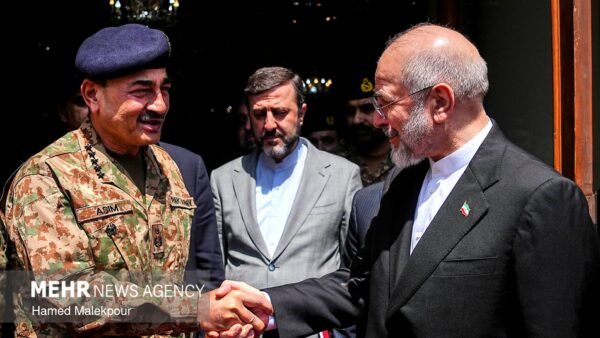
Pakistan Military ‘Cautiously Optimistic’ on Iran–US Mediation as Army Chief’s Tehran Trips Signal Progress
Pakistan's military says it is 'cautiously optimistic' about its mediation between Iran and the United States, with army…
Pakistan’s 30-Member Electoral Reforms Committee Takes Shape as Opposition Weighs Joining and Fazl Pushes a New Charter of Democracy
Islamabad says a 30-member parliamentary committee on electoral reforms is formed; the opposition signals it may join after…
Pakistan Anti-Terrorism Court Sentences Rights Lawyers Imaan Mazari and Hadi Ali Chattha to 10 Years Each
An anti-terrorism court has sentenced human rights lawyers Imaan Mazari and Hadi Ali Chattha to 10 years each…