
Kremlin Rejects Zelenskyy’s 60-Day Ceasefire for Ukraine Elections, Offers Halt Only on Election Day

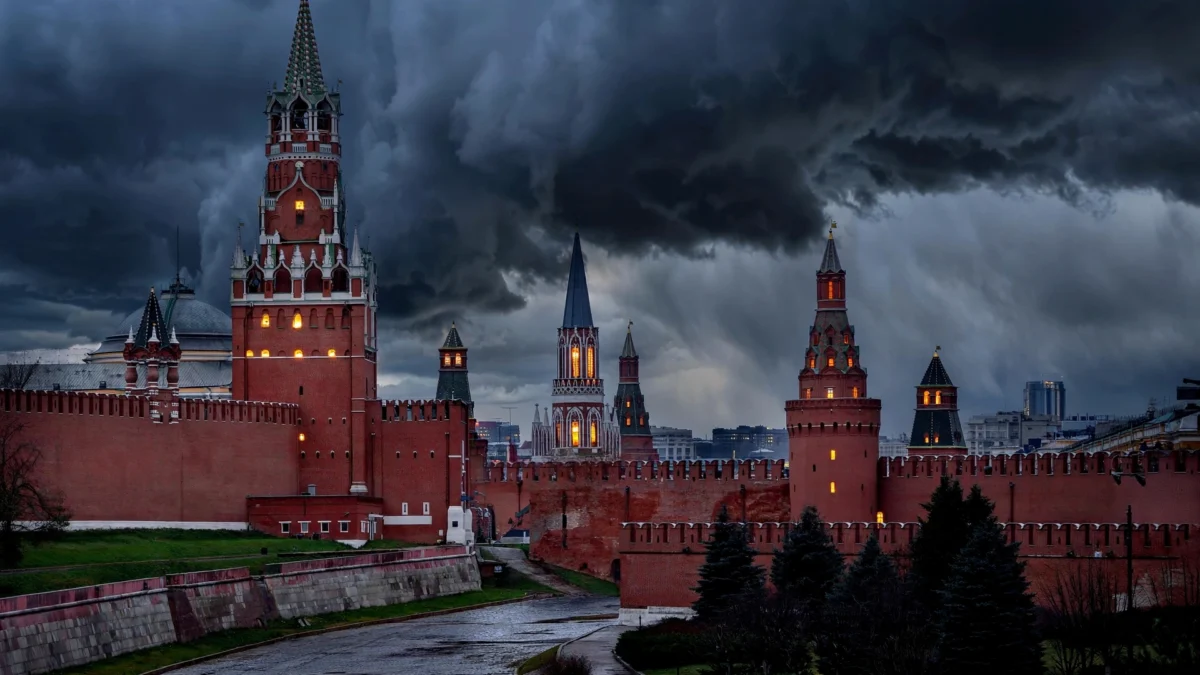
Russia Says It Wants a Long-Term Peace Deal, Not a Temporary Truce
The Kremlin has rejected Ukrainian President Volodymyr Zelenskyy’s proposal for a 60-day ceasefire that would allow Ukraine to hold wartime presidential elections, insisting instead that Moscow wants a comprehensive peace agreement rather than any temporary pause in fighting, according to Reuters.
The rejection, delivered by Kremlin spokesman Dmitry Peskov at a briefing on Monday, came one day after Zelenskyy floated the truce-for-elections offer on ABC’s “This Week” programme — a public challenge aimed directly at both Moscow and an increasingly impatient Washington.
“Please tell Putin, give us two months, 60 days of total ceasefire, 60 days, and we will organise elections,” Zelenskyy said during the Sunday interview, addressing his appeal to the Russian president through the American broadcaster.
Peskov’s response left no room for ambiguity. “In the Kremlin, both President Putin and officials at other levels have repeatedly stated that we do not want a ceasefire,” he told reporters on Monday, according to Reuters. “We want long-term peace and are prepared to do everything possible to achieve it.”
Moscow’s Counter-Offer: A Halt on Election Day Only
While rejecting the two-month truce outright, the Kremlin did not close the door entirely. Peskov said Russian President Vladimir Putin would be willing to order the military to halt strikes for the duration of a single day — election day itself.
According to Russian news agency RIA, Peskov told reporters that “if Kiev truly wants to hold elections, then the Russian president, as supreme commander-in-chief, will be ready to order the army not to strike Ukraine on election day,” as reported by the Raajje Times. He stressed that the pause would apply “specifically on election day,” according to Russian news agency TASS.
Moscow’s stated reasoning for the narrow offer is that a 60-day cessation of hostilities would simply give Ukrainian forces time to rearm and rebuild their military positions. Peskov argued that Russia prefers “a lasting peace that will endure for generations” over short pauses in the fighting, according to the Danish outlet Dagens.
The Kremlin has previously accused Kyiv of violating earlier temporary ceasefires, and Zelenskyy has in turn accused Russia of breaching the “energy ceasefire” that US President Donald Trump announced on Sunday. Neither side has produced a mutually agreed written framework for any of these declared pauses.
The Legitimacy Dispute
The exchange over elections sits on top of a deeper argument about who legitimately governs Ukraine. Russia has long pressed Kyiv to hold elections and maintains that Zelenskyy’s failure to do so undermines his legitimacy, according to Reuters.
Under Ukrainian law, elections cannot be held during wartime. Zelenskyy’s five-year term was due to expire in May 2024, but the country has been under martial law since Russia’s full-scale invasion began in February 2022, and the vote was not held. He has remained in office since, a position Ukraine’s parliament and Western governments continue to recognise.
Zelenskyy has said the choice of Ukraine’s leader rests with the Ukrainian people, and that voters and polling workers would need full protection from incoming missiles — a pointed reference to the drone and missile strikes that have targeted Ukrainian cities, including the energy infrastructure campaign Russia intensified this week.
Trump himself weighed in on the leadership question on Saturday, telling reporters outside the White House: “I suggest they get a new leader who could make a deal,” adding, “I think it’s time for Ukraine to get a new president,” according to the Seoul Economic Daily, citing Reuters and Yonhap. Zelenskyy’s Sunday offer of elections in exchange for a 60-day truce was widely read as a direct response to that pressure.
Washington’s Growing Frustration
The Kremlin’s rejection arrives as the White House’s patience with both sides appears to be thinning. On Sunday, Trump announced an “energy ceasefire” between Russia and Ukraine, declaring it “effective immediately” and claiming both parties had agreed. Zelenskyy called the announcement “news for me,” saying Kyiv had no prior knowledge of it, though he offered conditional support.
Trump threatened to impose secondary tariffs on Russian oil imports unless Putin agrees to a deal on “stopping the bloodshed,” and the White House said on Tuesday that Trump was “frustrated” with both Putin and Zelensky over the war, according to The Times. The president this week also accused Ukraine of “trying to back out” of a minerals deal with Washington, warning that Zelensky would face “big, big problems” if it did.
Moscow, for its part, has been dismissive of the energy ceasefire. Russian Foreign Minister Sergey Lavrov dismissed the suggestion in comments reported by NPR, and the Kremlin has neither confirmed nor formally engaged with the proposal. Zelenskyy said Monday that Russia had already violated the understanding after a strike hit a thermal power plant in Kharkiv, urging Washington to ensure Moscow honours any agreement.
Analysis: Why It Matters
Elections have become a weapon in the information war, not a path out of it. Zelenskyy’s 60-day offer turned Russia’s own argument against it: Moscow has spent months questioning his legitimacy over the postponed vote, and Kyiv answered by saying, in effect, give us a genuine pause and we will prove the point at the ballot box. By refusing while offering only a single-day halt, the Kremlin gets to keep the legitimacy charge alive while denying the conditions that would make an election credible. It is a veto over democracy dressed as an offer of security.
The one-day pause reveals how Moscow thinks about truces. A ceasefire measured in hours is not a humanitarian instrument; it is a tactical convenience. Peskov’s framing — halt the bombs on election day, resume the logic of war the next morning — makes explicit that Moscow treats any pause as a favour granted, not a commitment made. That same logic has hollowed out the parade of unilateral and third-party ceasefire declarations this year: the pause is announced, the guns are never actually silent, and each side accuses the other of breaking something that was never mutually agreed.
The “ceasefire versus peace” doctrine is not new, but it is hardening. Russia has consistently said it does not want temporary halts because they favour the side on the defensive — in Moscow’s view, any breathing room lets Ukraine rearm. That is a coherent strategic position, but it is also a convenient one: demanding the full resolution before any fighting stops means the fighting continues until Ukraine accepts Russian terms. The American mediation effort, by contrast, has proceeded by declaration — energy ceasefires announced on social media that neither combatant confirmed. The gap between those two approaches is where the diplomacy is dying.
Trump’s impatience is now the most unpredictable variable. In the space of one weekend, the US president demanded a new Ukrainian president, announced a ceasefire neither side knew about, threatened secondary tariffs on Russian oil, and warned Zelensky of “big, big problems” over a minerals deal. The frustration is symmetrical — aimed at Kyiv as much as Moscow — which means neither side can count on Washington’s patience, and both are adjusting their behaviour to survive it rather than to satisfy it.
A wartime election was never just about safety. Beyond the missiles, holding a national vote under martial law would require displaced voters, occupied territories, millions of citizens abroad, and campaign conditions that no war can provide. Even a 60-day truce would not have resolved those logistics. Zelenskyy’s offer was therefore as much a political gambit as a practical plan — and Moscow’s rejection, paired with the election-day-only counter-offer, reads as the Kremlin declining to play a game it did not set up.
What to Watch Next
- The secondary-tariff threat: Will Trump follow through on targeting Russian oil imports if no deal materialises, and how does Moscow’s open rejection affect the White House’s timeline?
- Trump’s “new president” demand: Zelenskyy’s truce-for-elections offer was pitched partly at Washington. Whether Trump accepts it as a genuine path to a vote — or escalates the leadership pressure — will shape Kyiv’s room to manoeuvre.
- The energy ceasefire’s fate: With Russia not confirming, Lavrov dismissing it, and Zelenskyy reporting violations, the coming days will show whether Trump’s declaration has any life beyond the announcement.
- Europe’s position: European leaders have reaffirmed support for Zelenskyy as Trump pushes the legitimacy question. Watch for any joint European statement on the election proposal.
- The winter campaign: With Russia intensifying strikes on Ukraine’s energy grid this week, the real calendar driving events may be the approaching winter — not the diplomatic one.
Sources
- Reuters — Kremlin rejects Ukrainian leader’s idea of a 60-day ceasefire, says it wants an overall peace deal
- Raajje Times — Kremlin rejects Zelenskyy’s 60-day truce plan, says Putin could halt attacks on Ukraine on polling day
- Dagens — Zelensky asks for a 60-day truce to hold elections: Kremlin offers 24 hours
- Seoul Economic Daily — Zelenskyy offers election if Russia agrees to 60-day truce
- The Times — Russia: We won’t accept Trump’s peace plan ‘while Zelensky is in power’

About the Author — Abdul Mannan
Related Articles
Russia Launches Overnight Barrage on Ukraine’s Energy Grid, Leaving More Than 600,000 Without Power
Russia fired 39 ballistic missiles and more than 120 drones at Ukrainian energy sites overnight, leaving more than…
Nord Stream Trial Opens in Hamburg as Ukrainian Ex-Officer Denies Pipeline Sabotage Charges
A former Ukrainian officer has gone on trial in Hamburg over the 2022 explosions that ruptured the Nord…
The Ceasefire That Exists Only in a Post
Trump announced a Russia–Ukraine "energy ceasefire" on social media — while missiles fell on Kyiv. A column on…