
Pakistan Tells Taliban Terrorism Is a ‘Red Line’ as Rubio Backs Islamabad at G20

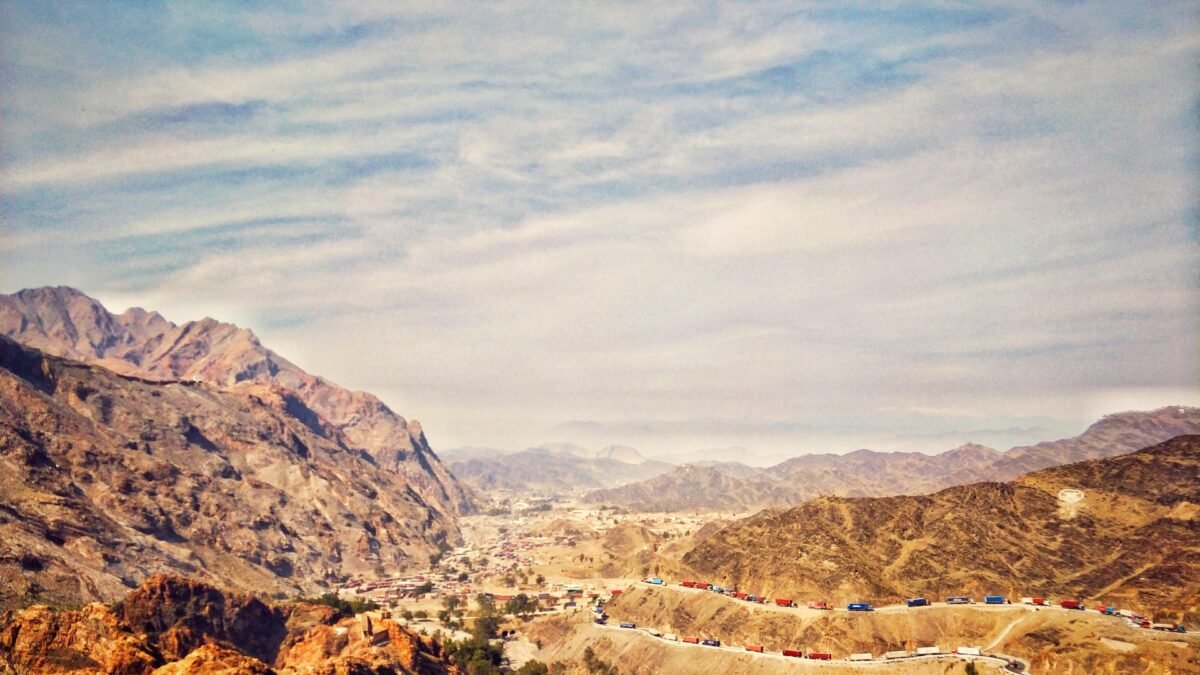
Pakistan has issued its bluntest warning yet to the Afghan Taliban, declaring that terrorism is a “red line” and that it reserves the right under international law to take all necessary measures to protect its citizens from attacks launched from Afghan soil, as the United States publicly backed Islamabad’s position at the G20 foreign ministers’ meeting in Atlanta.
The warning came in a statement issued on Saturday 31 October by Pakistan’s Ministry of Information and Broadcasting, which accused the Taliban leadership of “shifting blame” and refusing to confront what Islamabad called the central cause of the collapse in relations between the two neighbours: terrorist sanctuaries operating from Afghan territory.
“Pakistan’s position is clear: terrorism is a red line, and there can be no compromise on the security of its citizens,” the ministry said, according to Dawn, warning that Pakistan would not allow its people to remain targets of attacks emanating from Afghanistan.
The statement followed remarks by Afghan Taliban spokesperson Zabihullah Mujahid to Taliban-affiliated Hurriyat Radio on Saturday, in which he said Kabul had repeatedly sought to resolve differences through dialogue but had failed to achieve a breakthrough, and claimed that Islamabad did not want to settle the dispute through talks and lacked the readiness for a peaceful resolution. Mujahid said messages had been exchanged between Kabul and Islamabad through the mediation of several countries, but the efforts had failed to ease tensions. He did not identify the countries involved or provide details of the exchanges.
Islamabad rejected that account outright. The ministry said Mujahid’s remarks exposed what it called a “deeply misguided approach and unwillingness to confront the root cause of deteriorating relations with Pakistan”, and argued that the Taliban leadership continued to blame Islamabad’s policies while ignoring “the single most important issue poisoning bilateral relations: its persistent failure to address terrorism emanating from Afghan soil.”
“Pakistan’s security will not be held hostage to the Afghan Taliban’s inaction, evasions or misplaced priorities,” the statement said. “Pakistan’s determination to protect its citizens should not be mistaken for weakness.”
The ministry added that shifting blame, making hollow assurances and questioning Pakistan’s policies would neither resolve the crisis nor absolve the Taliban leadership of its responsibilities, and that the Taliban’s persistent refusal to address terrorism remained the principal obstacle to the restoration of normal relations.
Rubio backs Pakistan at the G20
The exchange gained added weight from Washington. Speaking at the close of the two-day G20 foreign ministers’ meeting in Atlanta, which ended on Saturday, US Secretary of State Marco Rubio said the United States had heard Pakistan’s concerns and did not want Pakistan to become a target of terrorism.
“Pakistan is concerned about terrorist attacks that are being sponsored from the territory of Afghanistan,” Rubio said, according to multiple reports of his press conference. “They think that the Taliban has not done enough to constrain those attacks, and they’ve taken action against it.”
“We don’t want Pakistan to be targeted by terrorism,” Rubio added. “If there’s a productive role for us to play, we would play it.”
Rubio said the United States opposed terrorism regardless of where it originated or whom it targeted, while acknowledging that Washington did not have a particularly close relationship with the Taliban. Pakistan welcomed the remarks as support for its long-standing position, according to Pakistani media reports.
The American endorsement matters because it arrives at a moment when Washington is simultaneously leaning on Islamabad and on Kabul. Rubio’s remarks at the G20 came days after he told an interviewer during a visit to India that the United States was “against anybody who sponsors terrorism”, while defending continued American engagement with Pakistan on the grounds that the country possesses nuclear weapons and occupies a strategically vital geography. “In the case of Pakistan, it’s a country that we have to have a relationship with,” he said in the interview with Network18 editor-in-chief Rahul Joshi in Mumbai. “It’s a country that possesses nuclear weapons, and from a geographic standpoint, we need to be able to interact with them.”
At the same time, the Trump administration is preparing to deport more than 150 Afghans to Taliban-ruled Afghanistan, with the first flight expected on Monday, as NEXA News HD reported on Saturday, a move that underlines how Washington is pressing Kabul from several directions at once.
The border flashpoint behind the words
The latest war of words follows weeks of escalating violence along the 2,600-kilometre frontier the two countries share. The immediate trigger was a clash at Angoor Adda in Lower South Waziristan, where, on Tuesday 27 October, Afghan forces opened fire on Pakistani border posts and residential areas, according to Pakistani media reports citing sources, killing one local resident and injuring five members of a single family.
Pakistan’s armed forces responded with what the information ministry described as an “immediate, effective and disproportionate response”, saying they destroyed several Afghan Taliban border checkposts. In a statement issued on Wednesday, the ministry said the operation had silenced the opposing forces’ guns and caused significant material losses, including the destruction of seven posts. The Afghan defence ministry subsequently claimed that Pakistani personnel had launched drone strikes on the Angoor Adda bazaar and the commissioner’s office in Paktika province without provocation, and said Afghan forces had carried out retaliatory strikes against a nearby Pakistani military base and outposts.
Islamabad dismissed Kabul’s account as “fabrications”. The ministry accused the Taliban regime of spreading false accounts of the incident and of acting at the behest of its “proxy masters India”, a charge it has levelled repeatedly. The Taliban has denied acting as any country’s proxy, and the competing claims about who fired first at Angoor Adda have not been independently verified.
The Angoor Adda exchange was not an isolated incident. Clashes continued through October along the border in Kurram and Angoor Adda, and in September Pakistan conducted calibrated airstrikes in border areas after suffering terrorist attacks in Khyber Pakhtunkhwa, according to Dawn. The pattern of strike and counter-strike has become the defining feature of the frontier in 2026.
A relationship in steady collapse
The roots of the crisis run deeper than any single border incident. Pakistan’s central allegation is that the banned Tehreek-e-Taliban Pakistan (TTP) and other militant groups use Afghan territory to plan and launch attacks inside Pakistan, and that the Taliban authorities have taken no verifiable action against them despite repeated demands. Islamabad has raised the issue at every level, from bilateral contacts to the United Nations.
On Thursday, Pakistan’s representative to the UN Human Rights Council, Muhammad Jawad Ajmal, told the council’s interactive dialogue on Afghanistan that more than 4,700 Pakistanis had been killed in terrorist attacks originating from Afghanistan over the past three years. He accused the Taliban of maintaining close links with terrorist organisations operating with impunity on Afghan soil, with support from external actors, and said the Taliban’s failure to publicly denounce these groups demonstrated complicity and active support. The figures cited by Pakistan’s envoy have not been independently verified, but they reflect the scale of the human cost Islamabad attributes to cross-border militancy.
Pakistan’s case has drawn support from international monitoring. In an earlier statement this month, the information ministry cited assessments by the United Nations and the United States on the presence and activities of terrorist groups in Afghanistan, including the UN Security Council’s Analytical Support and Sanctions Monitoring Team’s 16th report and the US Lead Inspector General’s Operation Enduring Sentinel report to Congress covering January to March 2026. The ministry argued that Kabul’s assertion that Afghanistan lacked the capacity or the interest to destabilise Pakistan did not address the documented concerns, and that such concerns “cannot be dismissed through blanket denials; they require credible explanations and verifiable action”.
Diplomacy has repeatedly failed to bridge the gap. Talks facilitated by Qatar and Turkiye last year, and efforts involving China this year, ended without a breakthrough, according to Dawn. The February 2026 offensive, Operation Ghazab lil-Haq, which Pakistan launched in response to what it described as ongoing terrorism emanating from Afghan soil, marked the moment when the dispute moved from diplomatic protest to open military confrontation, and the months since have brought a succession of border clashes rather than any settlement.
The deterioration has unfolded against a backdrop of extraordinary strain inside Pakistan. On 11 October, the federal government imposed a state of emergency and governor’s rule in Khyber Pakhtunkhwa, the frontline province that borders Afghanistan, suspending the provincial government led by Imran Khan’s Pakistan Tehreek-e-Insaf and taking its chief minister, Sohail Afridi, into preventive custody. The move, justified by the government on counterterrorism grounds, has been challenged in the Peshawar High Court, which has ordered the authorities to account for the detained leaders by 3 November.
At the same time, Pakistan has been playing an unlikely mediating role in the region’s other great crisis: the war between the United States, Israel and Iran that began in February. Field Marshal Asim Munir, Pakistan’s chief of defence forces, has visited Tehran twice in October as part of a mediation effort involving Saudi Arabia and Turkiye, and the military said last week it was “cautiously optimistic” about the diplomacy. The juxtaposition is striking: a country mediating between Washington and Tehran while warning Kabul that it may strike across its western border.
Analysis: Why It Matters
1. A warning with a threat built into it
The language of Saturday’s statement was chosen with care, and its hardest edge was the sentence reserving the right to take “all necessary measures, in accordance with international law, to eliminate threats to its national security, wherever they originate”. That is the language governments use when they want a warning to be heard as a threat without issuing an ultimatum, and it gains credibility from Pakistan’s recent record. Islamabad has already struck across the border in September, and again at Angoor Adda in October. The Taliban leadership will read the statement not as rhetoric but as a statement of intent, and will have to weigh whether the next attack attributed to Afghan soil brings a further round of airstrikes. The danger is that each side’s retaliation is calibrated to be “disproportionate”, in the ministry’s own word, which is precisely how limited border clashes escalate into something neither side planned.
2. Washington’s quiet but consequential shift
Rubio’s remarks at the G20 are the most explicit American endorsement of Pakistan’s position on the Taliban since the dispute turned violent, and they matter for two reasons. First, they remove any doubt in Kabul that Washington regards Pakistan’s grievance as legitimate; the Taliban can no longer count on American indifference to shield it from Pakistani pressure. Second, they signal that the United States sees Pakistan as a partner it cannot afford to lose, even while it pursues its own fraught relationship with India. Rubio’s balancing act in Mumbai, condemning terrorism sponsors while defending engagement with Islamabad, was aimed squarely at New Delhi, which has watched Washington’s warming ties with Pakistan’s military leadership with open unease. The offer of a “productive role” for the United States is also significant: it suggests Washington is willing to mediate, which would give the dispute a diplomatic off-ramp that the Qatar, Turkiye and China efforts failed to provide. Whether Kabul accepts American mediation, given the Taliban’s suspicion of Washington, is another matter.
3. Kabul’s impossible position
The Taliban’s refusal to act against the TTP is usually described in Islamabad as wilful defiance, but the reality in Kabul is more complicated, and understanding it is essential to judging whether the crisis can be resolved. The TTP and the Afghan Taliban share ideology, history and, in many cases, blood; the TTP sheltered the Afghan Taliban during two decades of war, and its fighters are woven into the fabric of the Afghan insurgency’s old networks. Moving against them would risk splitting the Taliban’s own ranks and inviting the very fragmentation the leadership fears most. At the same time, the Taliban’s capacity is genuinely limited: its forces are a lightly armed insurgent army turned government, not a modern counterterrorism apparatus, and the borderlands where the TTP operates are among the most difficult terrain on earth. None of this excuses the failure to act, and Islamabad is right that the Taliban has not even attempted the visible steps, such as public denunciation, that would cost it little. But any settlement will have to give Kabul a way to act against the TTP without appearing to betray its own allies, and neither side has yet proposed one.
4. The domestic bind driving the hard line
The ferocity of Saturday’s statement cannot be separated from the pressures bearing down on Pakistan’s government at home. The emergency in Khyber Pakhtunkhwa has put the military and the civilian leadership in the position of suspending an elected provincial government in the name of counterterrorism, a move that has drawn condemnation from the Human Rights Commission of Pakistan and legal challenges from the PTI. A government that has taken such a drastic step in the name of fighting terrorism cannot afford to look soft on the source of that terrorism across the border. The political logic points in only one direction: escalation, or at least the appearance of it. The risk is that domestic politics begins to drive security policy, and that the need to demonstrate resolve narrows the space for the patient diplomacy that a durable settlement would require. The coming days will test whether the government can hold the line between deterrence and overreach.
5. The mediation trap
Perhaps the most underappreciated dimension of the crisis is how it intersects with Pakistan’s role as a mediator in the Iran war. Islamabad is simultaneously trying to broker a ceasefire between Washington and Tehran, a task that requires the trust of both sides and the credibility of a state that can deliver on its commitments, while threatening military action against its western neighbour. If the Afghan dispute escalates into sustained cross-border fighting, it would stretch a military already committed to the eastern border with India, the counterterrorism campaign in Khyber Pakhtunkhwa and Balochistan, and the diplomatic effort in the Gulf. It would also complicate the trade and transit routes on which Afghanistan’s economy depends, and the deportation of Afghans from Pakistan, which has already strained relations. The paradox is that Pakistan’s influence as a mediator rests partly on its ability to manage its own neighbourhood; a war on the Durand Line would undermine the very standing that makes its mediation valuable. That is the strongest argument for taking Rubio’s offer of an American role seriously, and for treating Saturday’s statement as an opening for diplomacy rather than a prelude to war.
What to Watch Next
- Kabul’s response: Whether the Taliban leadership answers the ministry’s statement with its own escalation, a conciliatory gesture, or silence will set the tone for the coming week. A public commitment to action against the TTP, however modest, would be the first sign of movement.
- The border crossings: Any closure or restriction at Torkham or Chaman, the two main crossings, would signal that the dispute is moving from words to economic pressure, with immediate consequences for trade and for Afghans seeking medical treatment or work in Pakistan.
- Washington’s next step: Whether Rubio’s offer of a “productive role” turns into concrete mediation, and whether the planned deportation flight of Afghans on Monday goes ahead, will show how far the United States is willing to press Kabul.
- The Peshawar High Court deadline: The court’s 3 November deadline for the authorities to account for detained Khyber Pakhtunkhwa leaders, including the chief minister, will test the legality of the emergency that underpins Pakistan’s counterterrorism posture at home.
- The next attack: The grim reality is that the next militant attack inside Pakistan attributed to Afghan soil is likely to trigger the “necessary measures” Islamabad has reserved the right to take. The speed and scale of any response will reveal whether Saturday’s statement was deterrence or a warning of war.
Sources
- Pakistan TV — “Pakistan warns Taliban over terrorism as Rubio says Kabul failed to curb attacks”
- The Destination — “Pakistan Warns Kabul: No Compromise on National Security”
- ViewsNewsNow — “US Backs Pakistan’s Concerns Over Afghan-Based Terrorism”
- Beflaz (reporting Dawn) — “Pakistan slams Afghan Taliban for ‘shifting blame’, ‘persistent refusal’ to address terrorism issues”
- The Standard — “Pakistan Rejects Afghan Taliban’s Claims over Border Incident as ‘Fabrications'”
- Pakistan Archive — “Pakistan Tells UN Rights Council Taliban Let Terrorists Operate From Afghanistan”

About the Author — advmannan1
Related Articles
Imran Khan’s Son Warns His Father’s Life Is in Danger as Family Says No Contact Since August
Sulaiman Khan says neither Imran Khan's family nor his lawyers have seen or heard from the former prime…
Pakistan Military ‘Cautiously Optimistic’ on Iran–US Mediation as Army Chief’s Tehran Trips Signal Progress
Pakistan's military says it is 'cautiously optimistic' about its mediation between Iran and the United States, with army…
Pakistan’s 30-Member Electoral Reforms Committee Takes Shape as Opposition Weighs Joining and Fazl Pushes a New Charter of Democracy
Islamabad says a 30-member parliamentary committee on electoral reforms is formed; the opposition signals it may join after…