
Pakistan Sends Army Troops to Saudi Arabia in First Deployment Under Mecca Defence Pact as Houthi Attacks Escalate

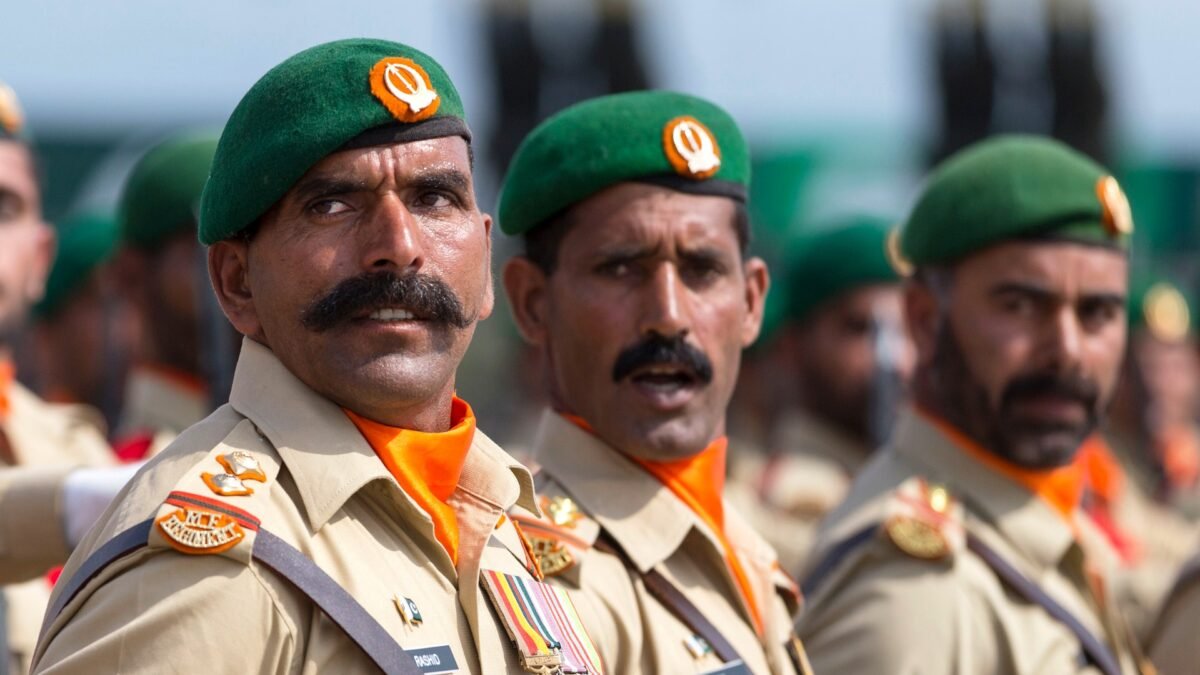
Pakistan has sent army troops to Saudi Arabia to help defend the kingdom against escalating attacks by Yemen’s Houthi rebels, the Pakistani military announced on Sunday, in the first publicly acknowledged deployment under the Mecca defence pact signed by Pakistan, Saudi Arabia and Turkiye in August.
According to Reuters, the troops were sent on Saturday, a day after senior defence and military officials from the three countries met in Islamabad for the second meeting of the Mecca Alliance for Defence’s Strategic Political and Defence Committee. The Associated Press reported that Pakistan’s military announced the move in a statement on Sunday, describing it as the first known troop deployment under the joint defence agreement.
The military’s media wing, Inter-Services Public Relations (ISPR), said the troops would carry out their duties within Saudi territory under existing defence cooperation arrangements. The statement said the deployment “reflects Pakistan’s unwavering commitment to the security, sovereignty and territorial integrity” of Saudi Arabia, according to Reuters.
No details were given about how many soldiers are being sent, what roles they will fill, how long they will stay, or when they will arrive, according to the Associated Press. That deliberate silence is itself one of the most telling features of the announcement, and it is likely to shape the debate that follows in Islamabad, Riyadh and Tehran alike.
A send-off in Rawalpindi
A send-off ceremony for the departing troops was held on Saturday in Rawalpindi, according to Dawn, cited by several outlets. Pakistan’s Defence Minister Khawaja Muhammad Asif attended as the chief guest, alongside the Saudi ambassador to Pakistan, Rajeh Tami Albugamy, the army’s Chief of General Staff, Lieutenant General Omer Ahmed Bokhari, and the Lahore Corps Commander, Lieutenant General Muhammad Umer Bashir.
The ISPR statement said Pakistan remained “steadfast in its commitment to safeguarding the Kingdom’s security and the sanctity of Haramain Sharifain”, the two holy mosques in Mecca and Medina, according to Dawn. The troops, the statement added, would “discharge their assigned responsibilities within Saudi territory, under agreed commitments and the established framework of defence cooperation”.
Reuters noted that the statement about the send-off ceremony was the first public comment from the Pakistani military on deployments to Saudi Arabia. That matters, because it draws a line between what has been reported and what has now been officially acknowledged. Reuters reported in May that Pakistan deployed thousands of troops, a squadron of jets and other military equipment during the United States-Israeli war with Iran under a previous defence pact with Saudi Arabia. In October, Reuters reported, citing a Pakistani official, that Pakistan had deployed 30,000 to 40,000 soldiers to help Saudi Arabia defend its land borders and stop drone and missile attacks. Sunday’s statement neither confirmed nor denied those figures, and it disclosed no numbers of its own.
The announcement came two days after Pakistani, Turkish and Saudi defence and military officials met in Islamabad and reaffirmed their support for Riyadh under the trilateral agreement, according to the Associated Press. A joint statement issued after that meeting said the three countries had vowed to step up collective efforts to protect Saudi security against Houthi attacks and to speed up the setting up of the alliance’s permanent secretariat in Riyadh, according to Dawn.
The Mecca pact, four months on
Pakistan, Saudi Arabia and Turkiye signed the Mecca Joint Defence Agreement on 7 August, declaring that an attack on one member would be treated as an attack on all three. The 16-article pact was signed in Mecca by Saudi Crown Prince Mohammed bin Salman, Turkish President Recep Tayyip Erdogan and Pakistani Prime Minister Shehbaz Sharif, according to Dawn.
The agreement was signed after fighting escalated in the summer between the Iran-aligned Houthi militia and Saudi-backed forces in Yemen, and after Houthi attacks on Saudi Arabia itself intensified, according to Reuters. The three countries have described the pact as defensive and said it is not directed against any particular state. Islamabad has repeatedly said the trilateral defence pact is not directed against any country, including neighbouring Iran, according to the Associated Press.
Pakistan and Saudi Arabia are also bound by a separate bilateral accord, the Strategic Mutual Defence Agreement, according to Dawn. The Mecca pact builds on decades of Pakistani military service in Saudi Arabia, where an unspecified number of Pakistani troops have been stationed since the early 1980s to train and advise Saudi forces, according to the Associated Press.
The pact has moved quickly from paper to practice, at least in its public choreography. Turkiye completed its ratification of the agreement in early November. A first meeting of the alliance’s political and defence committee was held in Riyadh last month, where the three countries agreed to implement their collective defence commitments, including arrangements for the rapid deployment of military forces and equipment to Saudi Arabia, according to the Associated Press. The second meeting followed in Islamabad on Friday, and the troops were sent the next day.
Why Riyadh asked, and why now
Saudi Arabia, a major United States ally in the region, has been facing mounting pressure since the Iran war erupted in February following US and Israeli strikes on the Islamic Republic, according to the Associated Press. It has turned to its regional allies, including Turkiye, Pakistan, Egypt and Syria, to strengthen its defences against Houthi missile and drone strikes, some of which have been deadly.
The kingdom has been countering the Houthis for a decade in Yemen’s civil war, backing the internationally recognised government in the south, while the Houthis control Yemen’s most populous areas, including the capital Sanaa, according to the Associated Press. Fighting escalated this summer between the Houthi rebels and the government’s Saudi-backed forces. The Houthis have also launched direct and deadly attacks on Saudi Arabia and imposed a blockade on its shipping, in what has been viewed as an extension of the US-Iran war.
The recent tempo of attacks explains the urgency. A projectile hit Saudi Aramco’s Jazan oil refinery on Thursday, 26 November, killing a Nepalese worker and injuring several others, according to Al Jazeera. The Houthis also claimed to have struck Ras Tanura, the kingdom’s largest refinery, a day earlier, and to have hit Riyadh’s King Abdullah financial district on 25 November, reportedly wounding 11 people, according to Al Jazeera. On Saturday, Saudi Arabia said it had shot down a Houthi cruise missile aimed at Riyadh. In recent months the rebels have also carried out their biggest land grab in years, capturing Yemen’s Red Sea coast from pro-government forces, according to the Associated Press, strengthening their ability to choke off Saudi oil exports and push up global fuel prices.
The confrontation sharpened again on Sunday itself. Yemen’s Iran-aligned Houthis said they would target Jeddah port and all other Saudi ports on the Red Sea coast in response to what they described as a Saudi attack on Yemen’s Ras Isa port, according to Reuters. Houthi-run Al Masirah television reported that Saudi Arabia had attacked Ras Isa, the main port for fuel imports into Houthi-controlled areas in Yemen’s western Hodeidah province. Moments earlier, the Saudi-led coalition had called on civilians to evacuate the port for their safety, in a statement accompanied by a map of the area. The coalition subsequently said it was carrying out a “military response” to Houthi attacks, without specifically confirming a strike on Ras Isa, according to Reuters. The Houthis called on workers and people near Saudi Red Sea ports to evacuate immediately and urged all shipping companies to remove their vessels from the ports.
Ras Isa served as a crude oil export terminal before Yemen’s war broke out in 2014 and has previously been targeted by both the United States and Israel, according to Reuters. US forces struck the port in April 2025 in an operation designed to cut off the Houthis’ main fuel source and deprive the group of revenue.
A wider coalition takes shape
Pakistan is not the only country moving to reinforce Saudi defences. Just over a month ago, Egypt said it would provide military support to Saudi Arabia to defend itself against Houthi attacks, without giving details, according to the Associated Press. A regional official, briefed on the matter, said at the time that Egypt would deploy air defence systems and aircraft to help repel missiles and drones fired at Saudi Arabia, and that the Egyptian support was defensive in nature and would not include any ground troops in Yemen.
Syria has also sent military advisers to Saudi Arabia under a new defence pact as the Houthi war escalates. The picture forming is of a widening circle of states rallying around Riyadh, each contributing what it can: Pakistan with ground troops, Egypt with air defence, Turkiye with political weight and its own military capacity, and Syria with advisers.
Defence Minister Khawaja Asif has previously said Pakistan would use “whatever means are available” to defend the kingdom against Houthi attacks, according to the Associated Press. Sunday’s announcement gives that pledge a concrete form.
The Houthi response
The Houthis have reacted angrily. In a statement late on Saturday, a senior Houthi official lashed out at Pakistan and Turkiye over their alliance with Saudi Arabia, according to the Associated Press. Mohamed Ali al-Houthi, a member of the group’s Supreme Political Council, said Ankara and Islamabad, which joined Riyadh in the Mecca Joint Defence Agreement, had ignored “the (Saudi) aggression, the blockade, the killings, and the ongoing crimes” in Yemen. “Just as the previous coalition against our country … ended in failure, any future coalition will likewise fail,” he said. He was referring to the 2015 US-backed, Saudi-led coalition that joined the Yemen civil war against the Houthis in a bid to restore Yemen’s internationally recognised government to power.
Early in November, the Houthis claimed that Pakistan had joined Saudi Arabia in strikes in Yemen. The rebels’ acting information minister, Omar al-Bukhaiti, said at the time that Pakistani fighter jets had struck rebel-held areas on 6 November in “an extremely dangerous escalation that cannot be accepted or left unchallenged”, according to the Associated Press. Pakistan has rejected the Houthis’ claims.
Saudi Arabia has accused the Houthis of firing missiles and drones towards Mecca and Medina since the escalation began in the summer. The Houthis have vehemently denied attacking Islam’s two holiest cities, according to the Associated Press. The dispute over the holy cities is not a side issue. It is the emotional centre of the conflict, and it is the reason Islamabad has framed its deployment in the language of protecting the Haramain Sharifain rather than in the language of war.
Pakistan’s balancing act
Pakistan is also pursuing diplomatic efforts with countries including Qatar to bring the United States and Iran back to negotiations to end their conflict, according to the Associated Press. Islamabad brokered an interim agreement between the two sides in June. That dual role, mediator with Tehran and now open military partner of Riyadh, captures the tightrope Pakistan is walking.
Iran is Pakistan’s neighbour, sharing a long and troubled border, and the two countries have their own history of friction as well as cooperation. A public troop deployment to Saudi Arabia, announced in the middle of a war in which Iran is the Houthis’ backer and the United States and Israel are ranged against Tehran, is a statement that will be read carefully in Tehran. Islamabad’s insistence that the pact is defensive and directed at no state is designed to soften that reading, but the Houthis’ own reaction shows that the message has been received as a hostile one by at least one party to the conflict.
At the same time, the deployment reflects the weight of Pakistan’s ties with Saudi Arabia. The kingdom has been a source of financial support, oil on deferred payment, and employment for millions of Pakistani workers whose remittances sustain households across Pakistan. The military relationship is only one strand of a much older partnership, and the ISPR’s language of “longstanding strategic partnership and fraternal bonds between the two brotherly countries” is the vocabulary in which that partnership is habitually described.
Analysis: a pact’s first real test
Sunday’s announcement matters less for the number of soldiers involved, which has not been disclosed, than for what it turns a treaty into. The Mecca Joint Defence Agreement was signed in August with grand language about collective defence, but until now it had existed mainly in communiques, committee meetings and ratification ceremonies. A troop deployment, announced publicly, with a defence minister at the send-off and a formal statement from the military’s media wing, is the moment the pact stops being a document and starts being a fact on the ground. That is why the timing, a day after the Islamabad committee meeting, looks deliberate rather than coincidental. The three allies wanted the world, and especially the Houthis and Iran, to see the machinery working.
The announcement is also a study in calculated ambiguity. The military said everything about why the troops are going and nothing about how many, what they will do, or for how long. That vagueness is not an oversight. It gives Islamabad room to scale the deployment up or down without a fresh public argument, it avoids giving the Houthis a target list, and it spares the government a domestic debate about the size and cost of a foreign deployment. But it also leaves the most important questions unanswered, and those questions will not go away. If the troops are guarding air bases and holy sites, that is one thing. If they are manning border positions or air defence batteries in the path of Houthi missiles, that is quite another, and the risks to Pakistani lives are correspondingly greater. The earlier Reuters reports, of 30,000 to 40,000 soldiers already in the kingdom and of thousands deployed with jets during the February war, suggest the real scale may be far larger than Sunday’s ceremony implies. The government has now put itself in a position where it will have to decide, sooner or later, how much of that picture it is prepared to confirm.
The framing of the mission around the Haramain Sharifain is equally deliberate. By presenting the deployment as the defence of Islam’s holiest sites, Islamabad gives the mission a justification that is hard to argue against at home, where the protection of Mecca and Medina carries deep emotional weight. It also draws a clear line that the deployment is defensive and confined to Saudi territory, a distinction Pakistan and Turkiye have both stressed. That line matters because the most dangerous accusation Pakistan faces, from the Houthis and potentially from Tehran, is that it has joined the war inside Yemen. Islamabad’s answer is that its soldiers will not cross into Yemen, and that its role is to hold the line at home, in Saudi Arabia, rather than to take the fight to the Houthis. Whether that distinction holds in practice will depend on what the Houthis do next. If their missiles keep falling on Saudi cities and refineries, the pressure on the Pakistani contingent, and on the politicians who sent it, will grow.
There is a broader pattern here that should not be missed. Saudi Arabia is assembling a coalition of the willing, and Pakistan is only one piece of it. Egypt’s air defences, Syria’s advisers, Turkiye’s political backing and Pakistan’s troops are being assembled into a layered defence of the kingdom. That is a significant shift in the region’s security architecture. For a decade, the war in Yemen was fought by a Saudi-led coalition that was widely seen as failing. What is emerging now is something different: a formal, treaty-based alliance with a secretariat in Riyadh, a standing committee, and now a troop deployment. It is the institutionalisation of a regional security bloc, built openly around the defence of Saudi Arabia and implicitly around the containment of Iran and its allies.
The risks are real and should not be understated. The first is mission creep. Defensive deployments have a habit of expanding, especially when the adversary keeps escalating. The Houthis’ threat on Sunday to strike Jeddah and every other Saudi Red Sea port shows they have no intention of backing down, and every successful Houthi strike will increase the pressure on Riyadh’s allies to do more. The second risk is retaliation. Pakistani soldiers in Saudi Arabia are now, in the Houthis’ eyes, legitimate targets in a war they have publicly denounced. The third risk is diplomatic. Pakistan is trying to mediate between the United States and Iran at the same time as it is deploying troops to the other side of that confrontation. That is a difficult position to sustain if the war escalates again, and Tehran will be watching for any sign that the mediation is a cover for choosing sides.
There is also a domestic risk for the government in Islamabad. Pakistan’s public has historically been wary of its soldiers fighting other countries’ wars, and the memory of the 2015 parliamentary decision to stay out of the Yemen war is still fresh. The government will need to keep making the case that this deployment is different: defensive, confined to Saudi soil, and rooted in the protection of the holy mosques. If Pakistani soldiers are killed or wounded, that case will be tested hard.
What to watch next is straightforward. First, whether any numbers emerge, either officially or through reporting, and what roles the troops are actually given. Second, whether Turkiye follows with a deployment of its own, which would turn the Mecca pact from a bilateral-plus arrangement into a genuinely trilateral military presence. Third, whether the Houthis carry out their threat against Jeddah and the Red Sea ports, and how the coalition responds. Fourth, how Tehran reacts in public and in private, and whether Pakistan’s mediation channel with the United States and Iran survives the deployment. And fifth, what happens to oil markets, because the Houthis’ campaign against Saudi energy infrastructure, and the coalition’s response at Ras Isa, are already feeding into global fuel prices.
For now, the facts are these: Pakistan has publicly committed its soldiers to the defence of Saudi Arabia for the first time under the Mecca pact, the Houthis have answered with a threat against Saudi ports, and a war that was already spreading across the region has acquired a new, formal military dimension. The announcement was short. Its consequences are unlikely to be.
Sources
- Reuters — Pakistan deploys troops in Saudi Arabia, army says
- Associated Press via NPR — Pakistan to send troops to Saudi Arabia to bolster defenses following Houthi attacks
- Reuters — Houthis threaten Saudi Red Sea ports after coalition calls for Ras Isa evacuation
- Dawn (via New Kerala) — Pakistan sends troops to Saudi Arabia under Mecca defence pact
- Xinhua — Pakistan sends troops to Saudi Arabia under defense cooperation framework

About the Author — Abdul Mannan
Related Articles
Netanyahu Offers to Let Rival Eisenkot Lead First in Unity Government as Israel’s Coalition Deadlock Deepens
Benjamin Netanyahu has offered to let rival Gadi Eisenkot serve first as prime minister in a rotating unity…
Saudi Arabia Shoots Down Houthi Cruise Missile Aimed at Riyadh as Both Sides Strike Each Other’s Capitals
Saudi air defences intercepted a Houthi cruise missile aimed at Riyadh early on Saturday, as the kingdom and…
MSF Says Israeli Strike Killed Two of Its Staff at Gaza Clinic as Israel Claims They Were Hamas Fighters
Doctors Without Borders says two of its watchmen were killed in a direct Israeli strike on its clinic…