
One Killed, 18 Injured in Stampede at TikTok Star’s Pre-Wedding Event in Sialkot

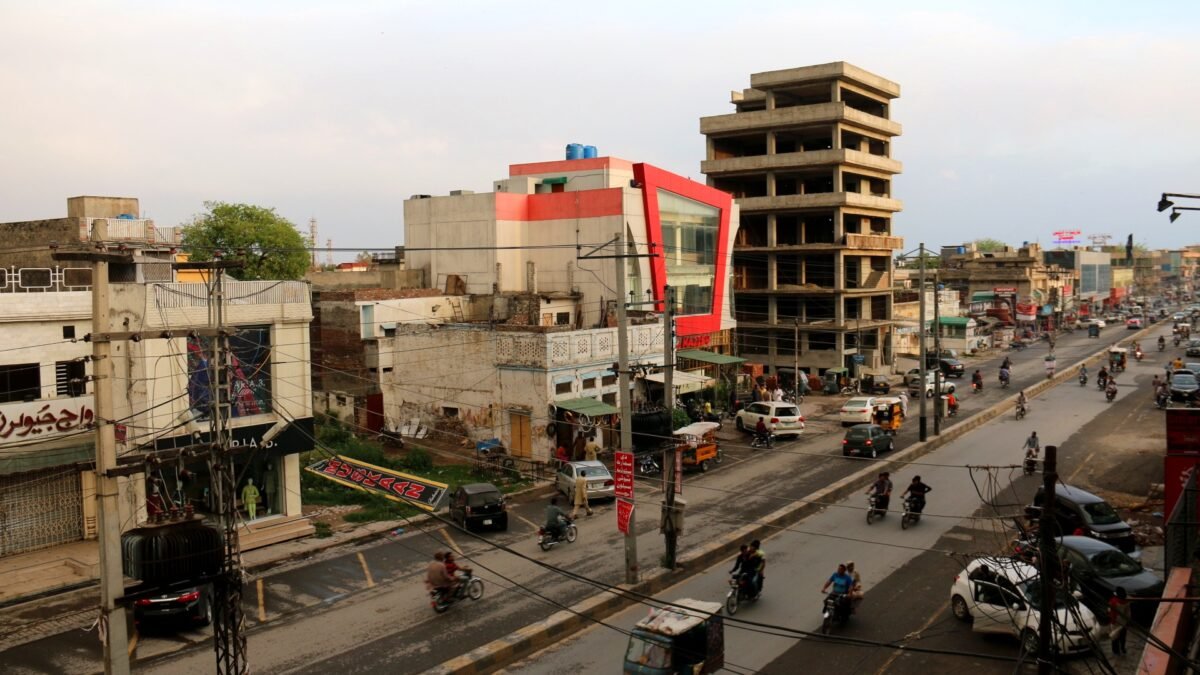
A pre-wedding celebration in Sialkot turned into a tragedy on Saturday night when a crowd surge at a cricket ground killed one man and injured 18 other people, according to police in Punjab. The event, hosted by a TikTok creator known as Mr Pattlo, had drawn thousands of people after invitations circulated on social media promising prizes that included a car and dozens of motorcycles.
The stampede happened at the Faraz Cricket Ground on Daska Road in Sialkot, a city in Pakistan’s eastern Punjab province, as a large crowd gathered for the mehndi ceremony of Muhammad Ansar Jatt, who performs on TikTok under the name Mr Pattlo. According to Arab News, police said the organisers had invited a large number of people by advertising prize draws for motorcycles, cars and other valuable items through social media. During the event, an announcement over the loudspeaker asked participants to enter the ground at the same time, and the sudden rush that followed turned into a crush.
Police said in a press release on Saturday that one man, identified as Aqeel, son of Bashir Ahmed, had lost his life in the incident, while 18 others sustained injuries. Rescue 1122 identified the dead man as 30-year-old Muhammad Aqeel, who died while being taken for treatment, according to Dawn’s reporting of the rescue and police accounts. The injured were taken to hospital, given medical assistance and later discharged, police said. Dawn reported that the injured were treated at the Allama Iqbal Memorial Teaching Hospital in Sialkot.
The crush also spilled beyond the ground itself. Police said the stampede disrupted traffic on the main Daska to Sialkot road, and that incidents of disorder and damage to public property were reported in the surrounding area. The district emergency officer for Sialkot, Engineer Naveed Iqbal, told reporters that the rescue service had not been informed in advance about the large gathering planned at the ground, a detail that will now sit at the centre of the investigation into how the evening was organised.
Some later reporting has put the death toll higher. The Sun, citing local reports, reported that at least two people had died. The police press release and the accounts based on Rescue 1122 and Dawn, however, confirm one death by name. Early reports also differed on the number of injured, with figures of 13, 14 and 18 appearing in different accounts before the police statement settled on 18. The figures in this report follow the police statement and the named casualty, and the discrepancy in later coverage is noted here so that readers are not misled by a single unreconciled number.
Police register case and make arrests
Police have registered a case against nine named individuals, including Jatt, the owner of the ground and other organisers, along with 40 to 45 unidentified security guards, according to Arab News. The suspects have been charged under sections 322, 431, 440, 188, 109, 148 and 149 of the Pakistan Penal Code, as well as Section 16 of the Maintenance of Public Order ordinance. Police said the charges include violations of safety standard operating procedures and permit conditions.
Six people have been arrested in connection with the incident, a local police officer told Arab News, while raids are being carried out to apprehend the others. Jatt himself remains at large. The case has been registered at Motra Police Station, and police said the investigation would examine how the event was planned, what permissions were in place and why the crowd was allowed to build to a size the venue could not safely hold.
Jatt, who uses the alias Mr Pattlo on TikTok, has more than 814,000 followers on the platform and has gathered over 33.7 million likes, according to Arab News. His following is large enough that a single open invitation, amplified by shares and reposts, can bring thousands of people to a venue within hours, and that is precisely what appears to have happened in Sialkot.
A familiar pattern in Pakistan
The Sialkot crush is not an isolated accident. Pakistan has a long and painful record of crowd disasters at gatherings where free goods, food or prizes are on offer, and where planning, crowd control and emergency coordination have been weak or absent.
In September 2009, at least 18 people, mostly women, were killed in a stampede at Khori Garden in Karachi during the distribution of free flour by a local trader. According to the Balochistan Times, around 400 to 500 people, mostly women, had gathered outside a godown near the city courts, and the crush began when people pushed forward to collect flour bags. The Sindh government ordered an inquiry, and the trader was arrested. The provincial information minister said at the time that the administration and police had not been informed about the distribution.
In October 2014, eight people were killed and 40 injured in a stampede at a Pakistan Tehreek-e-Insaf rally in Multan, when a large crowd rushed towards the main gate as the event ended. A three-member inquiry committee was formed, and its report described the incident as an accident, but the episode became a lasting reference point in debates about crowd management at political gatherings in the country.
More recently, in the first half of 2023, crowd crushes at free flour and ration distributions across Pakistan left 15 people dead and 45 injured, according to Wikipedia’s account of the incidents. The worst of them came on 31 March 2023, when 12 people, including three children, were killed during a zakat distribution at a factory in Karachi’s SITE industrial area. The Associated Press reported at the time that hundreds of women and children had panicked and pushed each other to collect food outside the factory, and that some of the victims fell into an open drain. The death toll from stampedes at free food centres across the country had reached at least 21 within a week, the agency reported.
The common thread in these episodes is not hard to see. A large crowd gathers for something free or valuable. The organisers underestimate how many people will come, or deliberately invite more than the venue can hold. Gates, entrances or distribution points become bottlenecks. The authorities who would manage an emergency are told late or not at all. And when the crowd moves as one body, the people at the front have nowhere to go. In Sialkot, the same elements appear to have been present: a prize draw advertised on social media, an open invitation, a single loudspeaker announcement telling everyone to enter together, and a rescue service that says it was never told the event was happening.
Analysis: Why It Matters
The influencer economy has outgrown its safety rules
The Sialkot tragedy is, at its root, a story about scale. A decade ago, a wedding celebration in a Pakistani city would have drawn family, friends and neighbours, a crowd the hosts knew by name and could count. Today, a creator with more than 800,000 followers can issue an invitation that reaches a city and beyond in minutes, and the people who turn up are strangers drawn by a prize rather than guests bound by a relationship. The venue, the security and the planning have not kept pace with that change. Faraz Cricket Ground is a sports venue, not a concert arena, and nothing in the public record so far suggests it was prepared for a crowd of thousands arriving at once.
This is the new arithmetic of fame in Pakistan. TikTok is one of the country’s most popular platforms, and its creators have become local celebrities with real-world drawing power. But the economics of that fame push in a dangerous direction. Giveaways, prize draws and open invitations are among the most effective ways to grow an audience and to convert online attention into something a creator can show a sponsor. A car and 50 motorcycles are not a casual gesture; they are a marketing device, and they worked. Thousands of people came. The problem is that the marketing device had no safety plan attached to it, and the people who came were the ones who paid the price.
That does not make the creator the only party at fault, and it would be wrong to decide questions of legal responsibility before the investigation runs its course. But it does show that Pakistan’s rules for public gatherings were written for a world of wedding halls and political rallies, not for a world in which a single social media post can summon a crowd. The question now is whether the law catches up: whether large influencer events should require the same permissions, crowd management plans and emergency service notifications as a concert or a political rally, and whether platforms bear any responsibility when their creators use prize draws to assemble crowds.
The loudspeaker announcement was the spark, not the cause
Police have said the crush followed an announcement asking participants to enter the ground simultaneously. That detail matters, because crowd disasters are rarely caused by panic in the way the word is usually understood. Researchers who study crowd dynamics have long argued that what looks like a stampede is usually a crush: a large number of people moving in the same direction through a space that is too narrow, with the pressure building from behind until the people at the front are trapped against a barrier or fall and cannot get up. A single instruction to thousands of people to move at once is exactly the kind of trigger that converts a dense crowd into a dangerous one.
The deeper cause, however, lies in the decisions made before the announcement. Somebody decided to advertise prizes without an apparent limit on numbers. Somebody decided to open the gates to everyone at once rather than admitting people in controlled groups. Somebody decided not to inform Rescue 1122. Each of those decisions was small on its own; together they created the conditions in which a single announcement could kill. That is why the charges filed by police focus on violations of safety procedures and permit conditions rather than on the announcement alone, and why the investigation will need to look at the whole chain of decisions, not just the final minutes.
Accountability must reach beyond the arrests
Six arrests have been made and more are promised, but arrests are the beginning of accountability, not its end. The history of crowd disasters in Pakistan is full of inquiries that produced reports and compensation announcements and then faded from public memory until the next tragedy. After the 2009 Karachi flour stampede, an investigation committee was formed and the trader was arrested. After the 2014 Multan rally crush, a three-member committee reported. After the 2023 ration stampedes, the authorities ordered extra police at distribution centres. Yet the pattern repeated, because the underlying incentives did not change: organisers still gain more from a large crowd than they lose from a small one, and the penalties for failing to plan safely have not been severe or certain enough to change behaviour.
What would make this time different is not another committee but a set of visible, enforceable consequences. If the investigation establishes that safety procedures were ignored, the prosecution should be pursued to a conclusion in public. If the event lacked the required permissions, the authorities should explain how it went ahead anyway and who was responsible for stopping it. And if the venue or the organisers were repeat offenders, that record should be part of the public discussion. The families of the dead and injured deserve more than a press release; they deserve a process they can follow and a result they can see.
What to watch next
Several things will determine whether the Sialkot crush becomes a turning point or another forgotten file. First, the investigation itself: whether Jatt is arrested and produced before a court, whether the case against the nine named accused proceeds, and whether the charges under the Pakistan Penal Code and the Maintenance of Public Order ordinance are sustained. Second, the response of the Punjab government: whether the provincial administration orders an inquiry of its own, and whether it announces new rules for large public events, particularly those organised by social media creators. Third, the question of the event’s permissions, which the police statement has already raised by citing violations of permit conditions; the public needs to know what permissions were granted, what conditions were attached and who was supposed to enforce them.
There is also a wider question about the prize culture itself. The promise of a car and dozens of motorcycles is a powerful draw in a country where household incomes are under pressure and where a motorcycle can transform a family’s earning power. That is precisely why such draws are so effective, and precisely why they are so dangerous when they are staged without crowd control. Regulators, platforms and creators will all have to answer whether a giveaway that can summon thousands of strangers to a single gate should be treated as a public event, with all the safety obligations that implies.
For now, the human facts are the ones that matter most. A 30-year-old man named Muhammad Aqeel went to a celebration and did not come home. Eighteen other people were hurt, and although police say they have been discharged from hospital, the shock of the evening will stay with them and with their families. Sialkot, a city better known for its industry and its cricket, is now known for a night in which a party ended in a crush. The test of the days ahead is whether Pakistan treats that as an accident to be mourned and forgotten, or as a warning to be acted on.
Sources
- Arab News (via Pune Media): “One dead, 18 injured during stampede in Sialkot at TikTok star’s wedding event”
- The Sun: “At least two dead and 18 injured during horror stampede at TikTok star’s pre-wedding event in Pakistan”
- Mukhbir, reporting Dawn’s account: “Mr Patlo Sialkot Stampede: Aqeel Dies at Mehndi Event”
- Wikipedia: “2023 Pakistan ration distribution stampedes”
- Wikipedia: “2014 Multan stampede”

About the Author — advmannan1
Related Articles

Pakistan Tells Taliban Terrorism Is a ‘Red Line’ as Rubio Backs Islamabad at G20
Pakistan warns the Afghan Taliban that terrorism is a 'red line' and reserves the right to act, as…
Imran Khan’s Son Warns His Father’s Life Is in Danger as Family Says No Contact Since August
Sulaiman Khan says neither Imran Khan's family nor his lawyers have seen or heard from the former prime…
Pakistan Military ‘Cautiously Optimistic’ on Iran–US Mediation as Army Chief’s Tehran Trips Signal Progress
Pakistan's military says it is 'cautiously optimistic' about its mediation between Iran and the United States, with army…