
Putin’s Promised Revenge Hits Kyiv: Russian Missiles Kill Five and Damage Three Bridges Hours After Shenzhen Summit

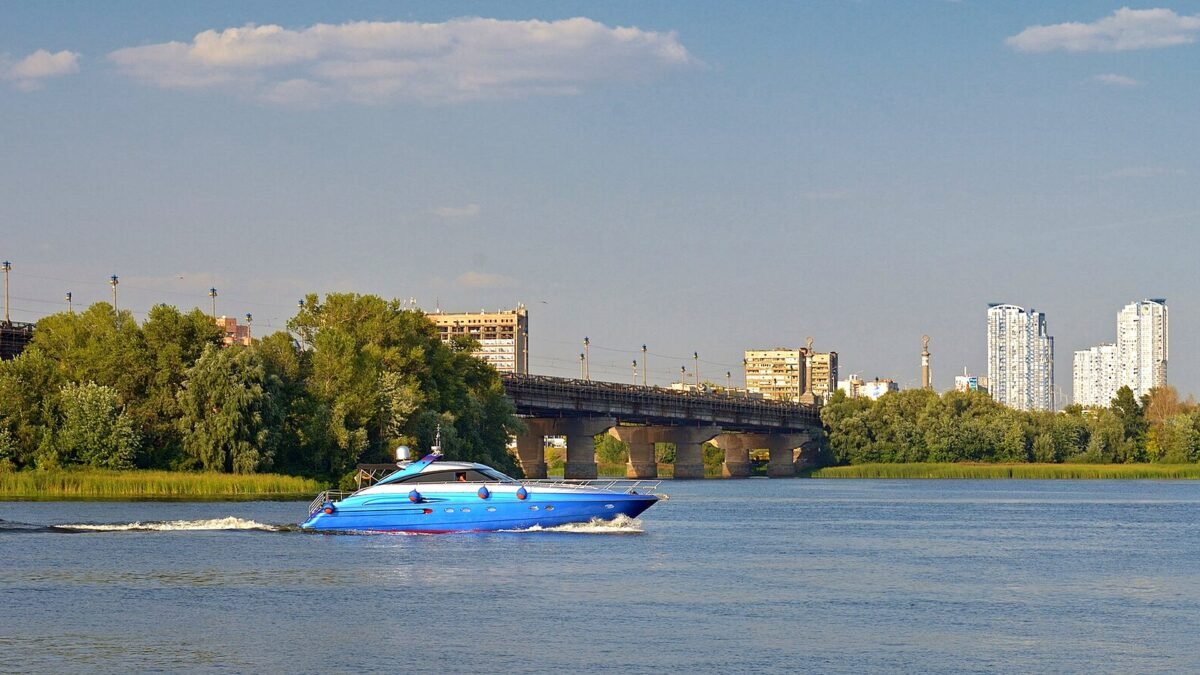
Russia launched a massive overnight missile and drone attack on Kyiv on Friday, killing at least five people and damaging three of the capital’s bridges over the Dnipro River, hours after President Vladimir Putin had promised a “far more painful” response to Ukraine’s attacks on the Kerch Bridge. According to CNN, the ballistic missile and drone strikes lasted for more than six hours, hitting key infrastructure across the capital and leaving several districts without power, in the largest attack on the river crossings that connect Kyiv’s two banks since the start of the war.
Kyiv’s mayor, Vitali Klitschko, said on Telegram that three people were killed in the capital and 15 were injured, according to CNN and The Independent. Two more people were killed in the western city of Lviv, according to local authorities cited by CNN. The city’s military administration put the number of wounded in Kyiv at 17, a small difference that reflects how casualty figures are still being updated as rescue teams work through the damage.
The missiles hit three of the six main bridges that carry Kyiv’s roughly three million residents across the Dnipro: the Podilsko-Voskresenskyi Bridge, the Darnytskyi Bridge and the Pivdennyi, or Southern, Bridge. According to The Independent, traffic from the right bank to the left bank was closed on the Podilsko-Voskresenskyi crossing, the Darnytskyi Bridge was damaged, and the Southern Bridge was hit but remained partially operational. Klitschko said experts would only be able to assess the full extent of the damage once the air raid alert had ended, and residents were urged to avoid driving and to ask employees to work from home on Friday.
Fires broke out in three city districts – Obolonskyi, Podilskyi and Holosiivskyi – after the attacks, according to Ukrainian media cited by The Independent. A fire broke out in a three-storey building in the Obolonskyi district in northern Kyiv after it was hit by missile debris, Klitschko said, according to Reuters, whose witness heard a series of explosions in the city in the early hours of Friday. A critical infrastructure facility was also damaged, Klitschko said, without giving further details.
President Volodymyr Zelenskyy said Russia had launched 16 ballistic missiles and more than 280 drones against Ukraine overnight, striking energy facilities, logistics infrastructure and urban areas across the country, according to The Gaze, which cited the president’s statement. The scale of the barrage was confirmed by Russia itself: the defence ministry said in a post to Telegram that it had launched a “massive strike using high-precision weapons from land, sea, and air,” as well as drones, targeting Ukrainian military and energy facilities, port infrastructure in the Odesa region, and transport infrastructure in Kyiv, according to CNN.
The power grid took a heavy blow. Several districts in Kyiv are without power, according to the energy company DTEK, and emergency power outages were implemented in the Lviv, Zakarpattia and Ivano-Frankivsk regions, according to Ukrenergo, the country’s state-owned electricity operator, which called the situation in the power grid “extremely critical,” CNN reported. The attack also reached beyond the capital: in Kharkiv, a Russian drone damaged a hospital and four people were wounded, according to the city’s mayor, Igor Terekhov, cited by Reuters.
The strikes began at around 1:25 a.m. local time on Friday, according to journalists from the Kyiv Independent on the ground, minutes after Ukraine’s Air Force warned that Russian ballistic missiles were flying towards the city. Monitoring channels reported that Russia had launched Tu-160 strategic bombers from the Ukrainka Air Base in the country’s Far East, according to the Kyiv Independent. Intermittent waves of missiles and drones attacked the city throughout the night, with further explosions heard between 3 and 4:30 a.m., and the Kyiv City Military Administration said in the morning that “a massive attack on the capital is ongoing” and urged residents to remain in shelters until the all-clear was announced.
The retaliation Putin promised in Shenzhen
The attack came hours after Putin left China following a day of meetings in Shenzhen with US President Donald Trump and Chinese leader Xi Jinping, the first three-way meeting of the three leaders, which ended with a four-point joint “declaration for peace” that made no mention of either the war in Ukraine or the conflict with Iran. Speaking from Shenzhen on Thursday, Putin had vowed revenge for Ukraine’s recent attacks on the Kerch Bridge, the multibillion-dollar crossing linking Russia with occupied Crimea.
“After the strikes on the Crimean Bridge, there will be no agreements. We will respond to these strikes. And I want everyone to know this: I believe our response will be far more painful than what the Kyiv regime did to the bridge,” Putin said, according to Reuters. He added: “There will be no negotiations,” according to CNN. Putin had earlier discussed a possible halt to attacks at sea and on energy facilities with the Security Council and asked members to think it over; on Thursday he withdrew that idea entirely.
Ukraine struck the Kerch Bridge three times in four days this week, on 16, 17 and 19 November. The strikes collapsed a section of the roadway and hit the rail section, halting rail traffic, and Zelenskyy described the operation as “unprecedented,” saying Ukrainian forces had spent weeks systematically targeting the Russian air defences, radars and electronic warfare assets protecting the crossing. The bridge, which Putin opened in 2018 at a reported cost of about $3.6 billion, had already been damaged in October 2022 and July 2023. Putin claimed on Thursday that the bridge was used “exclusively for civilian purposes,” a claim Kyiv disputes, arguing that it is a military supply route for Russian forces in Crimea and southern Ukraine.
The timing of the retaliation was the point. The Shenzhen talks had billed themselves as a force for peace: Trump opened the gathering by declaring the trio were “really making history,” and Putin hailed the discussions as taking place in a “relaxed and very intimate atmosphere.” But the joint declaration said nothing about Ukraine, and within hours of Putin’s departure, Russian missiles were falling on Kyiv’s bridges. Trump had embraced Putin at the summit and called him “my friend,” a gesture that drew a sharp rebuke from Senate Democratic leader Chuck Schumer, who called it “despicable.”
A city under attack, again
Friday’s assault followed a day of strikes on Thursday that had already battered the capital. Russian drones struck the heart of Kyiv on Thursday, damaging two European embassies – those of the Netherlands and Austria – as well as St Volodymyr’s Cathedral and residential buildings, according to The Independent. One person was killed in Kyiv on Thursday and several others were injured. Across Ukraine on Thursday, two people were killed and at least 23, including a 12-year-old boy, were reported wounded as Russian strikes caused damage in 12 regions, according to Ukrainian authorities cited by The Independent. Russia’s defence ministry said its defences had intercepted 53 Ukrainian drones over 10 Russian regions overnight, while a Ukrainian attack on Russia’s Saratov region killed three people and wounded two others, and a drone killed a woman travelling by bicycle with her eight-year-old grandson in the Bryansk region, according to local governors cited by The Independent.
Friday brought further exchanges. Three people were killed in a Ukrainian attack in Russian-controlled Luhansk, local authorities said on Friday, according to The Independent, and a Ukrainian drone damaged an industrial facility in Russia’s western region of Smolensk, according to the region’s governor, Vasily Anokhin. Ukraine’s Unmanned Systems Forces commander said Ukrainian drones had struck 40 Russian oil facilities and defence industry targets over the past 50 days, according to Reuters.
The bridge attacks are not new, but their scale is. On Monday night, Russian missiles hit two of Kyiv’s bridges – the Northern and Southern bridges – damaging critical infrastructure and disrupting water and heating supplies, and Zelenskyy said four ballistic missiles had targeted the Southern Bridge and three the Northern Bridge. That strike came as Ukrainian, US and European negotiators held fresh talks aimed at ending the war. Friday’s attack, hitting three bridges at once, is the biggest assault on the routes connecting the left and right banks of the capital since the war began, according to The Independent, and it lands as winter approaches, when Kyiv’s three million residents depend on those crossings and on a power grid that Russia has been systematically targeting.
Europe’s rival summit and the guarantees question
While the three leaders met in Shenzhen, Europe held its own gathering in Berlin on Thursday, where leaders of the Coalition of the Willing said Europe had a united negotiating position and must have a seat at the table in any talks to end the war. British Prime Minister Andy Burnham said Europe had a “united negotiating position,” while German Chancellor Friedrich Merz argued that Russia’s “maximalist demands” were unrealistic, according to The Independent. Merz said: “The US understands that there can be no peace without us. We, in turn, know that with the United States by our side, the prospects for peace increase.”
The Berlin meeting was called to discuss postwar security arrangements for Ukraine. Zelenskyy wants to ensure that Russia does not invade again, while Moscow wants to keep the NATO military alliance away from its borders. Trump’s envoy and son-in-law, Jared Kushner, said he believed Russia was “comfortable” with NATO-like security guarantees for postwar Ukraine. “I think we’ve gotten the Russians comfortable with that concept where any security guarantee for Ukraine would be based on Article 5,” Kushner said, according to The Independent. “And I think that that comes with at least what the Russians are saying, which is their intention is when this war is over to not have another war in the future.” Kushner added that Trump is “open” to an Article 5-like guarantee, although “obviously it has to be in America’s interest to do that.”
Trump called into the Berlin talks after Shenzhen. According to The Times, he told leaders they would not need to spend so much propping up Ukraine’s defences if they pushed to end the conflict, although there were conflicting reports about the tone of his remarks. Kushner stressed that Trump wants to make a deal with Europe “by his side” and is not looking to impose a unilateral agreement. “Any deal we do will be in close consultation with Ukraine and with Europe. And that’s something that he also asked us to come here today and reassure people in that regard,” he said.
European leaders, who were excluded from the Shenzhen talks, warned that the warm reception afforded to Putin would only embolden the Kremlin to escalate its campaign against Ukraine, according to The Independent. Merz called the Shenzhen meeting “above all a photo op” and said a Yalta-style format “will not bring peace.” Within hours, the missiles over Kyiv appeared to prove the point.
Poland scrambles as the war touches NATO’s border
The overnight attack also set off alarms in Poland. Rzeszow airport suspended flight operations due to the activation of military aircraft, the Polish Air Navigation Services Agency said, and the Polish Air Force was conducting preventive operations related to Russian missile attacks on Ukraine, the Polish army said in a post on Friday, according to The Independent. Polish Prime Minister Donald Tusk said on Friday he had received reports from ministers regarding a suspected violation of Polish airspace and that there was currently no threat from the air. “Appropriate services are operating on site,” Tusk wrote on X.
Poland has scrambled jets repeatedly during large Russian attacks on western Ukraine, and the proximity of Friday’s strikes to the border – with two people killed in Lviv, near Poland – explains the precaution. The episode is a reminder that a war fought hundreds of kilometres from NATO territory can still force a NATO member to put its air force on alert, and that the risk of a stray missile or drone crossing the border never fully goes away.
Zelenskyy’s warning on air defences
Zelenskyy used his statement on Friday to draw attention to delays in the delivery of interceptor missiles for Ukraine’s Patriot and NASAMS air defence systems, arguing that the shortages were making it easier for Russia to carry out its attacks. “The artificial and prolonged delays in the delivery of interceptor packages for Patriot and NASAMS systems, which unfortunately have occurred recently, are directly helping Russia achieve the objectives of its terrorist campaign. Every such delay means another Russian strike on one facility or another,” he said, according to The Gaze.
The warning carries weight because the numbers tell the same story. Zelenskyy said Ukraine had managed to intercept only four of 36 ballistic missiles in an earlier November barrage, according to Al Jazeera, and the sheer volume of Friday’s attack – 16 ballistic missiles and more than 280 drones, by his count – is designed to overwhelm defences. Britain announced on 18 November that it would send Ukraine more than 1,000 air defence missiles in a £240 million winter package, but that help arrives against a Russian campaign that is deliberately timed for the coldest months, when a power cut is not an inconvenience but a threat to life.
The September ceasefire, fragile from the start, collapsed after Russian strikes hit Kyiv’s power plants, and the Abu Dhabi trilateral talks earlier this month – the first in nine months – produced no breakthrough. Putin said on Thursday that Russia was interested in ending the conflict but that Ukraine must accept compromises, and that Moscow was prepared to continue negotiations, although the timing of the next round is unclear. He also invited European representatives to Moscow through diplomatic channels to clarify their position on Ukraine peace negotiations, according to Reuters.
Analysis: Why It Matters
The bridge war has come to Kyiv
For most of the war, the bridge war was fought in Crimea. Ukraine’s strikes on the Kerch Bridge were spectacular, symbolic and strategically aimed at a single crossing that Russia uses to supply its forces in the south. Russia’s answer, delivered overnight on Friday, was to bring the same logic to Kyiv: hit the bridges that hold a city of three million people together. The Podilsko-Voskresenskyi, Darnytskyi and Pivdennyi bridges are not military targets in any conventional sense. They are commuter routes, the arteries of a capital’s daily life, and damaging three of them at once is a deliberate attempt to paralyse a city rather than to defeat an army. The largest attack on Kyiv’s river crossings since the war began is not a battlefield event. It is a message about what Russia is willing to do to a civilian population, delivered on the morning after a summit that was supposed to be about peace.
Shenzhen was a summit about everything except the war
The trilateral meeting in Shenzhen was historic in form and empty in substance. Three of the world’s most powerful leaders met for the first time, signed a four-point declaration, and said nothing about the two wars that dominate the global agenda – Ukraine and Iran. Trump called Putin “my friend” on camera, Putin spoke of “shared interests” in settling the Ukraine war, and then, hours later, Russian missiles hit Kyiv’s bridges. The sequence is the story. A summit that produces a declaration without mentioning the war, followed immediately by an escalation of that war, tells Ukraine and Europe everything they need to know about what the Shenzhen format is for. It is a stage for three leaders to declare themselves a force for peace, while the war continues on their terms, not on the terms of the people being bombed.
The retaliation was announced, and that was the point
Putin did not hide what he was about to do. He stood in Shenzhen and told reporters, on the record, that Russia’s response to the Kerch Bridge strikes would be “far more painful” and that “there will be no negotiations.” The overnight attack was the fulfilment of a promise made in public, and its publicity was part of its purpose. By announcing the retaliation in advance, Putin turned a military operation into a piece of theatre: a demonstration that Ukraine’s successes on the Kerch Bridge would be answered, visibly and immediately, and that no summit, no declaration and no European gathering could prevent it. The danger of this pattern is that it rewards escalation. If every Ukrainian success is met with a promised and delivered Russian punishment, the incentive structure of the war tilts towards ever-larger strikes on ever-more-civilian targets, and the bridge war becomes a contest over who can inflict more pain on the other side’s cities.
Europe’s answer is unity, but unity without a seat
The Berlin meeting was Europe’s attempt to answer Shenzhen, and its message was clear: Europe has a united negotiating position and must be at the table. The problem is that the table is being set elsewhere. The Shenzhen format excluded Europe entirely, and the Berlin format, for all its talk of a four-party negotiation involving Ukraine, Europe, the United States and Russia, has no mechanism to force its way into a process that Trump and Putin are conducting bilaterally, with Xi as an observer. Kushner’s claim that Russia is “comfortable” with an Article 5-like security guarantee is the most significant single sentence to come out of Berlin, because it suggests that the hardest question in the war – what guarantees Ukraine against a future invasion – may be negotiable. But a guarantee that is “comfortable” to Moscow and acceptable to Kyiv and to Europe are three different things, and the missiles over Kyiv on Friday morning are a reminder that guarantees are negotiated in rooms while wars are fought in cities.
Winter is the real deadline
The most important number in this story is not the 16 missiles or the 280 drones. It is the state of Ukraine’s power grid, which Ukrenergo called “extremely critical” on Friday morning, and the fact that the attack was aimed at energy and transport infrastructure as winter approaches. Russia’s campaign against Ukraine’s power system is not new, but its timing is deliberate: every substation destroyed in November is a neighbourhood that will freeze in January. Zelenskyy’s plea about Patriot and NASAMS interceptors is, at its core, a plea about time. Every delayed delivery is another night when the missiles get through, and every night the missiles get through is another step towards a winter in which Kyiv’s residents cannot heat their homes. The bridge strikes matter because they show Russia’s intent. The power grid matters because it shows Russia’s strategy. And the strategy is to make the winter itself the weapon.
What to Watch Next
- The bridge damage assessment: whether the Podilsko-Voskresenskyi, Darnytskyi and Pivdennyi bridges can be repaired quickly, and how long traffic restrictions and closures will last for a city that depends on six crossings.
- The casualty figures: whether the death toll in Kyiv and Lviv rises as rescue teams complete their work, and whether the wounded figure settles at 15 or 17.
- Ukraine’s response: whether Kyiv answers the bridge attacks with further strikes on Russian infrastructure, and whether the Kerch Bridge campaign continues after three strikes in four days.
- Air defence deliveries: whether the Patriot and NASAMS interceptor packages Zelenskyy called for arrive faster, and whether Britain’s 1,000-missile winter package reaches Ukraine before the next barrage.
- The power grid: whether Ukrenergo can stabilise the “extremely critical” grid, and whether emergency outages in Kyiv, Lviv, Zakarpattia and Ivano-Frankivsk spread further.
- Europe’s next move: whether the Berlin coalition’s four-party format gains traction, and whether Kushner’s Article 5-like guarantee claim survives contact with Moscow’s actual position.
- The next round of talks: whether Putin’s invitation for European representatives to visit Moscow leads anywhere, and whether the Abu Dhabi channel produces a date for further negotiations.
Sources
- CNN – Hours after Trump-Putin talks, Russia hits Ukraine with massive, deadly attack
- Reuters – Fire broke out in Ukraine’s Kyiv after missile strike, mayor says
- The Independent – Ukraine-Russia war latest: Putin launches missiles at three Kyiv bridges after vowing revenge for Crimea attack
- Kyiv Independent via Europe Says – Russia launches mass missile attack against Ukraine after Putin vows retaliation
- The Gaze – ‘Every Such Delay Means Another Russian Strike’: Zelenskyy Sounds Alarm Over Air Defense Deliveries
- Particle News – Russian Ballistic Strike Damages Three Kyiv Bridges and Kills Three

About the Author — Abdul Mannan
Related Articles
Denmark Expels Russian Defence Attaché After Thwarting Alleged Russian Plot to Kill Rapper Kyivstoner
Denmark has expelled Russia's defence attaché after police said they thwarted a Russian intelligence plot to assassinate US-Ukrainian…
Kushner Raised NATO Membership for Ukraine in Exchange for Donbas in Closed-Door Talks, Report Reveals
The Wall Street Journal reports that US envoy Jared Kushner has repeatedly raised NATO membership for Ukraine in…
COP31 Slips Into Overtime as Fossil Fuels Vanish From Draft Deal and Island Nations Say They Cannot Accept It
Negotiators in Antalya stripped every reference to ending fossil fuel use from the COP31 draft deal, dropped a…